Environment, Gender, Education… Analyzing Media Coverage of SDGs Initiatives That Attract Attention and Press | SDGs Series Part 2

Hello! I’m Mizutani, in my second year with the Sports division of the Public Relations Business Headquarters, Bureau 3!
This is the second installment of our SDGs series by the SDGs PR Strategy Team.
Let me introduce the SDGs PR Strategy Team once again. With less than 10 years remaining until 2030, the deadline for achieving the SDGs—a global initiative aimed at creating a sustainable and better world—we asked ourselves: What can we do to help promote companies and organizations working on SDGs? The team was formed primarily by volunteer members from Bureau 3 who have previously handled SDGs-related projects.
Since our formation in July 2021, we have been deepening our understanding of SDGs from a PR perspective, sharing information about companies engaged in SDGs initiatives, and developing communication strategies through consultations on media exposure.
This time, members of our Media Unit—who engage in promotional activities with media professionals on a daily basis—have compiled an “SDGs Media Coverage Analysis.” Based on this analysis, we would like to explore what aspects of SDGs are currently attracting media attention!
▼ SDGs Series Parts 0 and 1 are available here
■ Media Coverage of SDGs Is Increasing Year by Year!
As you are aware, in recent years mass media such as television and newspapers have featured SDGs-related content, and it is no exaggeration to say that “there is not a day when we don’t see or hear SDGs-related news.”
In fact, when we examined data using our internal media search tool, we found that TV coverage of SDGs-related news increased significantly over the two-year period from December 2019.
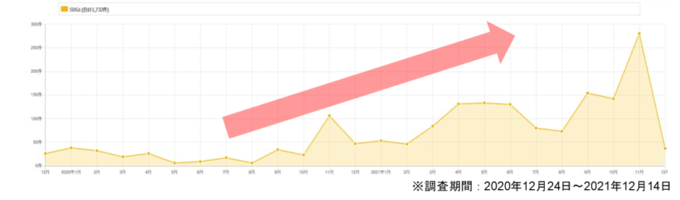
Particularly noteworthy is that during spring and fall—when momentum for SDGs builds—the volume of coverage in 2021 was nearly three times that of the previous year, demonstrating the very high level of interest among media organizations.
The increase during spring and fall can be attributed to major features timed with program schedule changes each season, as well as the influence of SDGs Week (GLOBAL GOALS WEEK), which includes September 25 (the date the SDGs were adopted), Earth Day (April 22 annually), and Rainbow Week (April or May annually).
Furthermore, when we compared the number of newspaper articles containing the keyword “SDGs” with five years ago, we found that national newspapers had increased by approximately 37 times!
This suggests that companies are actively engaging in SDGs initiatives and showing interest in each other’s activities. Additionally, with the rise of ESG investment—which emphasizes companies that consider environmental, social, and governance factors—it is particularly noteworthy that SDGs are now commonly treated not only as social news but also as economic news.
※ ESG investment refers to investment that considers not only traditional financial information but also Environmental, Social, and Governance factors.
Source: Ministry of Economy, Trade and Industry website
https://www.meti.go.jp/policy/energy_environment/global_warming/esg_investment.html

Additionally, magazines such as FRaU (Kodansha) and Hanako (Magazine House) have featured SDGs multiple times, and fashion magazine official websites and web news sites have created new SDGs tabs and sections. Specialized media dedicated to ethical consumption and SDGs are also emerging one after another. (SUNNY SIDE UP’s SDGs MAGAZINE is also actively publishing SDGs-related articles!)
■ TV Networks Are Also Organizing Cross-Program Special Features!
Television networks are also actively disseminating information through cross-program SDGs initiatives.
TBS, a pioneer in SDGs initiatives, has launched campaigns titled “Week to Make the Earth Smile” three times—in November 2020, April 2021, and November 2021. Centered on news programs such as “THE TIME,” and “Hiruobi!,” they have covered SDGs initiatives progressing around the world and in Japan.
In the third installment in fall 2021, under the theme “Let’s Try SDGs,” they called on viewers to make SDGs “their own issue” and work together toward solutions, focusing on familiar themes and initiatives that viewers can immediately implement, such as “food loss,” “waste separation and recycling,” “plastic reduction,” “gender,” and “diversity.”
Reference: http://www.tbs.co.jp/SDGs_week/
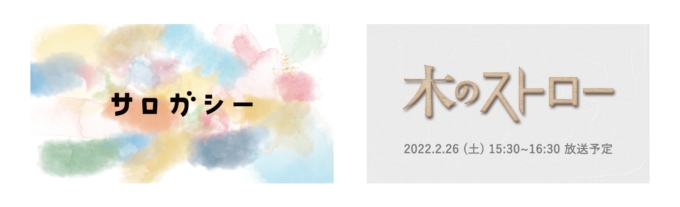
Fuji Television launched “SDGs Action Week” in March 2021, and in September 2021, timed with SDGs Week, they implemented “Action SDGs Week”—an SDGs promotion campaign integrated with BS Fuji, Nippon Broadcasting System, and Sankei Shimbun. Beyond covering SDGs-related news in news and information programs, they published articles online and developed multifaceted content, including dramatizing “Surrogacy” with an LGBT theme and “Wooden Straws,” which depicts the true story of developing and realizing the world’s first wooden straw.

Reference: https://www.fujimediahd.co.jp/sdgs/enjoyaction_sdgs/
■ Key Points for Media Coverage
Analysis of media coverage examples reveals that three areas attract particularly high media attention: “Environment,” “Gender and Minorities,” and “Education.”

“Environment” primarily corresponds to initiatives under “13. Climate Action,” such as apparel companies switching to sustainable materials or food manufacturers changing product packaging from plastic to paper. Initiatives by consumer-facing companies to reduce environmental impact through plastic reduction and food loss prevention are attracting attention.

“Gender and Minorities” corresponds to initiatives under “10. Reduced Inequalities” and “5. Gender Equality.” For example, many initiatives related to corporate HR policies are featured, including women’s empowerment, LGBTQ support, disability support, and reforms in recruitment and uniforms.

This area generates particularly high consumer interest, with significant response on social media and article comments. Due to the risk of backlash, careful attention must be paid to messaging and expression.
Additionally, education-related initiatives such as industry-academia collaboration and children’s events are frequently covered because they easily add “social value” and appeal to homemakers, who are a primary television audience.

As demonstrated, the key to SDGs-related initiatives that attract media attention lies in both clearly identifying the SDGs goals being pursued and having external implementation that allows for user feedback.
■ Beware of “SDGs Washing”!
SDGs washing refers to “making it appear that an organization is engaged in SDGs more than it actually is, without substantive action.” The term “washing” comes from “greenwash,” a term coined in the 1980s in Europe and North America to criticize companies that superficially appeared to be environmentally conscious.
As societal attention to SDGs has increased, more companies are communicating their SDGs initiatives internally and externally. However, corporate engagement with SDGs has become the norm, and we are transitioning to an era where the relevance to business operations and the seriousness of commitment are being questioned.

In SDGs PR and communication as well, rather than conveying only atmosphere and image, it appears necessary to clearly articulate and communicate specific concepts and concrete visions.
Capturing societal trends and creating news is one of the roles required of PR.
The SDGs PR Strategy Team will continue to engage seriously with “SDGs”—one of the most prominent social issues today—while developing branding and communication strategies with high social value.