Toward a world where 27 genders are “the person right next to you”! Tokyo Rainbow Pride 2017 – New Employee Fukui Edition
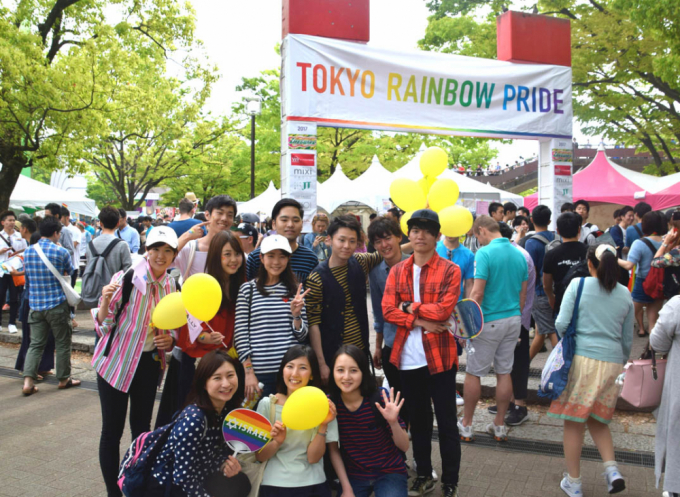
Nice to meet you! I am Fukui, a new graduate who joined the company in April 2017.
Last Sunday, 11 new employees participated in “Tokyo Rainbow Pride 2017”! In this blog post, I would like to introduce the details of “Tokyo Rainbow Pride 2017” and share my impressions of the event from a new employee’s perspective!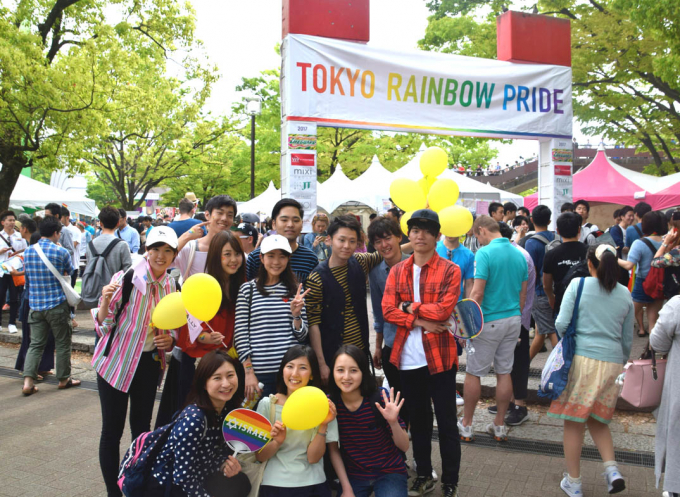 On a sudden note, do you know what percentage of all surnames in Japan are held by people named Sato, Suzuki, Takahashi, and Tanaka? According to one website, these names proudly rank as the top four most common Japanese surnames*1. Together, they account for approximately 8% of the population.
*1: Source: Myoji-yurai.net
The reason I mentioned this example is that…
actually, that percentage is said to be the same as the prevalence of LGBT individuals.
LGBT is an acronym for Lesbian, Gay, Bisexual, and Transgender (which can include gender identity disorder), and it is a collective term for sexual minorities.
While the current reality is that the image of a “minority” remains strong, LGBT individuals are living among us in numbers similar to those named Sato, Suzuki, Takahashi, and Tanaka!
Tokyo Rainbow Pride, which we participated in this time, is an event that aims to realize a society where sexual minorities, including LGBT individuals, can live more authentically and positively without being subjected to discrimination or prejudice. SUNNY SIDE UP, which promotes diversity, provides PR support for Tokyo Rainbow Pride every year.
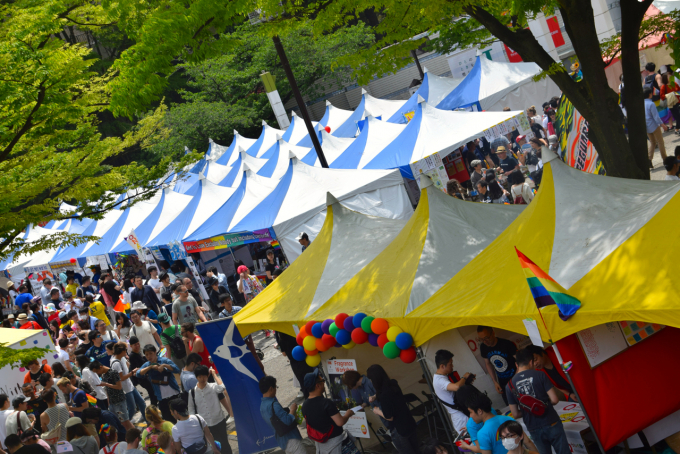 It has already been five years since we began our support, and the event has grown into a major success, mobilizing over 100,000 participants! It seems that interest in creating a society where sexual minorities can live comfortably is visibly increasing.
Now, in preparation for participating in this event, Fumino Sugiyama, Co-Representative Director of Tokyo Rainbow Pride, held an “LGBT Study Session” for us!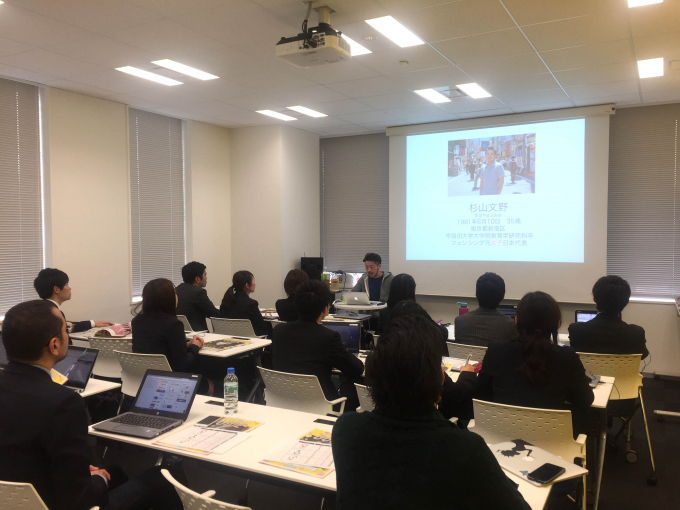 Mr. Sugiyama grew up in a lively household running a tonkatsu restaurant in Kabukicho, Shinjuku, and says he was a “cute girl” in his own right. He published “Double Happiness,” which incorporates his own experiences after being diagnosed with gender identity disorder, to convey that sexual minorities are “the people right next to everyone.” Listening to Mr. Sugiyama’s story made me wonder if there were people near me who felt constrained because they felt they “couldn’t speak out” about their own gender or sexuality.
On a sudden note, what is your gender? When you think about sexuality, how do you approach it?
Are you a “woman” because your romantic interest is men? Are you a “man” because your body is male?
Mr. Sugiyama suggested that when considering gender through the three elements of “physical sex,” “gender identity,” and “sexual orientation,”
there may be genders that do not fit into the traditional categories of male or female, no matter how you divide them.
For example, the way of thinking about gender for someone who is “physically female, identifies as female, and is attracted to women”
is not the same as for someone who is “physically female, identifies as male, and is attracted to women.”
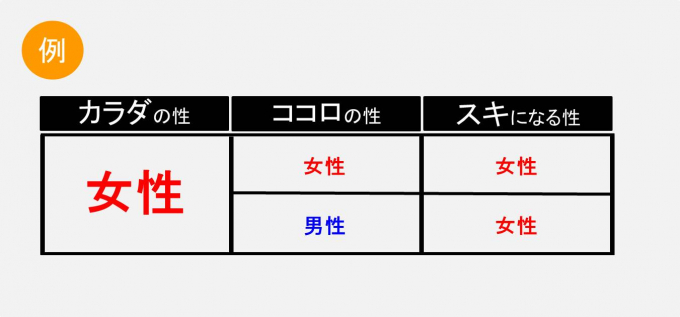
Thinking about it this way, gender cannot be divided into just male and female; rather, there are many ways to look at it. According to Mr. Sugiyama, there are as many as “3 x 3 x 3 = 27 variations.”
In this world, there are many people who are married and have children but are actually transgender. In today’s society, which operates on the assumption of heterosexuality, it cannot be denied that we still live in a “society where people cannot speak out” regarding invisible issues of sexuality.
To be honest, until now, I had thought of the spread of LGBT awareness as someone else’s problem. However, I was struck by the realization that transgender issues are much closer to home than I had imagined, and that while “awareness” may be spreading, “understanding” has not yet progressed.
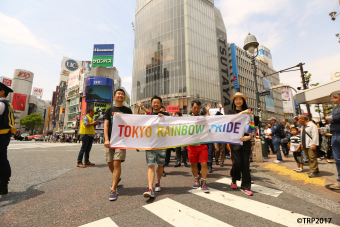
After deepening our understanding of LGBT and sexual diversity through this study session, we went to the “Parade,” the main event of “Tokyo Rainbow Pride 2017,” which features the six-colored rainbow—the global flag representing sexual diversity—as its symbol!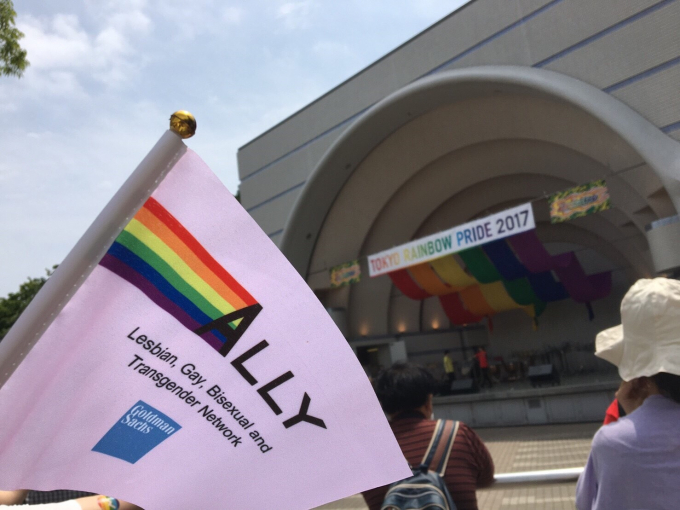
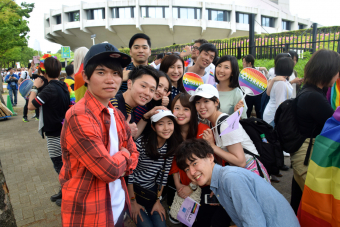
We marched joyfully to the music, waving flags and balloons while shouting “Happy Pride!”
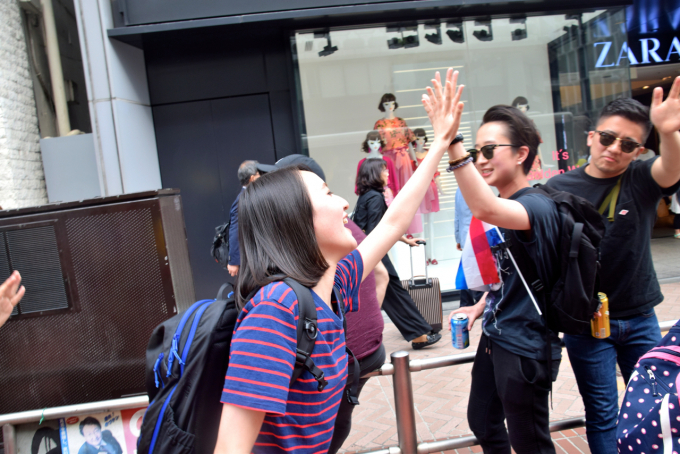 We had a wonderful time walking the rainbow-colored streets of Shibuya and Harajuku, exchanging high-fives with people of various genders and nationalities! Everyone just looked so happy!
As Mr. Sugiyama said, he hopes for a society where everyone can live comfortably. To achieve this, society as a whole must recognize that members of minority groups “might be the people right next to us.” First and foremost, as a member of a company that values diversity and creates “fun commotions,” I decided to become someone who can speak out loudly.
Happy Pride!
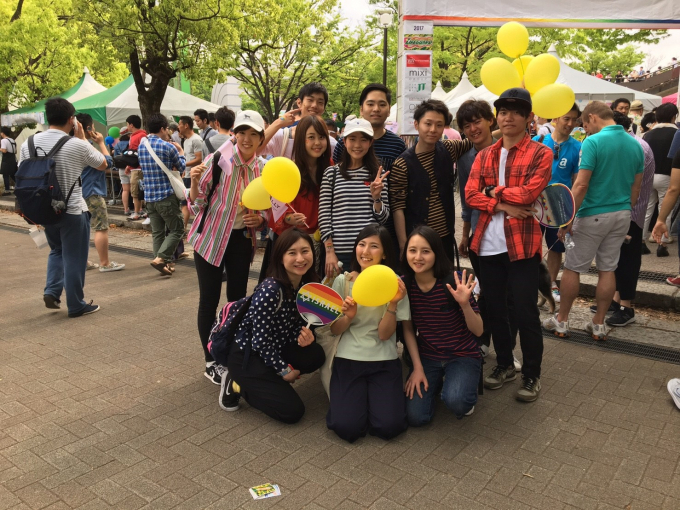
Happy Pride!
★Click here for the Hasuda Edition★