Master the Mindset to Win at Job Hunting! After-School Internship Report (Logical Thinking Course Edition)
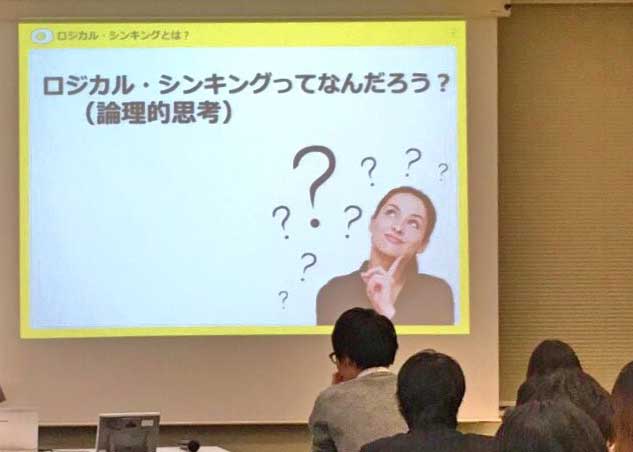
Nice to meet you! I’m Akiko Yamada, an after-school intern from the College of Education, Psychology and Human Studies at Aoyama Gakuin University! This time I participated in the “Logical Thinking Course,” so I’d like to share what it was like.
…But before that, let me introduce you to the SUNNY SIDE UP office a bit.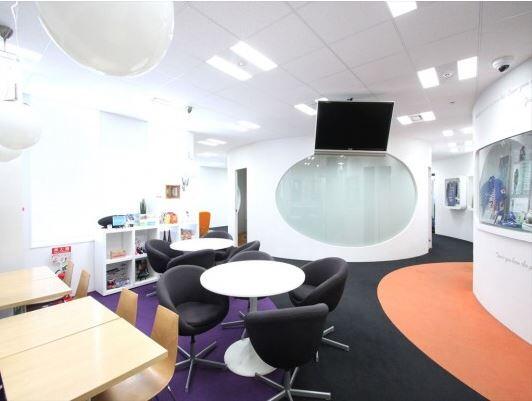 The first thing that catches your eye when you enter is the round, egg-like design of the furniture. Just like the SUNNY SIDE UP website, the office is based on bright colors such as white and yellow, which brighten your mood. Any woman is sure to fall in love!
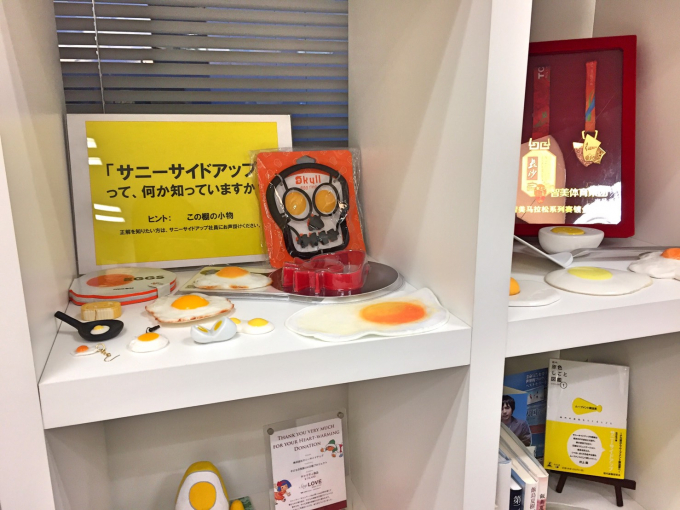 The shelves are lined with accessories related to “SUNNY SIDE UP.” These are also adorable.
Now, let’s get to the main topic. As many of you may know, the SUNNY SIDE UP after-school internship offers five courses. I had already participated in the “PR Course,” “Promotion Course,” and “Marketing Course,” where the unique instructors clearly explained the differences between advertising agencies and PR companies, as well as how SUNNY SIDE UP actually conducts its work. However, to be honest, this “Logical Thinking Course” seemed the most difficult and formal of the five… I found myself feeling somewhat apprehensive.
I mean, what is logical thinking in the first place???
In Japanese, it’s “論理的思考” (ronriteki shikou). Of course, I had heard the term before, and I thought it was probably a useful way of thinking for understanding things well or persuading others, but that was about the extent of my understanding.
According to the explanation, logical thinking is apparently. Of course, being able to understand things deeply is a great benefit for me as well. Now, there are various methods and frameworks for thinking logically, and they showed us a list of them.
SWOT analysis, MECE, logic trees, factor analysis, causality analysis, matrix analysis, innovator theory, PDCA cycle, correlation coefficient, regression analysis, sensitivity analysis, hypothesis/issue thinking, value chain, induction, deduction…….
O-oh my…
For someone like me, a humanities major who has continuously avoided studying mathematics, there were about 20 items that seemed likely to produce an infinite number of formulas I couldn’t understand in the slightest…
Even if I learned all of these, there’s no way I could use them effectively in my current state. That’s right—these frameworks are meaningless unless you can recall them instantly when needed and use them on the spot. So this time, we focused on two fundamental frameworks, “MECE” and “logic trees,” and learned them thoroughly through group work.
The theme was, quite simply, “job hunting.”
First, we organized and analyzed the skills necessary to work at a PR company. Then, using a fictional university student profile, we identified strengths and weaknesses and created a winning self-PR for job hunting.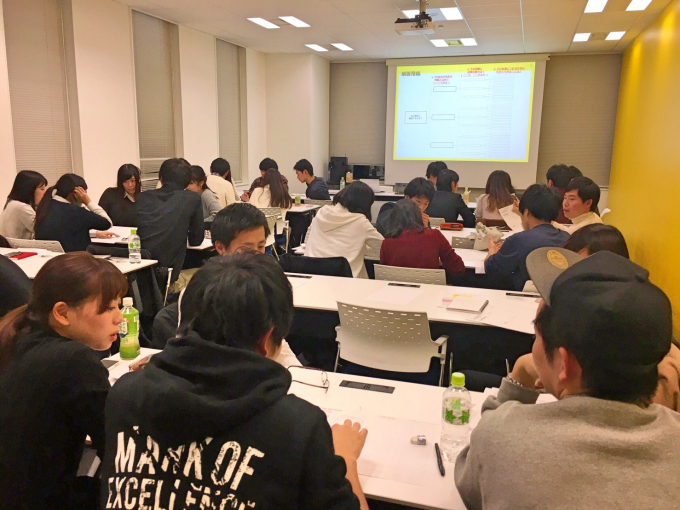 Organizing things without omissions or overlaps is more difficult than I imagined…
Our team, “Team Humanities” (created during the ice-breaking game at the beginning where we searched for commonalities among 5 out of 6 people. Since 5 out of 6 team members were humanities majors, we became “Team Humanities.” The lack of creativity is remarkable.), presented first.
We somehow managed to answer the brutally tough questions thrown at us by the employees, though we were bewildered. Communication skills—in the sense of understanding the meaning of the other person’s questions and responding appropriately—are also important.
Before participating in this internship, I had the image that “PR companies = idea battles!” so I thought that “creative thinking” to come up with ideas that would interest as many people as possible and “expressive skills” to make products and events look attractive were most important. However, I learned that because “logical thinking” to organize things is at the foundation, you can find clues to solving problems and create a foundation for gaining people’s empathy.
I want to say loudly that all university students should take this “Logical Thinking Course”! This way of thinking will definitely be useful not only in university life and job hunting, but also in whatever work you do in the future.
Also, watching the other teams’ presentations, I noticed one thing.
Everyone is so good at presenting!!!
I was amazed at how high each person’s presentation skills were—they devised ways of speaking to engage the audience and responded to tough questions without being intimidated.
When I asked the people I became friends with through the internship how they could present so confidently… they each had opportunities to practice presentations in seminars, clubs, and so on. On the other hand, I haven’t had many opportunities to stand in front of people and present, so I lack confidence and often end up looking at my notes too much (sweat).
I’m going to gain experience through these five courses and grow even a little! I’m looking forward to the next “Planning and Presentation Course”!!