Professor Side’s PR Course (News Releases)
In this section, Professor Side and various others share their thoughts on PR.
This time, we will explain the basics of PR activities: news releases.
Hello, I’m Professor Side.
A news release is one type of material intended for members of the press.
It is also sometimes called a press release.
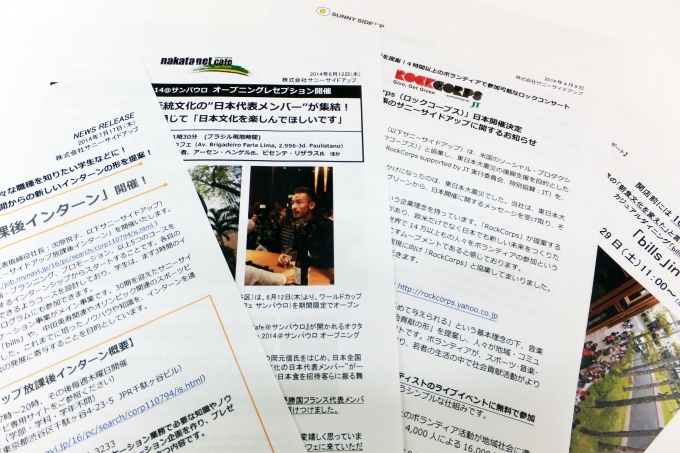
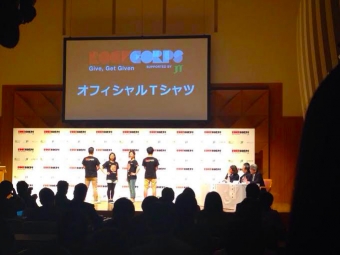
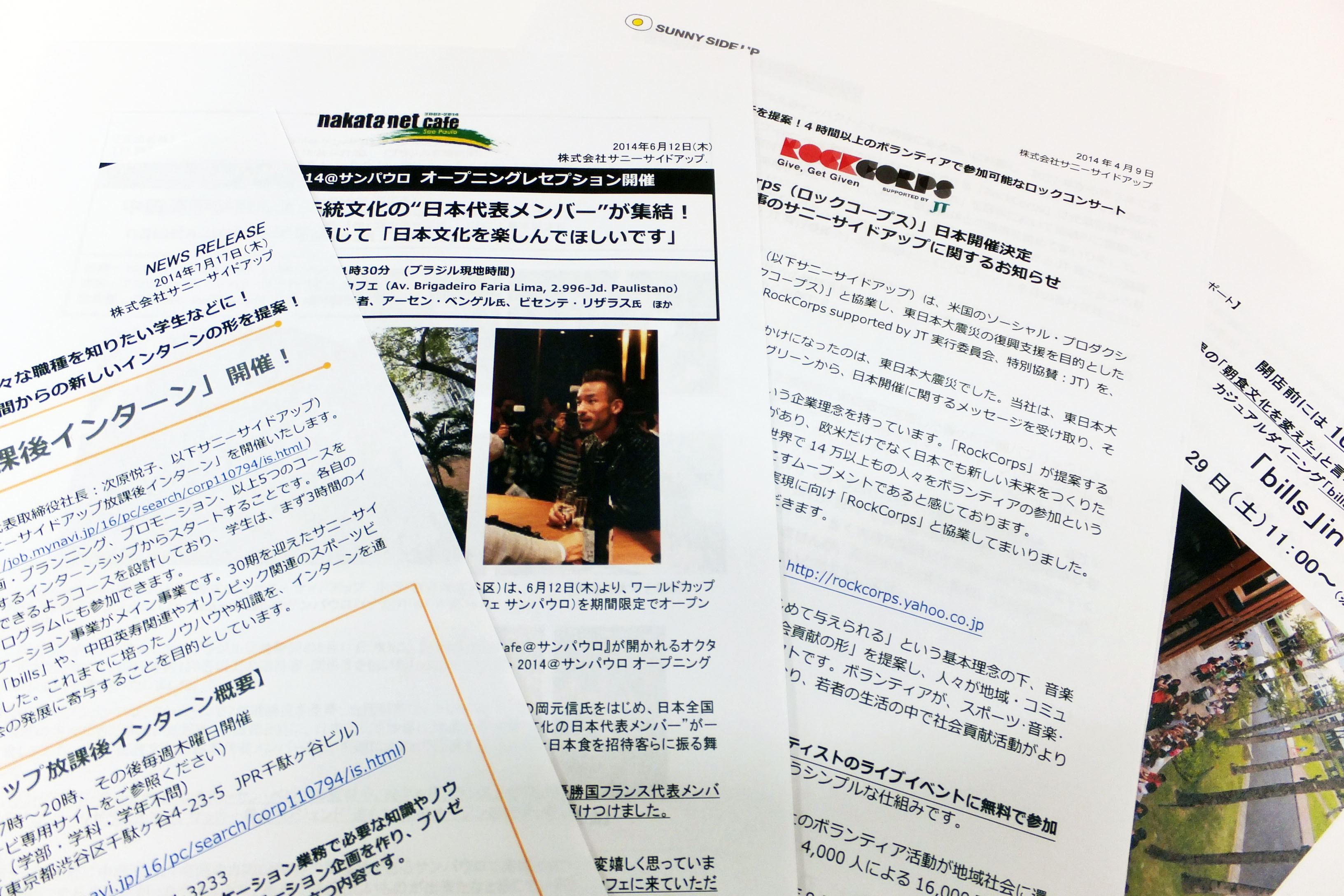
From left: Announcement of an internship program, nakata.net cafe opening reception report (breaking news), materials on RockCorps being held in Japan, and bills in Waikiki first-day report
A key characteristic of press materials called “releases” is their “timeliness.”
By content, examples include: “new product,” “new service,” “new facility,” “new store,” “new CEO,” “merger/acquisition,” “new factory,” “business results,” “event announcement,” “survey results,” “apology for misconduct,” and so on.
A type of press material that resembles a news release but is different is the newsletter. This “letter” type of press material is not “timely.” Its purpose is for companies to provide media professionals with story ideas that can serve as hints for feature coverage. By combining their own products and services with “seasonality,” “social relevance,” and the like, it is one PR tactic aimed at trend articles and feature stories in newspapers and on television. In addition, it also serves as a tool for regularly disseminating information to media professionals. Newsletters are generally published two to four times a year.
In addition, news releases are published on many companies’ websites.
In that sense, they can no longer be described as materials intended solely for media professionals. By reading news releases from various industries, you can see each industry’s characteristics, and you can also gain hints about what makes a well-crafted news release.
From PR
As the professor says, we also read news releases from a wide range of industries. At PR agencies, we create news releases for many companies. There are many points to consider, such as the timing of the announcement, content that takes current events into account, and which media outlets to send it to.
Recently, I often have opportunities to revise news releases written by people at other companies, and I think one of the most challenging parts is how to write a “catchy title that catches the media’s eye.”
First, I believe the first step is to read and read the outlets where that news is likely to appear—
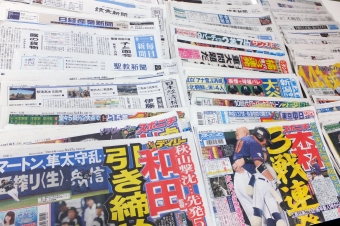
for example, sports newspapers and entertainment news websites for celebrity-related events; newspapers and business magazines for business-related topics; and magazines for beauty and fashion—then learn the trends and the types of titles and content they prefer.
Also, when writing a news release, I feel that more than “writing skills,” the ability to “organize information” is essential.