What Is “Real Promotion”? A PR Agency Explains | A Taste of “SUNNY SIDE UP’s Step-by-Step PR”! Vol. 5
Hello! I’m Oku, in charge of this series 🌱
PR refers to building positive relationships with the public.
What becomes important in creating touchpoints with the public (primarily customers) is real promotion (field promotion), such as sales promotions and events.
From SUNNY SIDE UP’s manual book, which includes many PR achievements leveraging events, we will introduce selected pages that clearly explain real promotion!
■ Introduction
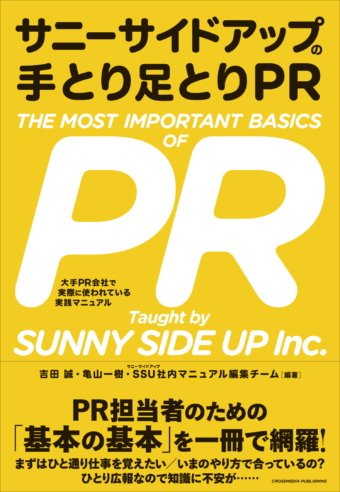
This article is part of a series that introduces selected excerpts from the manual book “SUNNY SIDE UP’s Step-by-Step PR,” published in May 2021 for PR beginners and solo in-house PR professionals.
Previous articles are available here▼
A Taste of “SUNNY SIDE UP’s Step-by-Step PR”!
If this article made you think, “I want to learn more!” or “I’d love to keep a copy on my desk!”, we would appreciate it if you would purchase the book at bookstores, on Amazon, and other retailers.
To purchase on Amazon, click here.
If you have any questions about the book or would like to learn more details, please feel free to click the “CONTACT” button (bottom right on PC, or at the bottom on smartphones)!
Now, let’s dive right in and take a quick look inside!
■ Real Promotion Based on a Multi-Dimensional Strategy
Promotion is one way to address challenges such as increasing sales and attracting customers. It is communication that appeals to consumers at relatively close touchpoints for a company’s or brand’s products, while adding “social value” created through PR thinking.
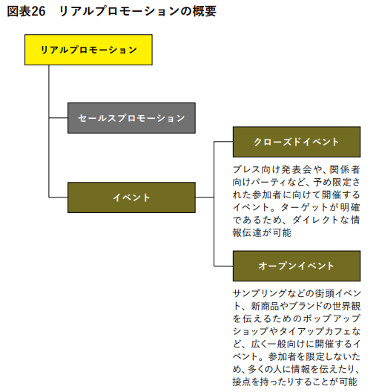
The term “promotion” can be understood in a very broad sense, but in this chapter we will specifically explain real promotion (field promotion), such as sales promotions and events, in concrete terms〈Figure 26〉.
The Key to Boosting Communication Effectiveness
The key is to build a story that starts with gaining awareness, creates motivation to purchase, and leads to an actual purchase—then effectively link advertising, publicity, and promotion.
By incorporating multifaceted information that includes not only your company’s and brand’s perspective but also third-party viewpoints, and by creating a “multi-dimensional strategy” that does not end as one-way communication, you can build a communication plan that truly resonates.
■ Essential Knowledge for Sales Promotion
Sales promotion refers to communication that creates touchpoints where consumers purchase products or use services, leading to increased sales.
Because sales promotion can guide consumers from awareness to purchase and create “direct purchase motivation,” distribution partners can more easily feel its impact, which can also lead to improved in-store handling.
Differences Between Advertising, PR, and Sales Promotion
For example, let’s consider the theme: “We want people to enjoy bottled Chinese tea with meals just as much as they do Japanese tea!”
With advertising, you would create a scene of enjoying Chinese tea with onigiri and broadcast it in a TV commercial to increase awareness.
With PR as a method, you would distribute a newsletter compiling trends that support enjoying Chinese tea with onigiri, as well as third-party survey data tied to current events, and indirectly create “purchase motivation” through the media.
In contrast, sales promotion would create “purchase motivation” through direct actions—such as introducing a set discount that makes it a better deal to buy Chinese tea and onigiri together, or running a campaign that people can enter when they buy the set.
The Customer Journey to Purchase
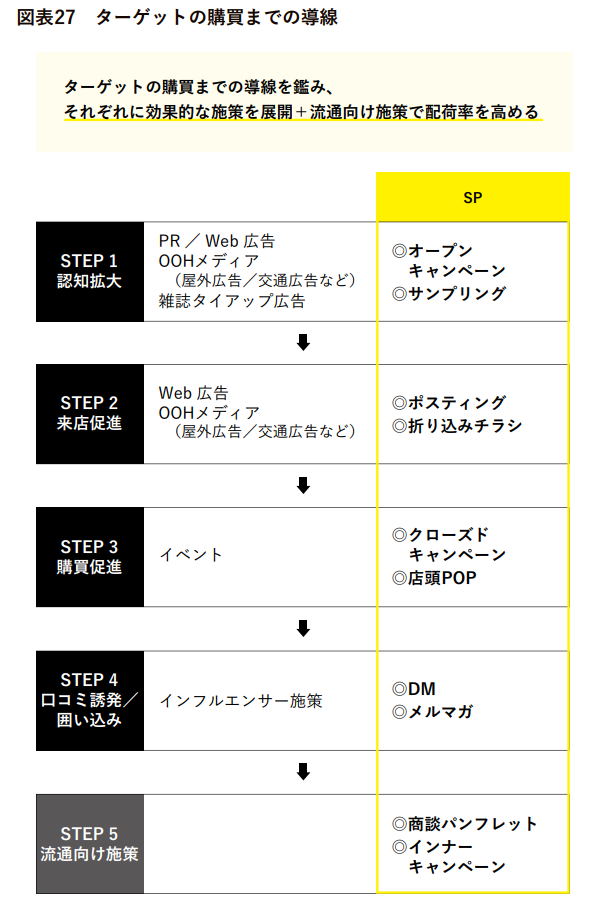
By breaking down the path to purchase, you implement effective measures at each phase—“awareness expansion,” “store visit promotion,” “purchase promotion,” and “retention.” You also carry out initiatives aimed at stores that carry your products, executing measures so that more of your products are displayed in-store〈Figure 27〉.
Sales promotions take place in many locations: for in-store, convenience stores, supermarkets, drugstores, shopping centers, home improvement centers, and more; and for proprietary distribution, everything from your own stores to vending machines, online stores, e-commerce sites, and social media. Choose the optimal method for each channel.
How Distribution Works
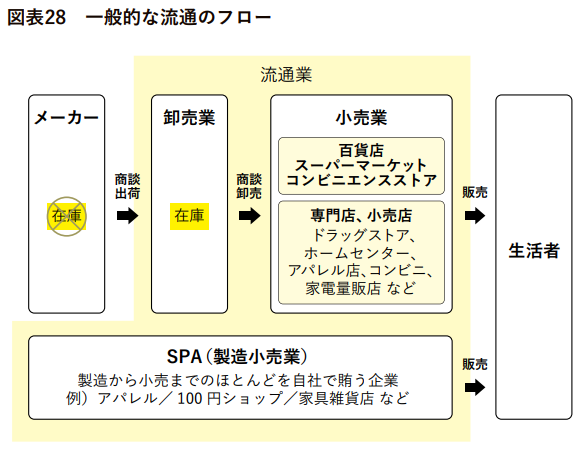
In general, products manufactured by a maker reach consumers through wholesalers and retailers, but some companies cover most of the process from manufacturing to retail in-house〈Figure 28〉.
Pricing Power Is the Source of Profit
Pricing power determines how much profit a product—developed and manufactured by a maker over time—will generate. For wholesalers and retailers, it is a lifeline: “How much can we differentiate from other companies, attract customers, and retain profit?” It is a crucial factor for all businesses involved in the “supply chain,” the transaction route through which products reach consumers from manufacturing.
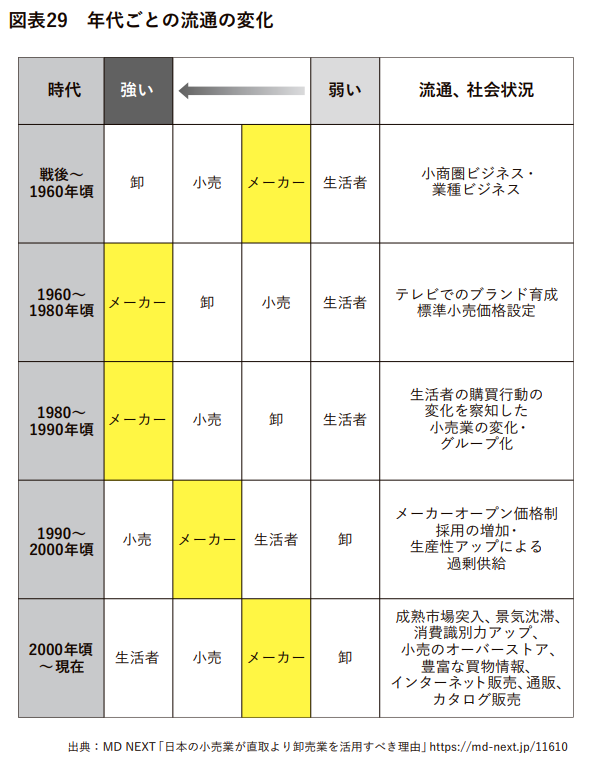
Since the 2000s, the number of major retail store formats and brand types has increased, and consumers have entered an era in which they choose their preferred stores and products from abundant options. In addition, as productivity has improved, product supply has begun to become excessive, strengthening the tendency that “pricing power lies with retailers and consumers”〈Figure 29〉.
■ Conclusion
Now then, were you able to grasp the basics of real promotion?👀
If you would like to learn more—such as open campaigns and posting as sales promotion measures, and successful real promotion case studies—please be sure to pick up the book.