The World Cup Continues Outside the Stadium: How Sports Move Cities and People in New York | World Cup Inspection Report: NY Edition
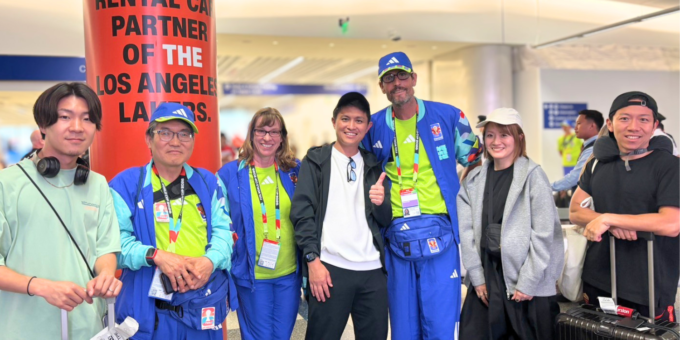
Hello! Following the Los Angeles edition, we are Saiki and Ishiguro from SUNNY SIDE UP!
In Los Angeles, we reported on the “venues” and “viewing experiences” that support the world’s premier sporting events through the opening match in the host country, the United States, and “SoFi Stadium.”
In this second part, we move the stage to New York to explore the various initiatives taking place “outside” the stadiums and match venues!
In New York, one of the world’s leading commercial cities, we looked at how a sporting event like the World Cup connects with sponsor companies, sports brands, retail, and the city as a whole to create new value. We also learned about “experience value” that goes beyond just watching the sport itself through MLB games.
Walking the Streets: A New York That Wasn’t Just “All World Cup”
Since it was during the World Cup, I imagined the city would be buzzing with soccer. However, in reality, much like Los Angeles, the entire city was not completely immersed in the World Cup; rather, it felt like an everyday scene, to the point where you might not even realize the tournament was happening.Of course, there were opportunities to see advertisements from official tournament partners and supporters in jerseys, but my impression was that it didn’t significantly change the daily cityscape.
On the other hand, tournament sponsors and sports brands maintained a strong presence.Rather than “decorating the entire city,” they were building excitement for the tournament by “creating brand experiences.” This distinction was very impressive.
Places to Enjoy Sports, Created by Sports Brands
The initiatives of adidas, an official World Cup partner, were particularly memorable.To put it simply, they had fundamentally updated the role of their flagship store from a “place to sell products” to a “place to gather people.”
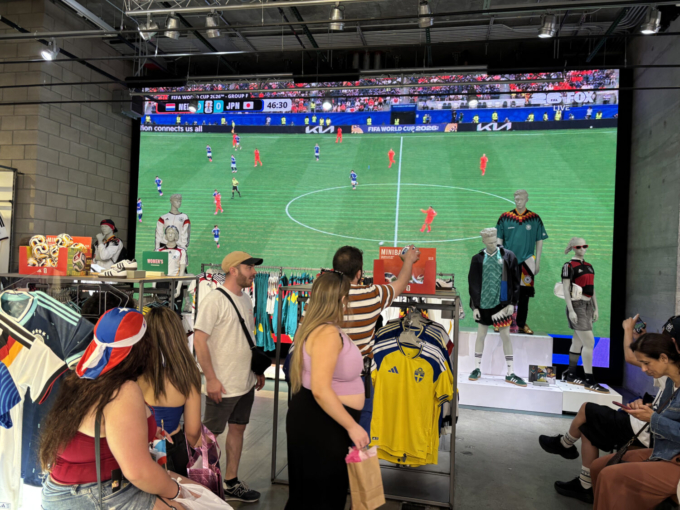
Upon entering the flagship store in Manhattan, a large screen broadcasting live matches was installed inside. Visitors could enjoy watching the games without leaving the store while they shopped. While it was a place to sell products, it also served as a space for fans to gather, cheer, and interact. This conveyed the brand’s commitment to prioritizing “providing experiences” over just “selling.”
Furthermore, a limited-time event was held at the foot of the Brooklyn Bridge during the tournament.
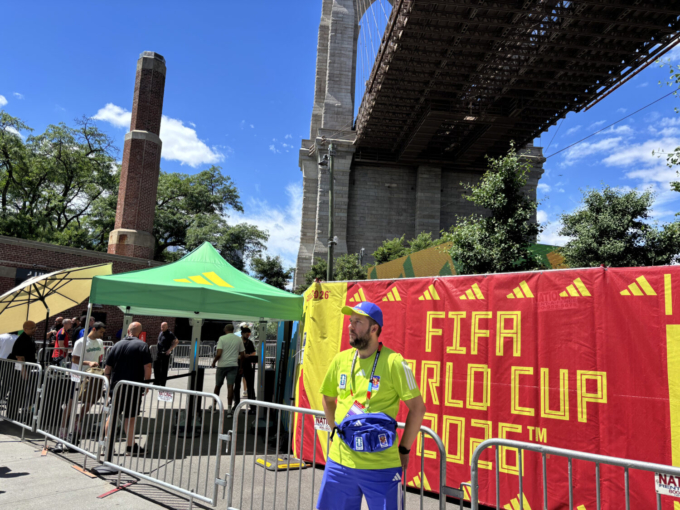
In addition to public viewing on a large screen, a variety of programs were offered, including official merchandise sales and interactive content, attracting many fans and supporters.As the event took advantage of a famous tourist location, it was impressive to see how it naturally became a space where people gathered not just to watch the match, but to “enjoy the World Cup atmosphere alongside sightseeing.”
Brands are elevating sports events into experiences by linking their own worldview with the passion of the sport. I felt that the high level of execution offers many points of reference for event promotion in Japan.
The Moment Sports Change the Atmosphere of the City
During our stay in New York, the NBA’s New York Knicks won their first championship in 53 years. Despite it being midnight, the streets of Manhattan were filled with joy, many people were wearing team colors, and the local media was dominated by the news.
Even during the World Cup, the fact that a local team’s victory had enough influence to change the atmosphere of the entire city made me realize the deep-rooted popularity of the NBA in New York and across the United States.
From “Watching a Game” to “Enjoying a Day”
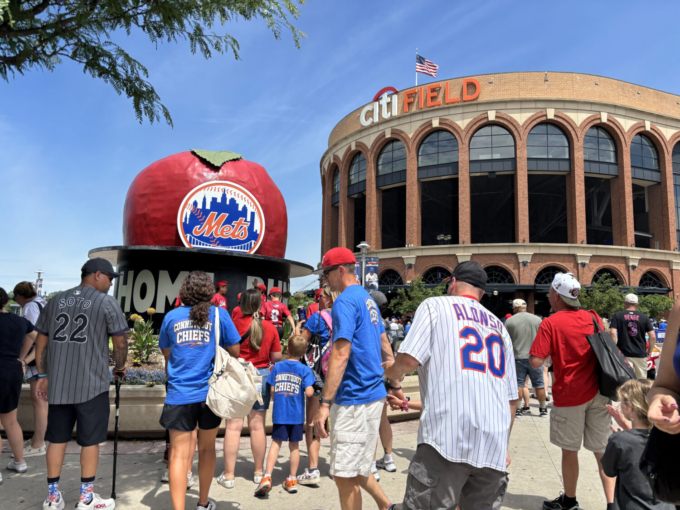
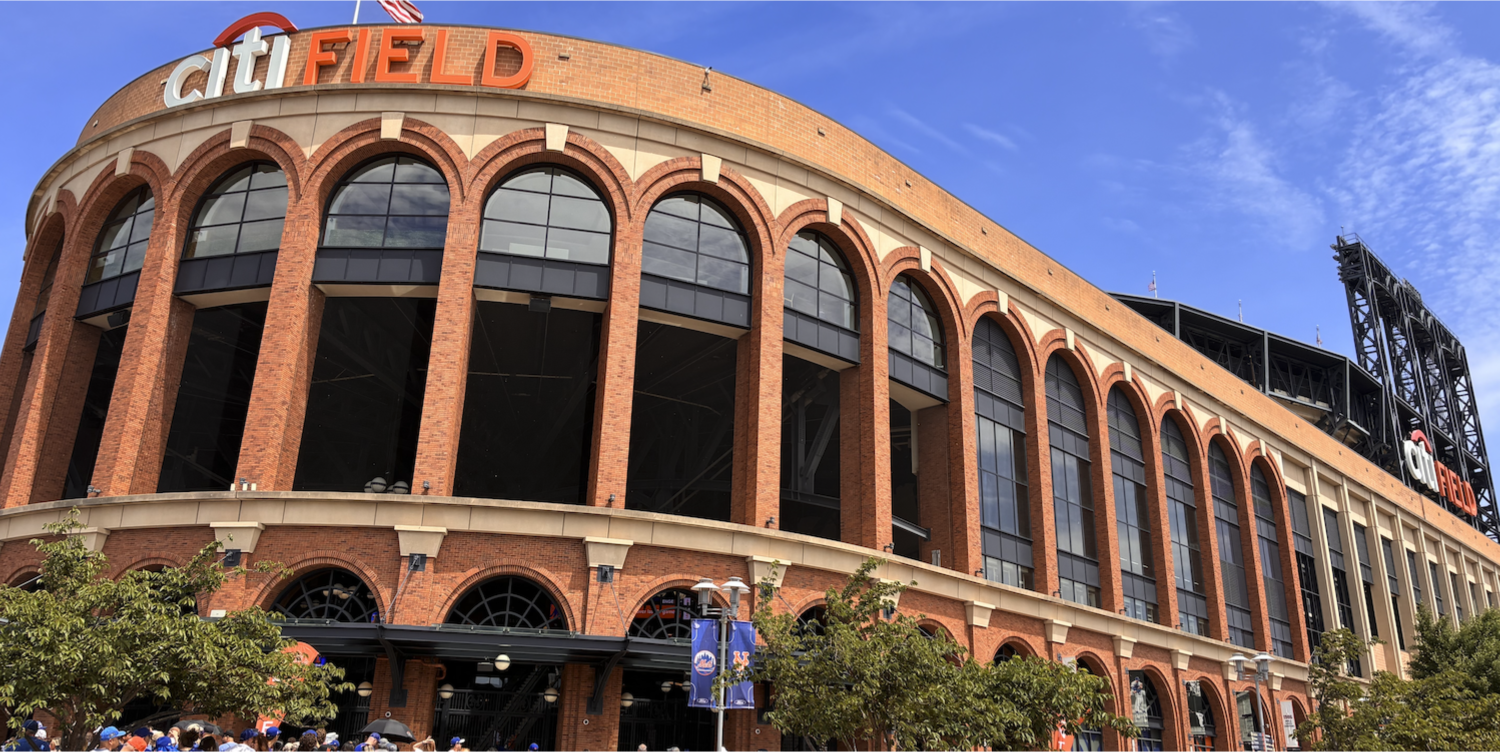
In New York, we also visited Citi Field, the home of the MLB’s New York Mets.
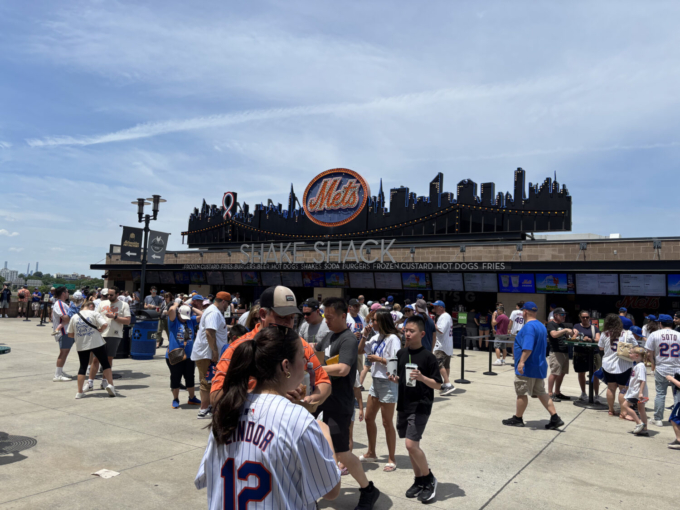
What I felt in common with Dodger Stadium, which we visited in Los Angeles, is that many visitors do not come solely for the purpose of “watching the game.”There is a sense of excitement at the merchandise shops, and the stadium is lined with a wide variety of food and beverage outlets.
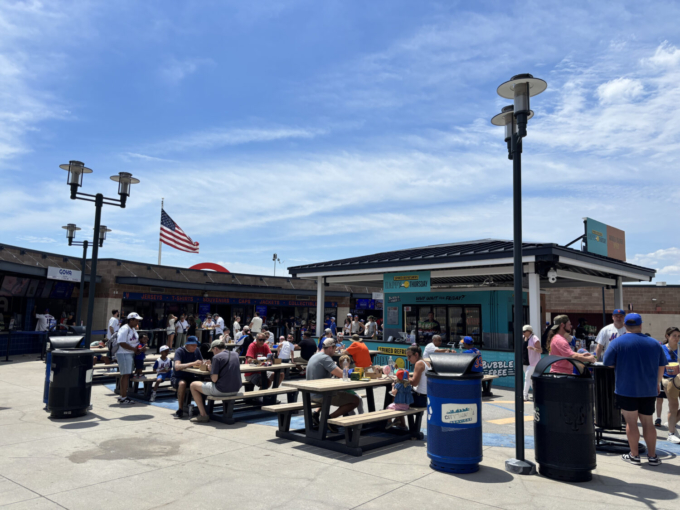
What was even more unique was that there were many spaces provided where people could enjoy food and conversation with family and friends outside of their seats. Even before the game started, many people were enjoying meals and chatting.With the sense of openness that only an open-air stadium can provide, I felt that Citi Field functions more as a leisure space for a relaxing day off than just a place for baseball.
Not just “providing a game,” but “how to make that time enjoyable.”This way of thinking is something I felt in common in Los Angeles as well, and I believe it is one of the significant values in the American sports business.
PR and Communication Require an Approach That Involves the Surroundings
What I strongly felt during this New York inspection is that sporting events do not end inside the stadium.A single, large experience value was created through the coordination of many touchpoints, such as sponsors, the city, commercial facilities, food and beverage, and fan events.And I believe each of these enhances the value of the event and pushes up visitor satisfaction.
Translating this to the work of PR and communication, I feel it is becoming increasingly important not just to “increase exposure,” but to “create mechanisms that make people want to gather, experience, and share with others.”
Sports events do not captivate people through the game alone; a special experience that makes people from all over the world want to gather is born only when the brand, the city, the people, and the fan community come together as one.The scenes I witnessed in New York reaffirmed the magnitude of the economic and cultural influence of sports, while also providing many insights into the potential of PR.
The “ultimate viewing experience” learned in Los Angeles, and the “experience design involving the entire city” learned in New York.
I want to continue thinking about “PR that designs the experience itself” and communication that moves people’s hearts, while applying the initiatives and passion I saw on-site to events and sports promotion in Japan.