On-Site Insights into “Doing, Watching, and Supporting” and the Current State of Sports PR | World Cup Inspection Report: San Francisco and San Jose Edition
Hello! We are Kondo and Aoki from SUNNY SIDE UP, handling sports projects.
World Cup inspection in the United States. Following Dallas, we moved to San Francisco and San Jose (Santa Clara) on the West Coast, continuing to deepen our analysis of sports experience design from the perspectives of “doing, watching, and supporting.”
This World Cup report, delivered in four comprehensive parts, reaches its final installment with this fourth edition. We report on the cutting edge of “experience design” in sports PR as experienced on the West Coast.
In the third edition covering Dallas, we were overwhelmed not only by the expansion of viewing experiences through cutting-edge technology at the large-scale dome facility “COSM,” but also by the “integration into daily life” that engaged the entire city. For example, public viewing (PV) setups were installed in every corner of the city, from the entertainment commercial facility “Grandscape” to the outdoor facility “The Yard” filled with local energy, and even the unique “Toilet Seat Art Museum” within it. Even everyday spaces far from the stadium were transformed into impromptu stadiums, with brilliant spatial design that enabled the entire city to share in the excitement of the tournament.
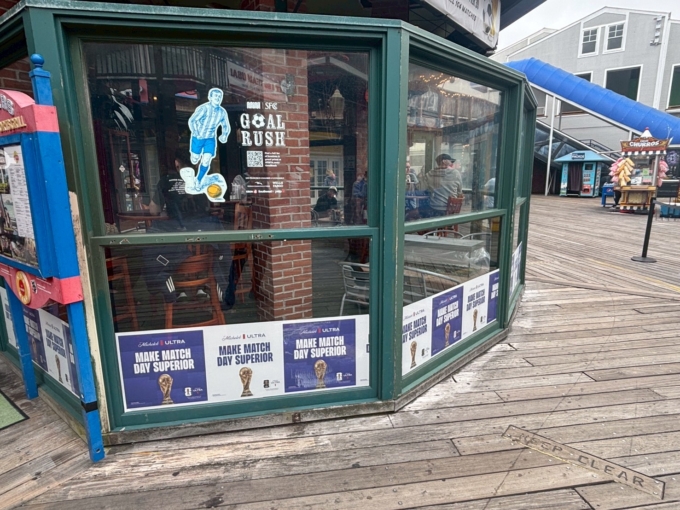
Of course, here in San Francisco, that wave of excitement had firmly reached the city as well. A symbolic scene was witnessed at the renowned major tourist destination “Pier 39.” Open-air restaurants along the waterfront transformed into impromptu sports bars, skillfully leveraging World Cup excitement for “customer attraction.” The combination of the non-everyday space of a quintessential tourist destination and the fervor of sports drew multinational tourists passing by to stop and join in the excitement one after another. This was another brilliant example of space creation through an approach different from Dallas.
While such open excitement filled the city streets, what we strongly realized during our West Coast stadium inspections was the “overwhelming value of staying” provided by sports spaces themselves and the “power of invisible infrastructure” that makes massive events possible. We report on the cutting edge of “experience design” in sports PR.
Watching and Spending Time: Oracle Park as a “Stadium = Stay-Type Entertainment Space”
During this training, there was a particularly symbolic phrase that struck us. It was this statement made by a representative during our inspection of “Oracle Park,” home to MLB’s San Francisco Giants.
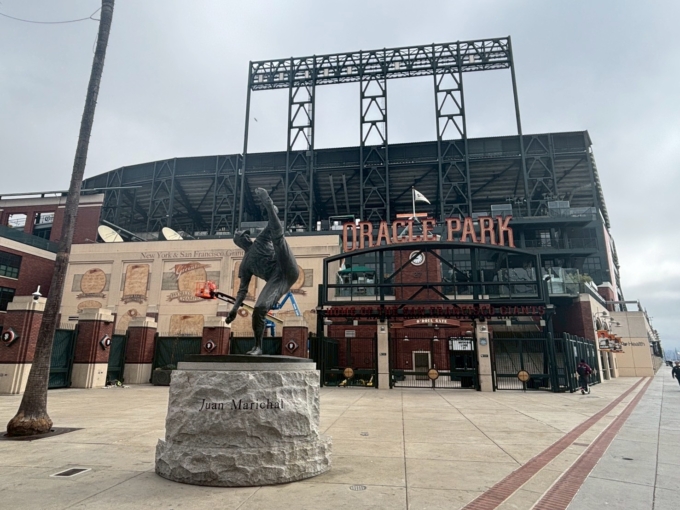
“The ballpark is not a place to come watch a game, but a place to ‘spend the day.'”
This statement brilliantly captured the essence of modern sports viewing. During our special inspection tour from the stadium’s back areas to luxurious suite rooms, what we witnessed was meticulous “time design” and “spatial design” that transcended the framework of baseball as a sport.
What surprised us most was the presence of a VIP-exclusive club called “The Gotham Club” within the ballpark, which included a bowling alley. Guests enjoy bowling before, during breaks, or after the game, savor high-quality meals, and engage in conversation with companions while gazing at the beautiful views of San Francisco Bay. Baseball viewing is positioned as merely one of the day’s enjoyments.
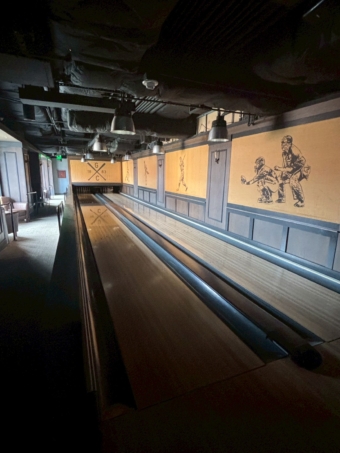
What was further impressive was the special spatial design that brings fans closer to players. For example, the premium seats called “Blue Shield Field Club” offer more than just proximity to the field. Fans with tickets to these seats can access an area just outside the player tunnel directly connected to the players’ clubhouse. If fortunate, they can encounter players heading to the field just before the game and exchange words with them. Not only “watching the game” but also “sharing behind-the-scenes excitement” is brilliantly packaged as part of the ticket’s value.
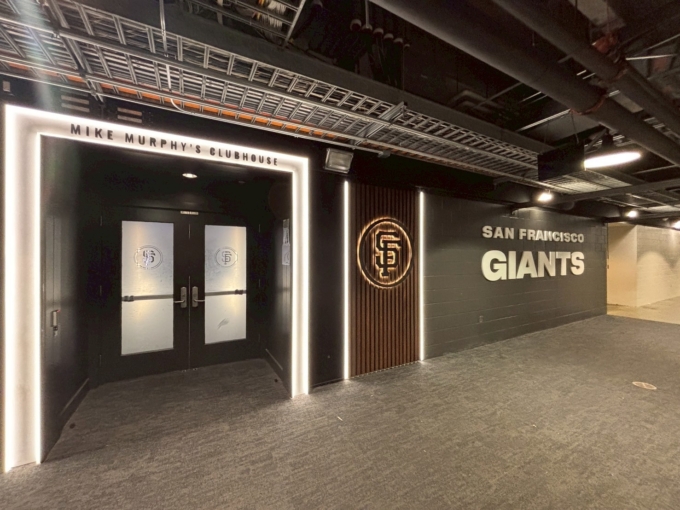
The essence is the same as what we experienced in Dallas with the city-wide public viewing and the experiential soccer entertainment facility “TOCA Social.” The value has completely shifted from “sports = time to watch competition” to “sports = space to spend quality time with others.” From a PR perspective, we were reminded once again that what we should communicate is not just game results or player statistics, but a lifestyle proposal of “what kind of exceptional experience can be had here.”
Watching and Supporting: The Passion and Hospitality Embodied by Levi’s Stadium
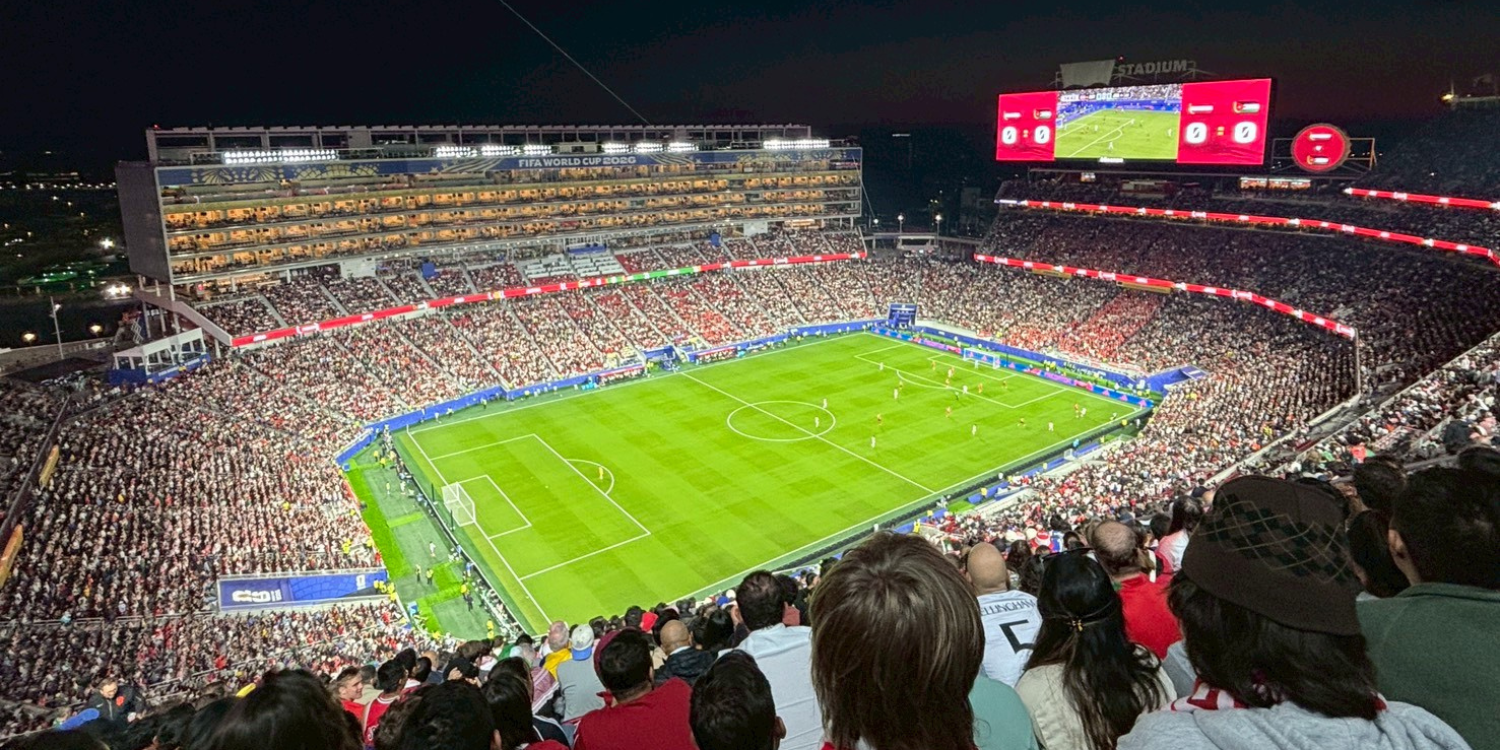
Next, we visited Levi’s Stadium in the heart of Silicon Valley near San Jose. Here we watched the World Cup match “Jordan vs. Austria.”
The energy of supporters from both nations filling the stadium, the resounding chants, and the determination of players carrying their countries on their shoulders. The “intensity of being there in person” unique to mega sporting events was overwhelming. However, as PR professionals, our attention turned to the behind-the-scenes design that “supports” that excitement safely and smoothly.
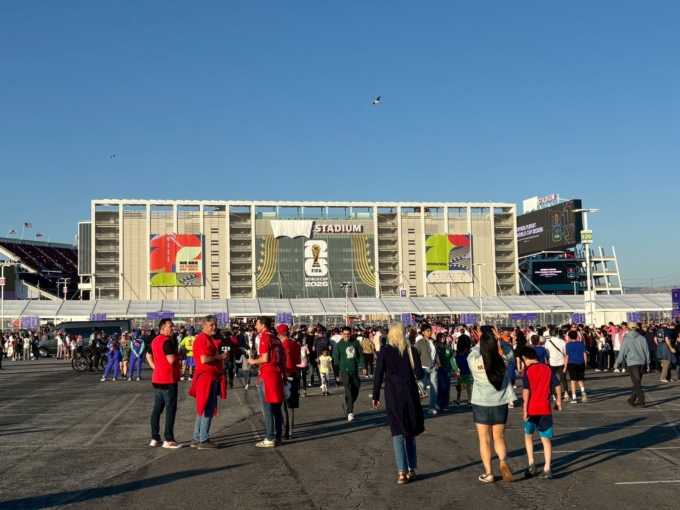
In a massive stadium accommodating nearly 70,000 people, with multinational, multilingual fans intermingling, the flow line design, the smoothness of security checks, and above all, the hospitality of staff and volunteers stood out. While Silicon Valley’s characteristic technology-driven app guidance and pre-order systems were functioning, what ultimately ensured the quality of experience was accurate operations by the “people” on-site.
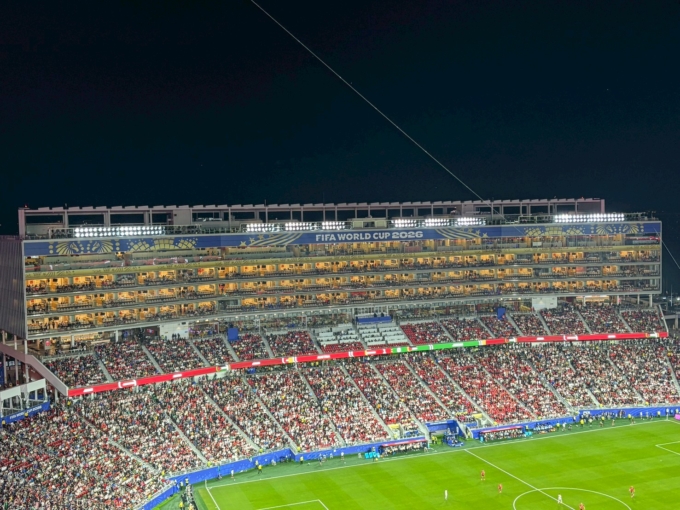
Not only generating excitement, but also the “defensive experience design” that allows people to enjoy that excitement without stress. We felt firsthand that only when this functions is the credibility of the massive brand called “World Cup” maintained.
Summary: The Main Battlefield of Sports PR Shifts to “Time Design”
Throughout this inspection tour of Dallas, San Francisco, and San Jose, what consistently emerged was the fact that “sports is no longer merely competition, but an integrated experience design business.”
The expansion of everyday spaces where entire cities share excitement as seen in Dallas, and the impromptu engagement at tourist destinations like Pier 39. The stay-type entertainment design at Oracle Park as “a place to spend the day” and the flow line design that allows access to behind-the-scenes areas. The operational design at Levi’s Stadium that balances excitement with safety. All of these are created with a clear intention of “what kind of time fans should spend.”
The role of sports PR is also changing. It is no longer limited to simply “widely announcing” the existence of a game, but rather “translating and delivering the value and ways of spending time available at that location as an attractive context.” And “building brand trust” through the sincerity of operations behind events and consideration for safety.
“How to design experiences and how to convey their appeal.” This inspection confirmed our conviction that continuing to confront this question will be the key to maximizing the value of sports PR going forward, and indeed all experiential entertainment.