The Current State of Sports PR and the “Play, Watch, Support” Dynamic: World Cup Inspection Report – Dallas Edition
Hello! We are Kondo and Aoki, in charge of sports projects at SUNNY SIDE UP.
We visited Dallas, Texas, a host city for the World Cup, to not only watch matches but to observe how sports are designed as an experience!
This is the third installment of our comprehensive four-part series. In this report, we will discuss the fundamental elements of sports—”Play, Watch, and Support”—that we witnessed in Dallas, and the current state of sports PR that emerged from those observations.
What we felt firsthand on the ground is the fact that sports are no longer just about “watching a competition,” but have become an “experience business” where space, technology, community, and PR all work in tandem. From a sports PR perspective, we truly felt that the main battlefield has completely shifted from “how to communicate the match (information)” to “how to establish and involve people in the experience.”
Watch: Designing a Gradation of Enthusiasm (From Stadiums to COSM to Everyday Spaces)
The “watching” experience on-site was designed as a precise gradation tailored to the enthusiasm levels of the target audience.
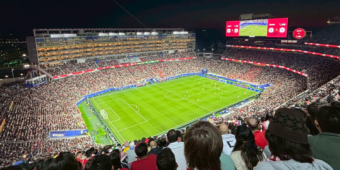
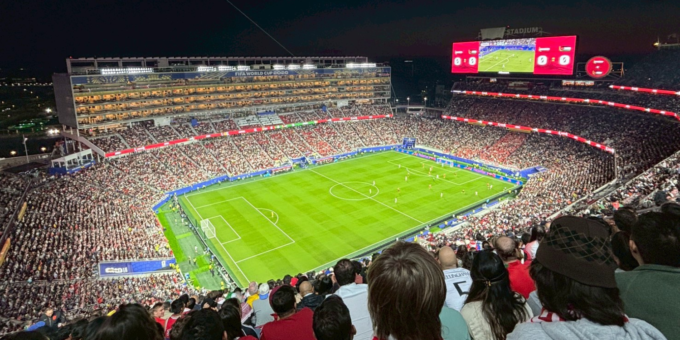
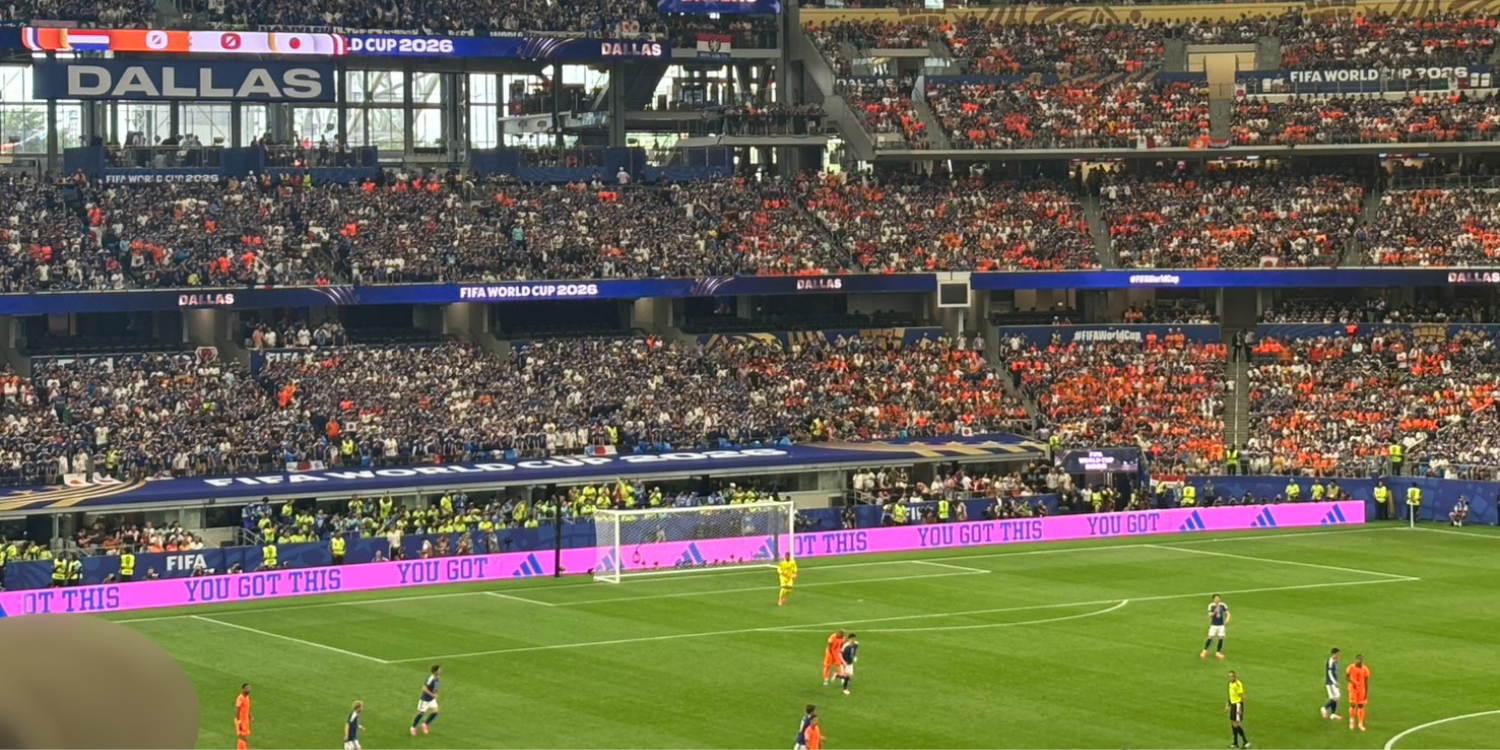
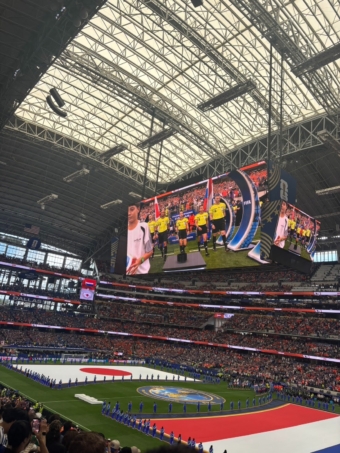
First, we watched a World Cup match at the stadium. The pressure of the sound, the synchronized timing of the crowd standing up, and the chain reaction of cheers transcending nationalities. There was an overwhelming intensity where the act of “being there” itself became the value, beyond any logic.
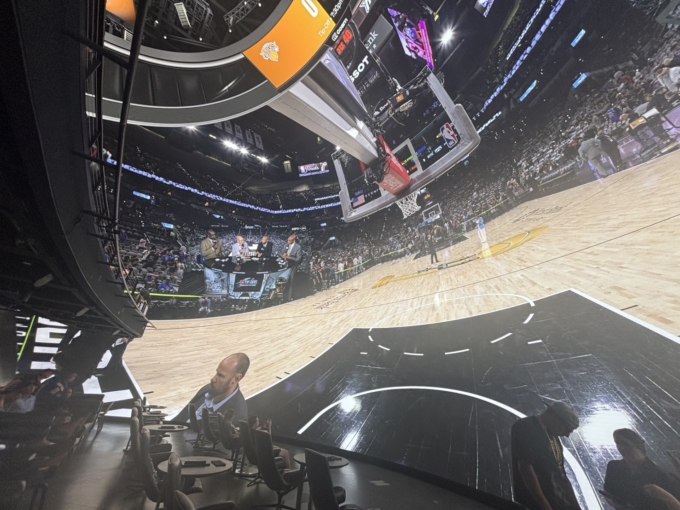
On the other hand, the viewing experience at “COSM,” a new facility in Dallas, was shocking. We watched the NBA Finals there, and thanks to a massive dome-shaped LED screen and spatial audio, the game was reconstructed not as a “video to watch” but as the “space itself” (even reproducing the height of the ceiling!). This was not just an enhanced version of public viewing. It was a groundbreaking space that expanded the very way sports are viewed, designed to share the same level of heat as the stadium while overcoming hurdles such as “not being able to get tickets” or “being far away.”
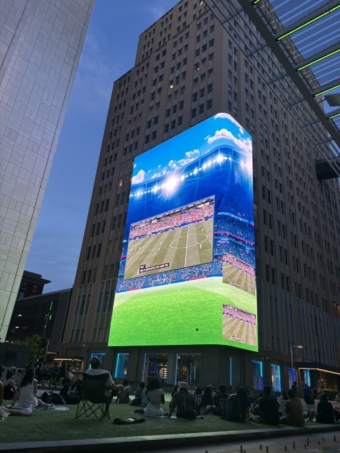
What was even more surprising was the penetration into daily life outside of dedicated facilities. From the plaza of the massive commercial complex “Grandscape” to the high-energy outdoor commercial facility “Truck Yard,” and even the “Toilet Seat Art Museum” tucked away inside it, every corner of the city was transformed into a makeshift stadium. How to casually involve those who cannot watch the game on-site in their daily lives? We realized that this “creating an atmosphere across the entire city” is a crucial point in maximizing the value of the tournament.
Watch x Play: Sublimation into “Family Entertainment” at TOCA Social
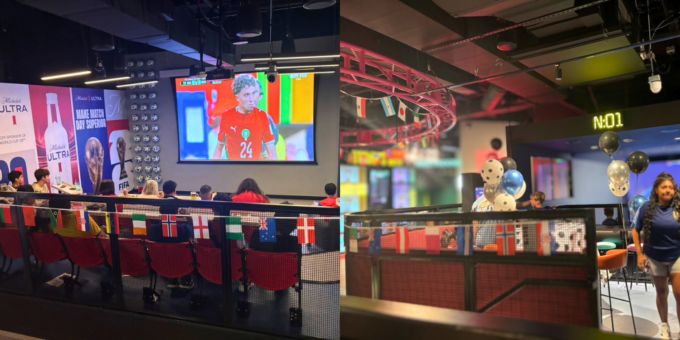
Next, we visited “TOCA Social.” TOCA Social is the world’s first immersive interactive soccer experience facility that integrates cutting-edge technology, entertainment, and food drink. It was an entertainment space where watching and playing were beautifully established within the same area.
What was impressive was the large number of families, with everyone from children to adults enjoying it like a “soccer party.” People were playing soccer games right next to large screens showing World Cup matches, enjoying conversations over delicious food. Here, sports were not divided into “watching” and “playing,” but were designed as “quality time spent together.” From a PR perspective, this is a symbolic example where value is placed on lifestyle appeal—”with whom and how you spend your time”—rather than the appeal of the sport itself.
Support: “Defensive Experience Design” Seen in the Fan Fest Thunderstorm Evacuation
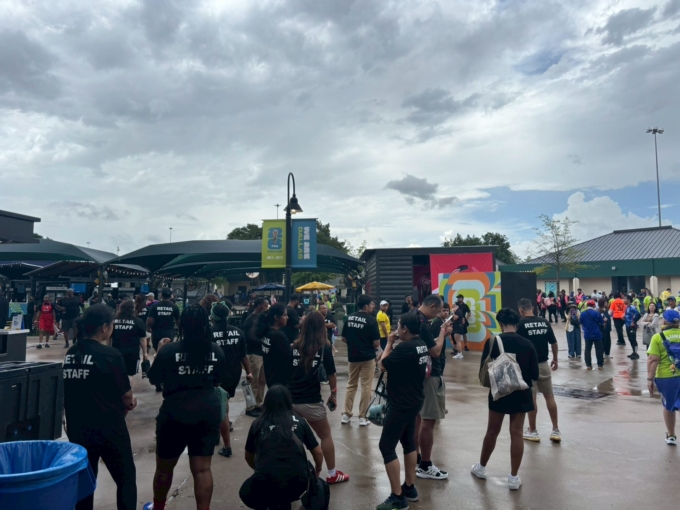
At the site of mega-sports events, volunteers handling a wide range of roles such as guidance, direction, and multilingual support functioned as the “designers who make the experience possible.”
One event that particularly made us think was something that happened at the Dallas Fan Fest. Lightning occurred during the event, and we encountered a situation where everyone had to be temporarily evacuated from the venue. However, there was no major panic or trouble on-site, and once safety was confirmed, the viewing environment was smoothly resumed.
When it comes to sports events, people tend to focus on “how to build excitement (offense),” but we realized that experience design is also being carried out to include “how to protect safety when something happens (defense).” From a PR perspective, there is no doubt that this kind of risk management and the sincerity and reliability of on-site operations are directly linked to the core trust of the brand (Public Relations).
Summary: Sports PR Moves Toward “Experience Translation and Design”
What we saw through this Dallas training was the evolution of sports into an “experience design business where ‘Play, Watch, and Support’ are integrated.”
The enthusiasm at the stadium, the expansion into street spaces like COSM, Grandscape, and Truck Yard, the family entertainment of TOCA Social, and the safe operations supported by volunteers. these are not disjointed phenomena, but are connected by a common design philosophy of “how to create the best experience.”
In future sports PR, the perspective of “how to design the experience and how to deliver that value to the world” will become increasingly important. Going beyond information dissemination to design the context of the experience and generate people’s enthusiasm. This was a very fruitful inspection, filled with countless hints for that goal.