[BG × SUNNY SIDE UP] PR for a New Agricultural and Food Model Connecting Consumers and Producers Through Soil
In recent years, amidst the raging extreme weather, you may have heard news about soaring vegetable prices and poor harvests.
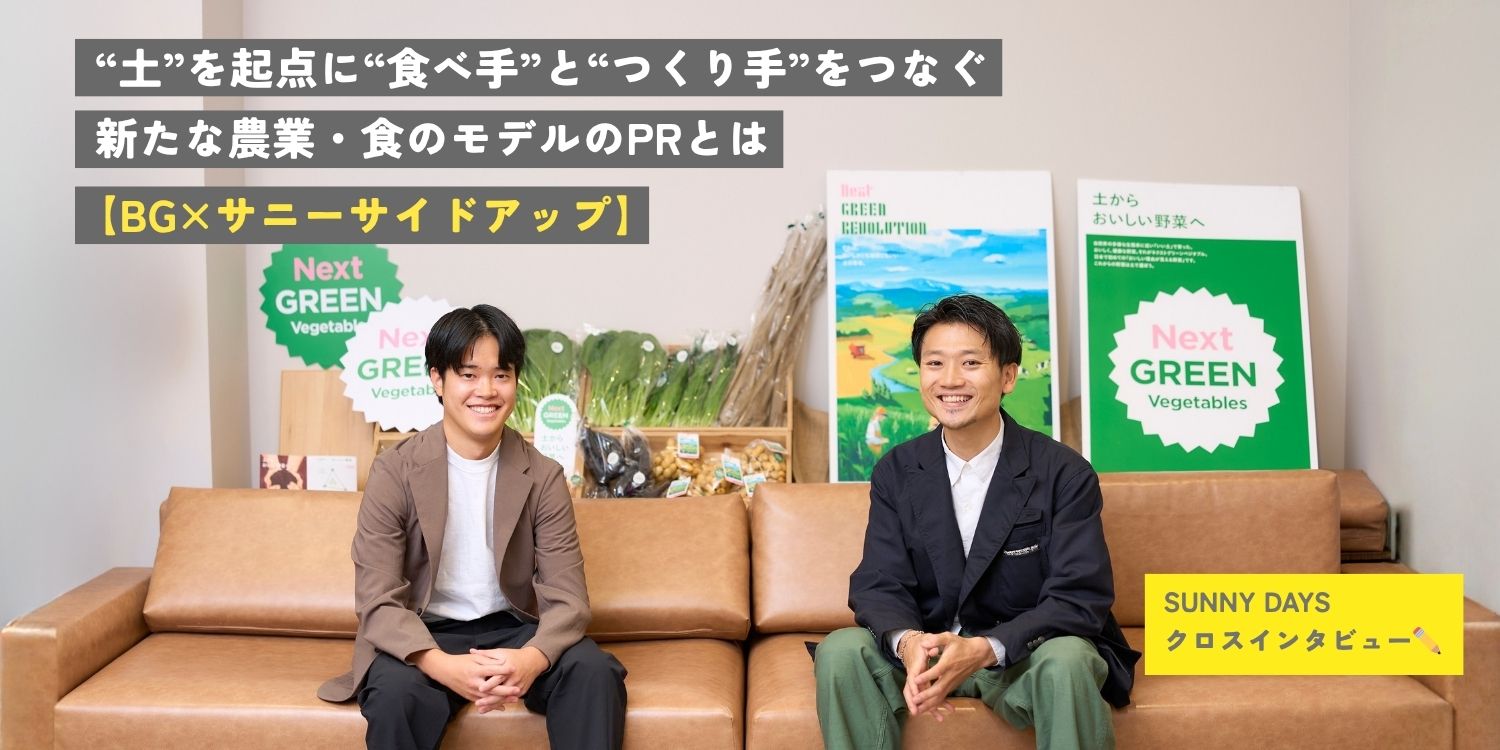
BG Inc. is a next-generation agricultural venture with a mission to “BLACK TO GREEN | Discovering the unseen value of agriculture from an unprecedented perspective and continuing to share it with society.” It was founded in 2021 to build a food system for a new era that connects “producers” and “consumers” starting from the “soil.”
SUNNY SIDE UP resonated with the company’s mission. Since March 2025, prior to the service launch, we have been in charge of PR and communications for the start of their new food and agriculture movement, “Next Green Revolution.”
What was the nature of the collaboration between the two parties? Ryusei Kubota, COO of BG Inc., and Kazuharu Toshinari of SUNNY SIDE UP discussed everything from their initial meeting to the process of co-creation and future prospects.
Sharing the New Value of Agriculture with the Purpose of the Next Green Revolution
――What are your respective roles in this project?
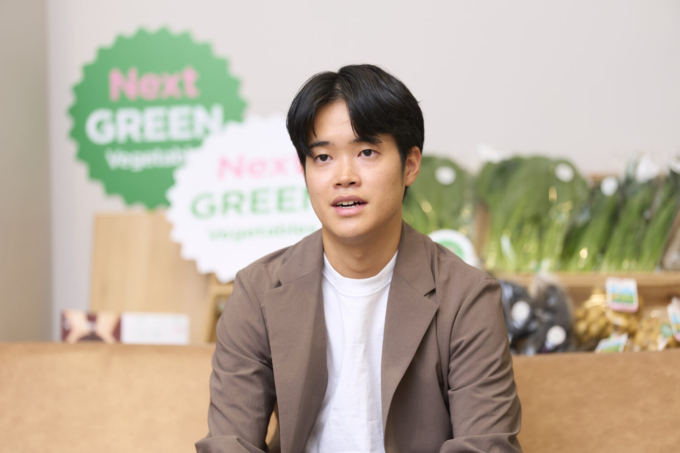
Mr. Kubota: I serve as the COO at BG Inc. In addition to overall management, I work hand-in-hand with SUNNY SIDE UP to execute our PR strategy.
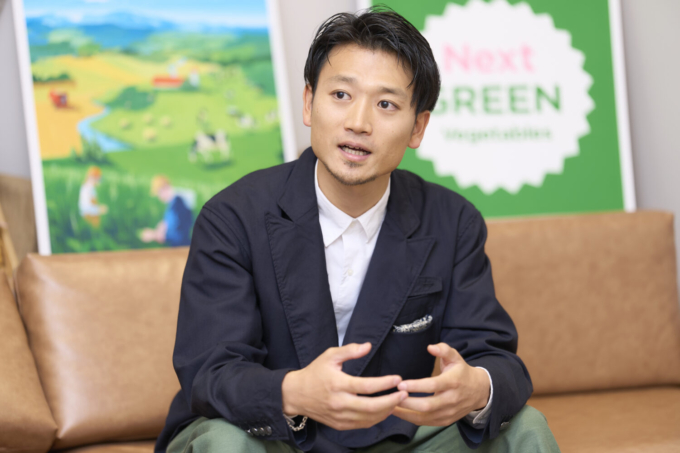
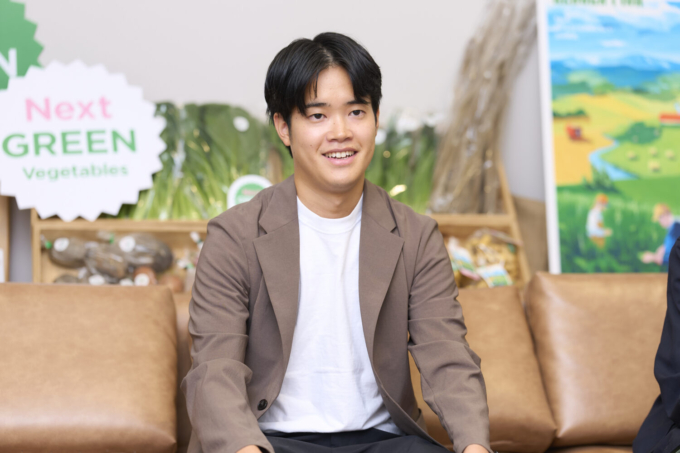
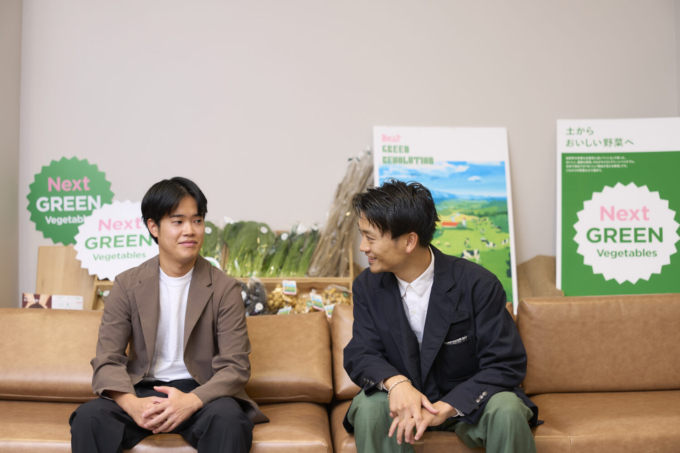
Ryusei Kubota, COO of BG Inc.
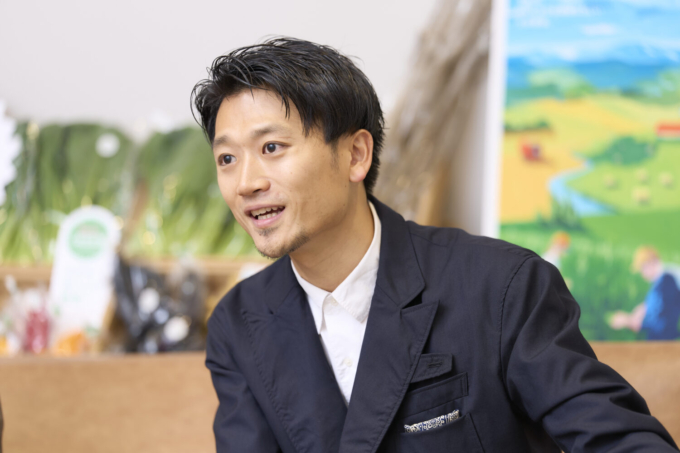
Toshinari: I am the leader of Section 1, Department 1 of the Public Relations Division at SUNNY SIDE UP. I served as the primary point of contact for our collaboration with BG.
――BG is working on a project focused on “soil.” What first made you notice the issues surrounding soil?
Mr. Kubota: To solve the challenges of agricultural and planetary sustainability, I spent years visiting farmers across the country who practice “agriculture without trade-offs”—never compromising on yield, taste, or environmental considerations. Through this, I found that the common key was the presence of “soil.”
Every farmer found that by bringing the soil in their fields closer to the diverse soil ecosystems naturally found in the wild, vegetables grew tastier, healthier, and led to stable harvests. That realization is our starting point.
Toshinari: When I first learned about BG’s initiatives, I felt they were taking a truly unique approach, and I remember being personally very excited. However, because they are approaching things from a completely new perspective, I spent a lot of time thinking about how to gain the empathy and understanding of consumers.
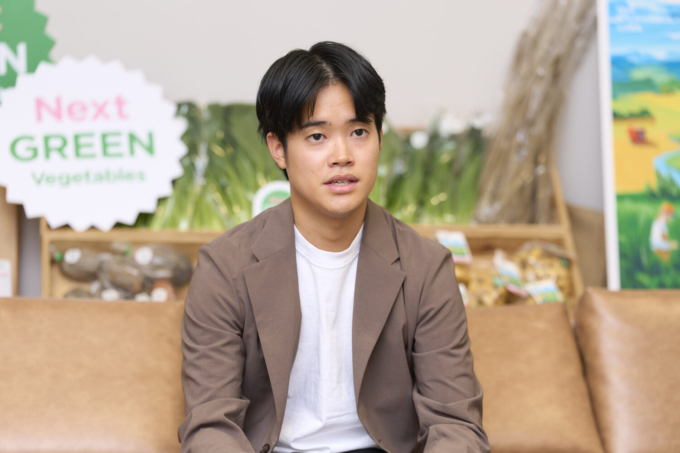
Kazuharu Toshinari, Leader, Department 1, SUNNY SIDE UP
Since I wasn’t an expert in agriculture myself, I gradually deepened my knowledge by actually renting a field and experiencing farming firsthand.
Mr. Kubota: I remember being truly happy with the attitude of the SUNNY SIDE UP team, including Mr. Toshinari, who actually touched the soil and experienced it for themselves.
――What are the soil-related challenges that modern Japan is facing?
Mr. Kubota: We experienced extremely severe heat again this summer, and in the last few years, abnormal climate change has become a familiar reality. This has had a major impact on vegetable growth, leading to issues such as shortages and price hikes. Behind this lies a long-standing dependence on chemical fertilizers and the resulting soil degradation.
Chemical fertilizers essentially provide nutrients directly to the plant, bypassing the soil. By relying excessively on them and neglecting soil cultivation, the microorganisms and organic matter in the soil decrease. The soil becomes sandy and compacted, resulting in shallow roots and soil that cannot absorb water. Consequently, it becomes highly susceptible to the effects of climate change, such as high temperatures and heavy rains.
――With further climate change predicted for the future, it seems we might lose the ability to eat delicious vegetables if we cannot solve these soil issues.
Mr. Kubota: Exactly. Humans have a fundamental desire to eat delicious food. And producing delicious vegetables means creating good soil.
Good soil looks different; its microbial community—the ecosystem—is very diverse, making it an excellent environment for the Earth. In other words, the human desire to eat delicious food and the creation of soil that is good for the planet are aligned in the same direction. However, Japan currently lacks a system to strengthen its soil.
――That is why it is necessary to build a food system that strengthens the soil.
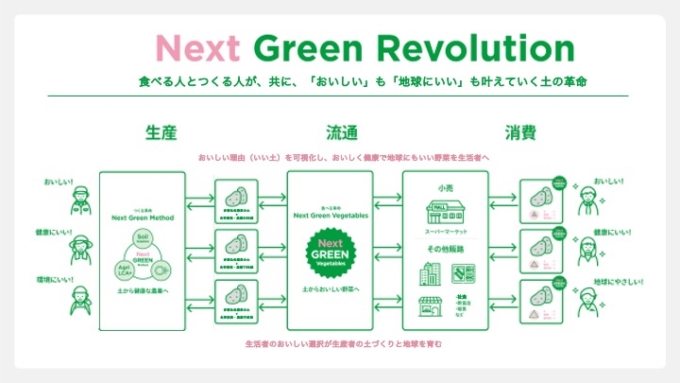
Mr. Kubota: We are aiming for a “Soil Revolution | Next Green Revolution” to create a next-generation food system through two mechanisms: a “Consumer Revolution | Next Green Vegetables” and a “Producer Revolution | Next Green Method.”
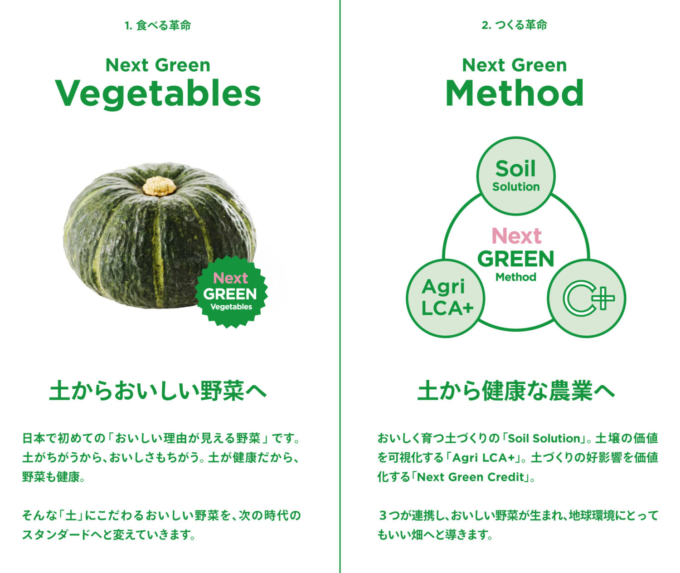
Eating delicious vegetables leads to soil that is good for the planet—that is the inherent value of agriculture. With the support of SUNNY SIDE UP, we released this “Next Green Revolution” project and the framework for its social implementation on July 10. We have begun efforts to connect all stakeholders, including “producers,” “consumers,” and “corporations,” starting from the soil.
――What was the deciding factor in forming a partnership with SUNNY SIDE UP?
Mr. Kubota: One of our business partners introduced SUNNY SIDE UP to us as a brand communication agency that provides PR connecting social issues with brands.
When we actually spoke, I felt that beyond their skills as PR professionals, they strongly resonated with our philosophy of “changing society starting from the soil” and would strive alongside us to realize the “Next Green Revolution.” Of course, their media relations and planning capabilities were also key points, but the biggest factor was that they felt like partners beyond just business—comrades who share a sense of crisis and responsibility toward the future.
BG × SUNNY SIDE UP Initiatives
――As partners, what kind of initiatives did you undertake?
Toshinari: To be honest, I was initially surprised by the idea of “PRing soil.” But as I listened to the details, I deeply resonated with the idea that “eating delicious things ultimately improves the soil and leads to good things for the planet.” From a PR perspective, I felt it was a theme that society could engage with positively.
At the same time, I felt the difficulty of “how to communicate something invisible.” While consumers are interested in the appearance of crops and dishes, their awareness rarely reaches the “soil” that precedes them. I thought the key would be how to make it a “personal matter” for them.
――I understand you actually visited the farms that BG collaborates with.
Toshinari: I visited the fields and spoke with the producers. They all took immense pride in their fields and possessed a vast amount of knowledge. They spoke so passionately about soil, climate, and microorganisms that you could call them “farming enthusiasts.”
The vegetables produced by such people were truly delicious, and it made me strongly feel that I wanted to communicate this initiative to the world.
Mr. Kubota: The team at SUNNY SIDE UP came to the fields, touched the soil, ate the produce, and engaged in discussions based on what they felt. That was very encouraging. Rather than just a PR firm we hired, they felt like partners heading toward the same goal.
――Specifically, what kind of PR activities did you develop?
Toshinari: First, over about three months starting in March, we designed the overall strategy together with BG. The target audience was a three-tier structure: “consumers,” “producers,” and “corporations.”
For corporations in particular, the goal was to create a “story they would want to participate in” as entities that utilize the value of soil for business growth. From May to June, we conducted a media caravan with Mr. Kubota. We prepared press materials and visited various media outlets directly to explain the project.
Mr. Kubota: Until then, we had almost no experience facing the media. Therefore, we were able to consider how to dialogue with the “communicators to society” precisely because we were with the SUNNY SIDE UP team.
We made numerous interim reports, observed reactions, and refined our message. We built it up not as a one-off announcement, but as a process to foster understanding.
Toshinari: In July, we held a launch event that included experiential content such as soil experiments and vegetable tastings. Every piece of content was designed with the intention of inviting people to become partners in the “Next Green Revolution.”
――How was the reaction from the media and the public?
Toshinari: On the day of the launch event, 29 media outlets attended. I was happy to receive comments from participants such as “I’ve never seen a launch event like this” and “Without flattery, this was the best launch event I’ve attended.”
Following that, interview requests poured in, and there were cases where the caravan discussions were turned directly into articles.
Mr. Kubota: One reporter told me, “The perspective of soil is new.” It made me realize that something we take for granted can be a “rediscovery” for society. Precisely because things we once took for granted are no longer so, a sense of novelty resides in the essential. I believe the significance of this activity lies in discovering that and delivering it in a way that benefits society.
――Were there any difficulties or memorable episodes?
Mr. Kubota: Everything was difficult (laughs). The launch event, in particular, was our first big stage. Since it was the first opportunity to present our achievements to the world, I felt that “our company’s character would be decided in this moment.” I practiced every day until the very last minute.
Toshinari: We were in contact so much that I joked even lovers don’t communicate this often (laughs). But I believe it was because we shared that level of passion that we were able to lead the launch event to a successful conclusion. It wasn’t a formal client-agency relationship, but one where we could express our honest opinions to each other.
Mr. Kubota: Exactly. We could exchange opinions naturally, even on things that might normally be difficult to say. I think that was possible because of our closeness as partners.
The Mission Ahead
――Please tell us about your future vision and mission.
Mr. Kubota: We are now entering the phase of implementing the “Next Green Revolution” in society. In the first half of next year, we plan to officially release “Next Green Vegetables,” a vegetable brand where you can understand the reason why they are delicious. We want to establish a new choice in daily life: delicious vegetables that are actually good for the planet.
Our goal is for this to be a definitive choice for everyone by 2030. To that end, we will use the “Next Green Method” to create production areas with strong soil together with producers, and establish a circular system connecting agriculture with other industries, starting with visualization technologies like Agri LCA+.
Toshinari: From a PR perspective, I believe it is important not to just stop at the announcement, but to nurture what has been communicated. I want to work together to build a mechanism where media and consumers can resonate with the project and that resonance can spread.
――What kind of technology is Agri LCA+?
Mr. Kubota: Agri LCA+ is Japan’s first system for visualizing the value of soil. It incorporates an environmental impact assessment scheme developed in collaboration with the National Institute of Advanced Industrial Science and Technology (AIST). By comprehensively evaluating the entire agricultural process, it becomes possible to visualize the value of soil from various angles according to the purpose, such as soil that contributes to the taste and health of vegetables or soil with a low environmental impact. By visualizing the inherent value of agriculture in a usable form, I want to realize a society from the soil up where everyone can participate in creating the future of agriculture, food, and the planet through what they can do.
――Looking back on your efforts so far, what are your thoughts?
Toshinari: Through this project, I felt once again that PR is about creating a space for co-creation. By sharing time to foster understanding, both the media and consumers become partners. I feel that we were able to run at full speed precisely because of the high level of passion from the BG team.
Mr. Kubota: “Consumers,” “producers,” and “communicators” are all part of this “Next Green Revolution.” Eating delicious vegetables nurtures the soil and nurtures the Earth. Making such a “delicious cycle” a natural part of society is the Next Green Revolution that we at BG aim for, and we will continue to work on it with all our might.
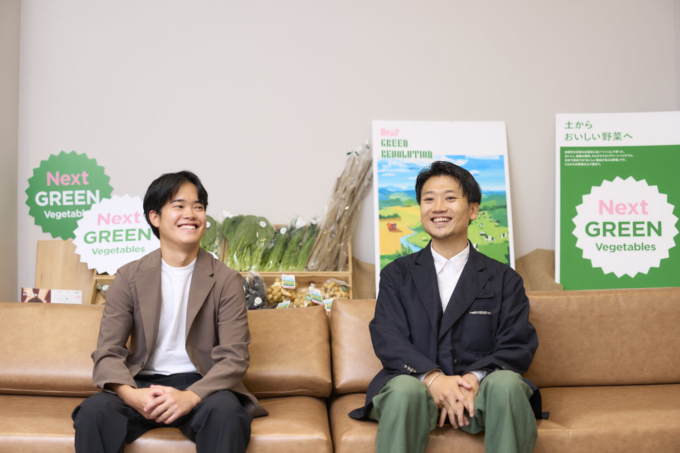
BG Inc. will continue to create a delicious cycle in everyone’s various daily lives. The first step is “Next Green Vegetables,” a vegetable brand where you can understand the reason why they are delicious. When you see this logo at supermarkets or elsewhere, please take a moment to check it out.
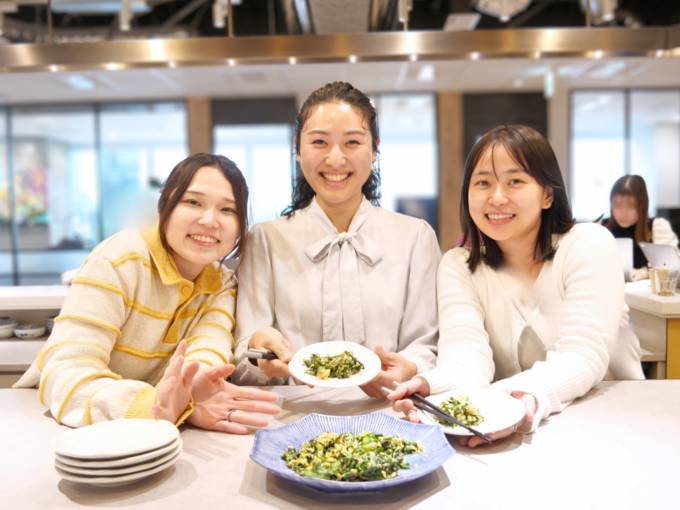
Later, with the cooperation of Smile Keeper, we made an egg scramble using fresh chive and komatsuna from “Next Green Vegetables” 🌱. It was very well received, with comments like “The freshness and aroma are completely different!”
SUNNY SIDE UP handles PR and communications for a wide variety of products and services.
What can be achieved through the power of communication? We welcome consultations starting from such questions. Please feel free to contact us using the “CONTACT” button below.