Professor Side’s PR Course (Newspapers 3)
In this section, centered on Professor Side from SUNNY SIDE UP, various people share their perspectives on PR.
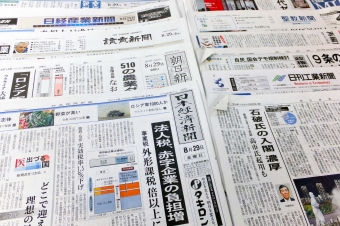
Today, we will explain “newspapers,” something anyone involved in PR absolutely knows (and really should know).
(Local and regional (block) newspapers edition)
Japanese newspapers are broadly divided into general newspapers, which cover a wide range of news, and specialized newspapers (trade papers), which focus on specific industries or themes. Among general newspapers, those that cover the entire country are called national newspapers, while those that cover specific regions are called local newspapers. Within local newspapers, those with larger circulation that cover a broader area—such as the Hokkaido Shimbun (covering all of Hokkaido), the Chunichi Shimbun (covering the Chubu region), and the Nishi-Nippon Shimbun (covering Kyushu)—are referred to as regional (block) newspapers.
(From the Public Relations & Mass Media Handbook: PR Pocketbook 2014/2013, Japan Public Relations Association)
In Japan, there are about 60 major local and regional (block) newspapers.
In some areas, many newspapers have higher circulation than the general national papers (Asahi, Yomiuri, Mainichi, Sankei). Local newspapers (including regional/block papers) have robust local sections, with more extensive coverage of regional events and local economic and political news than the local pages of national papers. They also carry many obituaries, including the dates, times, and venues of wakes and funerals for people who may have supported you in the past. In other words, they are newspapers closely rooted in the community. Their advertisements are also locally oriented, with used-car sales, cram schools, nursing homes, pachinko, and similar businesses being common.
Newspaper companies that publish local newspapers maintain not only a headquarters in the prefectural capital but also many bureaus and branch offices within the prefecture, assigning reporters and conducting detailed reporting activities. By contrast, when it comes to reporting in Tokyo, many newspaper companies—except for some local and regional (block) papers—have only advertising staff in Tokyo, which suggests that they focus their efforts on community-based reporting.
National newspapers have bases throughout Japan and many overseas bureaus, so they carry not only nationwide news but also international news. However, even newspapers published by local newspaper companies that have only limited bases outside their prefecture or region also carry domestic and international news.
Next time, we will discuss news agencies, which are key to how this system works.
From PR
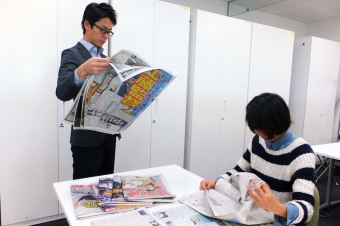
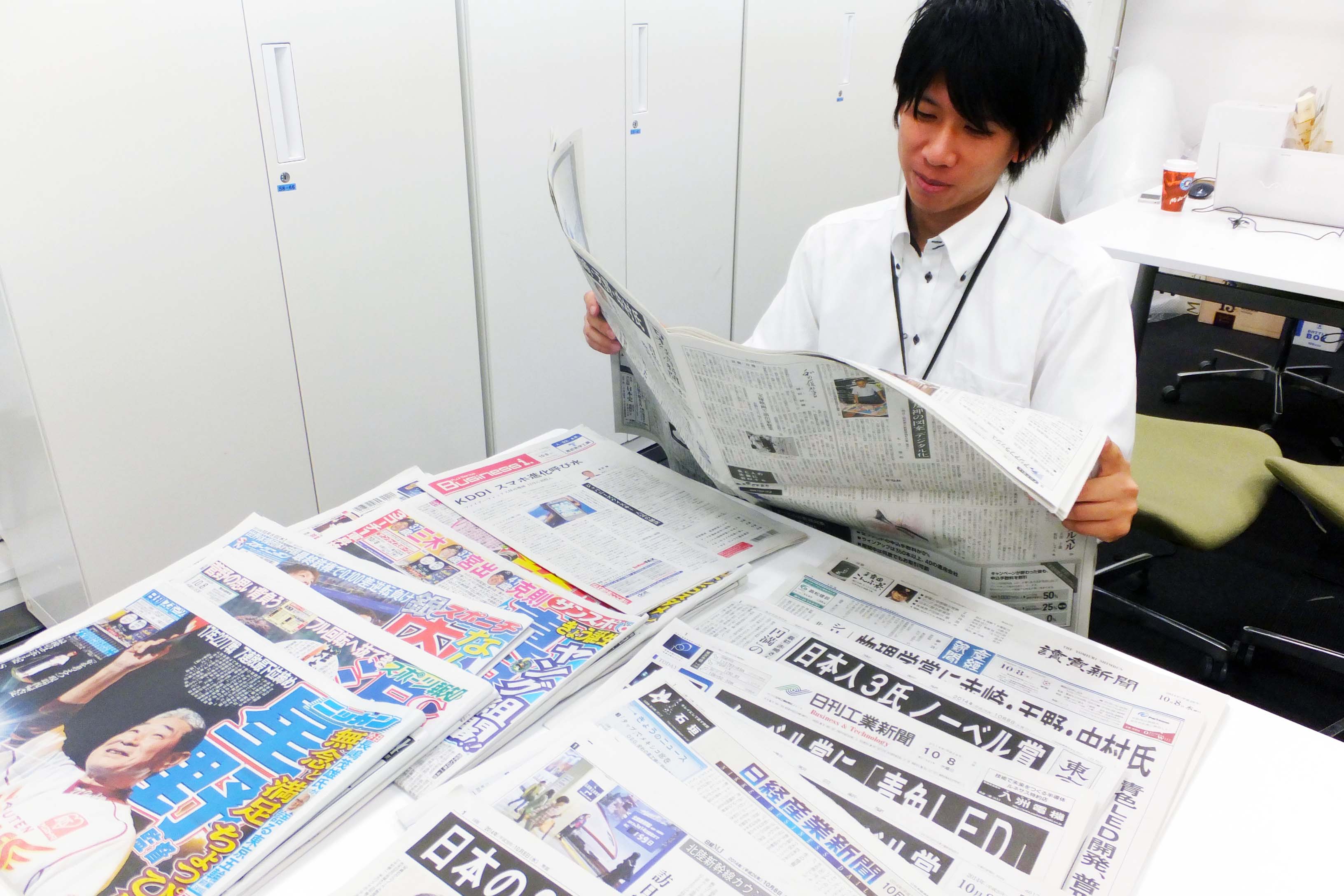
These days, it is said that more people do not read newspapers, and I also feel that more people check the news online. However, the other day, communication director Chie Morimoto spoke about newspapers, saying:
“When you feel the texture of a ‘newspaper’ in the palm of your hand and turn the pages, it feels like the value of the information you gain changes. There is the joy of encountering information you did not expect.”
That is what she said.
Morimoto also writes her illustrated diary in the newspaper (over the text). In addition to the kind of hard information you might imagine, newspapers often feature interviews with authors and manga artists, as well as information on trending products and shops, so I think the content can be interesting even for young readers.
That said, when I was a student, I was told I should read The Nikkei for job hunting, and I read it out of a sense of obligation, but at the time I did not find it interesting or enjoyable at all.
If you read with a more open mind, you may come to understand the enjoyment of newspapers.