Truly Mystical! A Report on Three Hidden Charms of the Aokigahara Jukai Forest
Hello! I am Kitai from SUNNY SIDE UP.
Do you ever find yourself wanting to be healed by nature? I believe everyone has moments when the fatigue of busy daily life builds up, and they suddenly feel a desire to find solace in the natural world.
Recently, I had the opportunity to visit the Aokigahara Jukai Forest in Yamanashi Prefecture for a particular project.
The Aokigahara Jukai is a relatively young primeval forest formed approximately 1,200 years ago at the foot of Mount Fuji. This vast forest, established upon lava flows from Mount Fuji’s eruptions, is lush with moss, ferns, and trees. The breath of new life and the light illuminating it create a mystical, extraordinary atmosphere, and it has been designated as a Natural Monument.
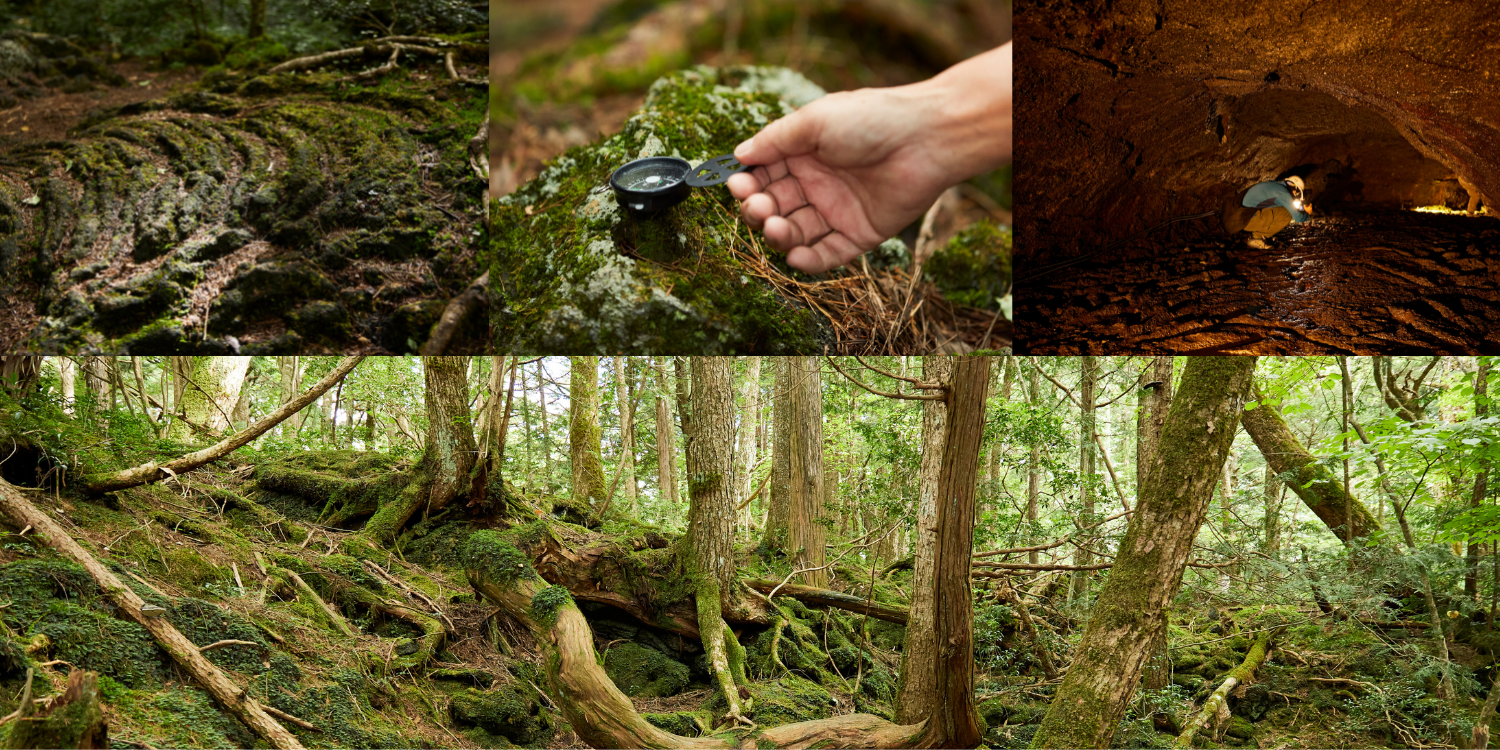
Hearing the name Aokigahara Jukai, I felt a slight sense of unease about what kind of place it might be. However, once I stepped inside… what a surprise! I found a beautiful and precious expanse of nature. The unique scenery within the forest—trees with strangely curved trunks, roots growing over the roots of other trees, and hollows scattered throughout the ground—all represent a one-of-a-kind charm that can only be experienced here.
Today, I would like to introduce three charms of the mystical Aokigahara Jukai.
1. Was Aokigahara Jukai Created by a Volcano?
The Aokigahara Jukai is a primeval forest formed on top of massive lava flows from Mount Fuji. Consequently, traces of this origin can be found everywhere.
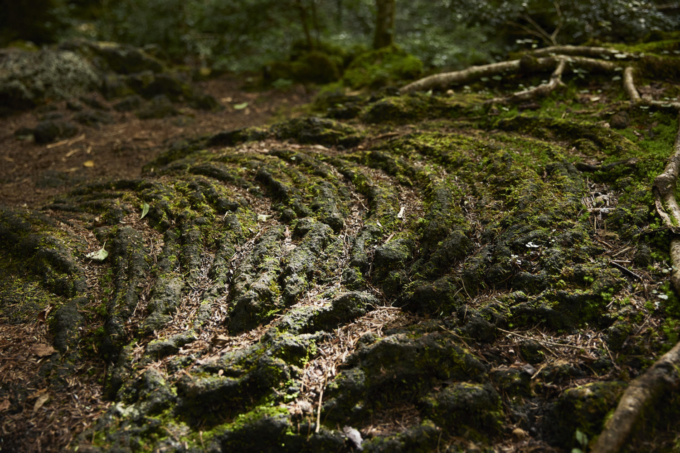
As seen here, one can discern the direction in which the lava flowed.
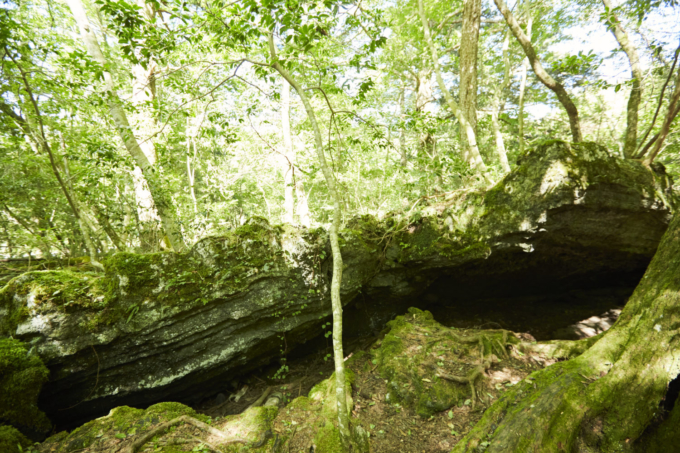
Lava caves, which are hollows formed during the cooling process of the lava flow.
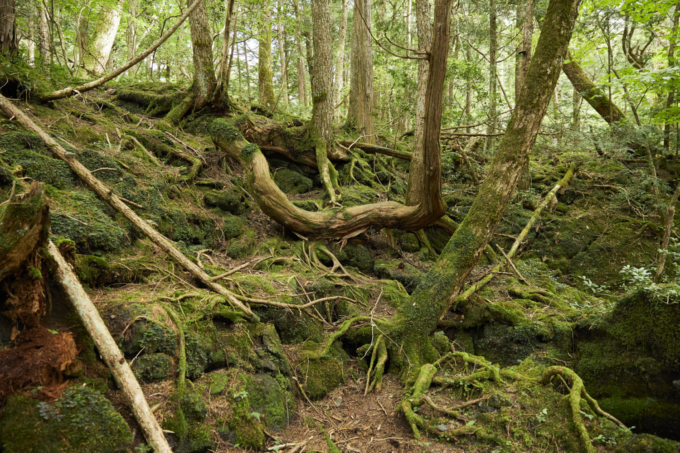
Furthermore, because the lava prevents roots from growing deep into the earth, the trees in the forest spread their roots horizontally. The way each tree roots itself varies, and I could truly feel the vitality of the plants.
2. There Is a Reason Why Compasses Go Haywire in the Forest!?
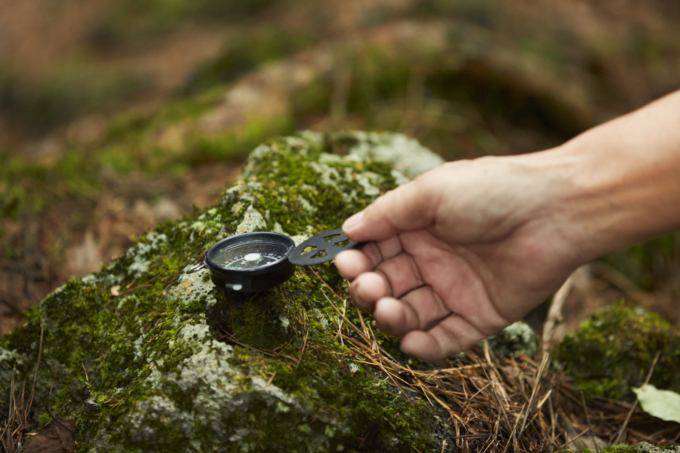
Have you ever heard the rumor that compasses become useless in the forest?
In fact, some of the lava that forms the forest is strongly magnetic. If a compass is used directly above such rocks, it may fail to indicate the correct direction.
When we actually tested this with a compass, the needle spun aimlessly near the rocks. However, when lifted to a certain height or moved to a different spot, it pointed in the correct direction.
3. There Are Also Caves Created by Lava Around the Forest
The Aokigahara Jukai area is home to several caves, including the Narusawa Ice Cave, the Fugaku Wind Cave, and the Saiko Bat Cave. Most of these are lava tubes formed by Mount Fuji’s eruptions. This time, I visited the Saiko Bat Cave, which is one of the largest lava tubes at the foot of Mount Fuji, with a total length of over 350 meters.

After putting on a helmet, I entered the cave. Once inside, I found many areas where the ceiling was so low that I had to crouch to avoid hitting my head.
The Bat Cave is cool in the summer and warm in the winter, so bats use it for hibernation. However, the cave is closed to the public during the winter, so it seems one cannot actually see the bats.
Additionally, I stopped by the Ryugu Sea Cave during my walk through the forest. You can descend slightly toward the cave, and the view looking up from the bottom was incredibly mystical—it became my personal favorite spot.
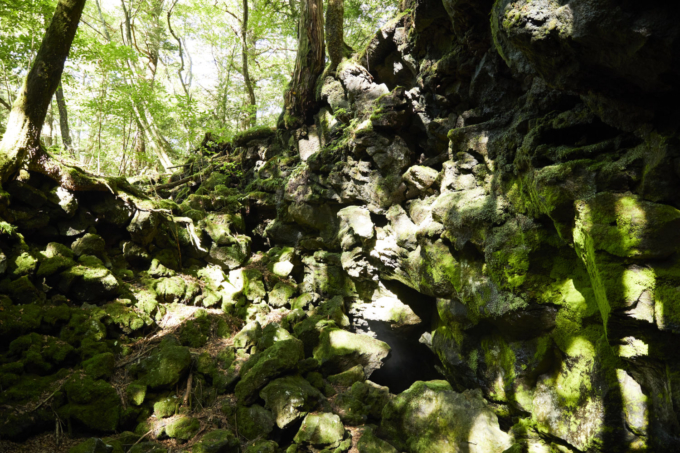
(The soft sunlight that heals the fatigue of the city is hard to capture fully in a photograph…)
The Aokigahara Jukai is a mystical place created by the blessings of Mount Fuji and rich nature; it was far removed, in a positive way, from the dark image often portrayed by the public.
There may be other places like the Aokigahara Jukai where rumors and urban legends take on a life of their own and dictate people’s impressions.
While it may be difficult to find the courage to “just go and see” everywhere, if you actually visit and experience a place with your five senses, you might find wonderful encounters you never expected.