A fun commotion born from a “borderless” relationship that transcends corporate boundaries. What went on behind the scenes of the PR for “MORI Building DIGITAL ART MUSEUM: EPSON teamLab Borderless”? [Part 1]
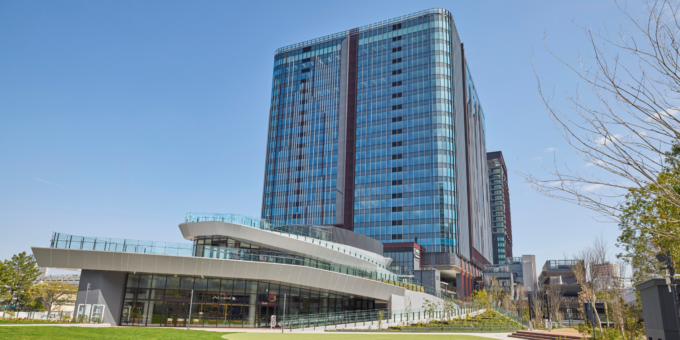
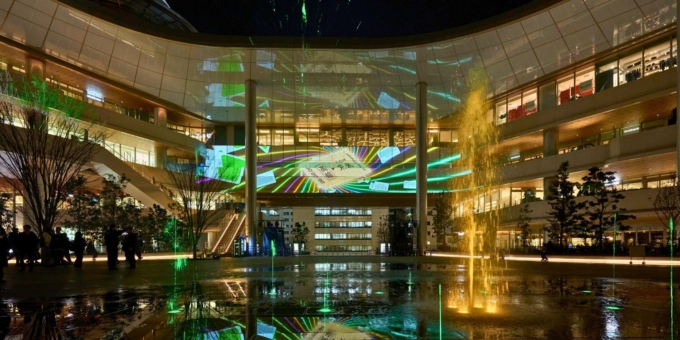
Even amid the COVID-19 pandemic, one museum has been drawing attention as a spot where visitors can enjoy themselves safely thanks to thorough infection-prevention measures. It is “MORI Building DIGITAL ART MUSEUM: EPSON teamLab Borderless” (hereafter, teamLab Borderless), located in Odaiba, Tokyo.
In the first year after opening in 2018, teamLab Borderless attracted approximately 2.3 million visitors annually from more than 160 countries and regions. Beyond the museum itself, it has also contributed to enhancing the appeal of Tokyo as a city, and continues to captivate people as a place with a unique “magnetic pull” that draws attention worldwide.
This year, the PR activities carried out at the time of the museum’s opening were once again recognized in the global PR and advertising industry, earning awards at numerous international competitions, including the highest honor of the International Public Relations Association’s International PR Awards, the “Golden World Awards,” as well as the Lisbon PR Awards.
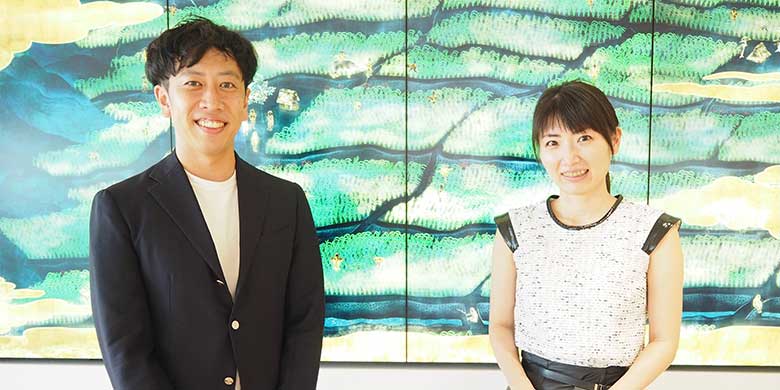
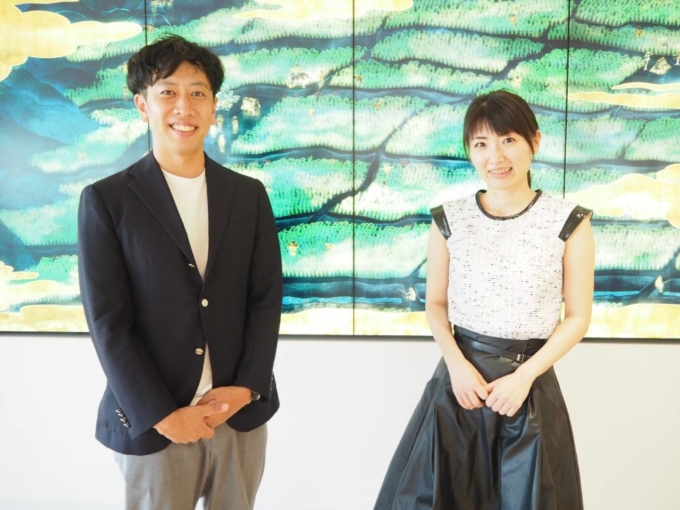
How did this museum come to attract worldwide attention? We spoke with two key figures behind the project’s PR and branding—Kazuna Takahashi of MORI Building Co., Ltd., Town Management Division, New Domain Planning Department, and Takayuki Hirukawa (Leader) of SUNNY SIDE UP Inc., Public Relations Division, Department 1—about what happened behind the scenes that created this “fun commotion.”
■ An unprecedented major project begins: a “museum without a map”
©teamLab
—You have been receiving awards overseas one after another. Could you please tell us again about the museum’s overview?
Ms. Takahashi (honorifics omitted below):
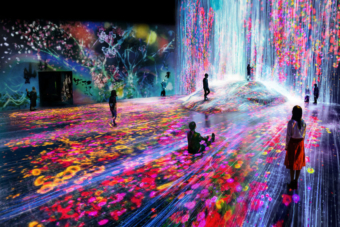
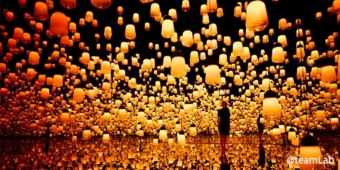
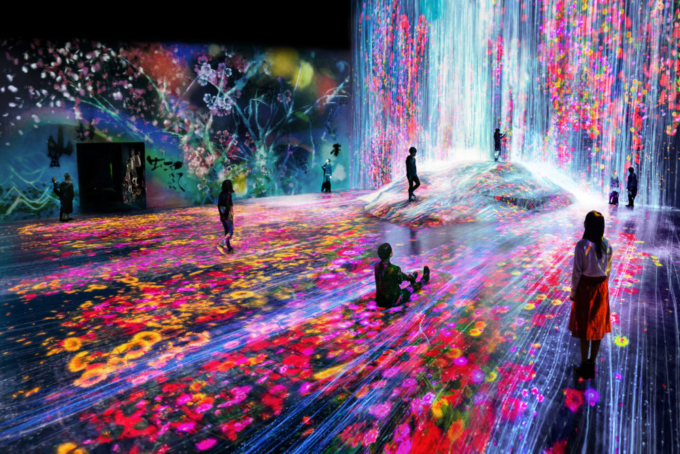
teamLab Borderless is a “museum without a map,” operated jointly by MORI Building Co., Ltd. and the art collective teamLab, featuring a borderless collection of artworks.
I have been in charge of this museum since its launch phase in 2018. I joined the team in a role overseeing the project as a whole, while also supporting the PR and promotion staff.
This museum is teamLab’s first permanent exhibition in Tokyo, and at approximately 10,000 m², it is among the largest of teamLab’s projects. It was also the first time that teamLab and MORI Building took the lead and handled everything consistently from planning through operations. It was truly an “unprecedented project,” so we did struggle with how to execute PR and promotion.
—Did SUNNY SIDE UP begin supporting the PR side around the time before the opening in June 2018?
Mr. Hirukawa:
Yes. We began our work before the opening in June 2018 and handled PR activities for about the first year after launch. Under the “borderless” concept, we proactively shared information not only in Japan but also with the rapidly growing inbound audience at the time, focusing on the seasonally changing works and the unique “active, body-based experience” available only here. We also worked to build the brand image of a “museum that attracts attention overseas.”
Ms. Takahashi:
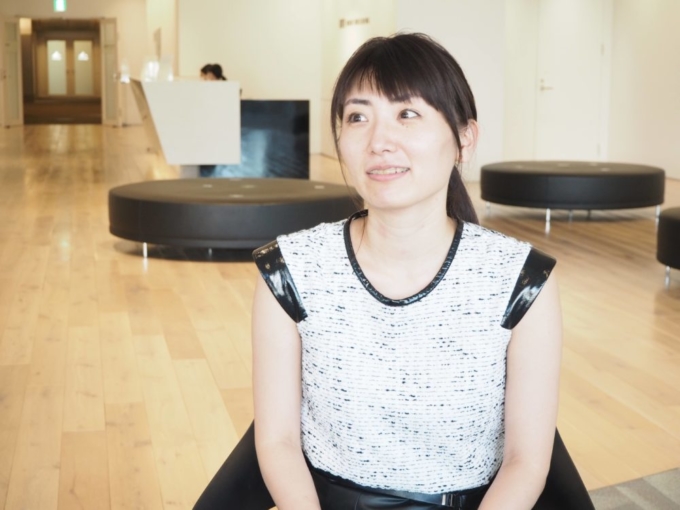
Originally, I come from an engineering background in architecture and was in a department involved with office interiors. I transferred departments before this museum opened, and since I knew very little about PR, I developed the strategy while learning a great deal from everyone at SUNNY SIDE UP.
■ Because the artworks kept changing until the last minute, communicating information was difficult
—With a project of this scale, I imagine there were many challenges on the PR side as well.
Mr. Hirukawa:
In preparation for the June 2018 opening, the teamLab team continued refining the quality of the works right up to the last possible moment. The first media preview was held two months before opening.
Ms. Takahashi:
The artists deliberated intensely until the very end, and the final output image of the artworks kept changing moment by moment, which made things challenging both physically and operationally. We couldn’t see the works until just before opening—there were only walls—so we were nervous about what kind of facility it would become (laughs).
—It must have been difficult to develop PR and communication strategies and move the project forward without being able to see the artworks.
Mr. Hirukawa:
The teamLab team’s passion and commitment to their works were truly remarkable. Because their feelings toward the art were so strong, they were making various adjustments right up until just before opening.
With typical artworks, we would want to share information with the media about two months in advance. However, because the content and release dates were not finalized until the last minute, it was difficult to communicate information beforehand. Newspapers and other outlets that require detailed information to run a story were especially challenging, but we made various efforts to ensure they could still feature it. We also conveyed the artists’ strong passion to the media.
By communicating that passion to the media, we successfully raised expectations. As a result, more than 500 members of the media attended the preview held just before the opening.
■ Is the KPI a destination that represents Tokyo!? PR and communication
—MORI Building and teamLab. It seems you had difficulty aligning the tone and pace of communications by combining the strengths of two companies from different industries.
Ms. Takahashi:
The most difficult part was that two companies that seemed unlikely to intersect—MORI Building (real estate) and teamLab (artists)—had to exchange opinions as equals and make decisions together. Completely different ideas would come to the PR table. Especially right before opening, it was challenging to align on how to ultimately communicate those ideas.
—That makes the role of a PR communicator—acting as a “translator” of the project and communicating it to the public—especially important. Through the actual PR activities, were there any key points that led to strong results?
Mr. Hirukawa:
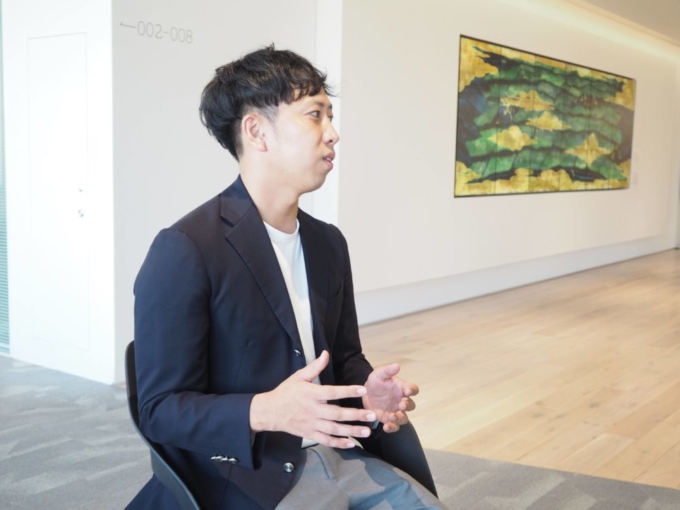
If we narrowed the target audience, we would never reach the ambitious goal of becoming a destination that represents Tokyo. For this museum, we needed to design PR so that information would reach people of all generations.
With that in mind, we created various angles for introducing the museum and tailored them to each outlet in our media approach. With works like teamLab’s that make you want to take photos, one might normally approach it using the then-trending angle of “Instagrammable.” However, we did not want it to become a passing trend, so we deliberately avoided such wording and instead communicated the essential elements and concepts of the works from multiple perspectives.
We also continued sharing information after opening. We regularly released updates such as “about 700 people lined up on opening day” and “tickets sold out for three consecutive months,” consistently communicating the facility’s status.
As a result, the museum was featured by many media outlets and achieved approximately 2.3 million visitors in its first year. This is a figure comparable to the world’s most renowned museums.
Ms. Takahashi:
Everyone at SUNNY SIDE UP provided us with full support to help us achieve our extremely ambitious goals.
I believe that because we carefully communicated the facility’s concept, it drew attention not only from people in the art world but also from many different industries. I feel that the figure of 2.3 million visitors was a “miracle” in which all the various elements connected.
Mr. Hirukawa:
I feel that if even one person from MORI Building or teamLab had been missing, we would not have been able to achieve this visitor record.
—Rather than one company making decisions and executing on its own, MORI Building, teamLab, and SUNNY SIDE UP each contributed ideas and the team moved in the same direction. That is what led to these extraordinary numbers.