A report on attending AKOMEYA TOKYO’s rice tasting event: How a complete novice was astonished by the discernible differences in rice.
Hello! I am Mizusaki from the SUNNY DAYS editorial department.
As a “newly harvested” member appointed to the editorial team this year, Editor-in-Chief K told me, “You might be able to attend some interesting tasting events!” Having been given this privilege, I was vigilantly looking for the perfect opportunity to participate.
The event I attended this time was the AKOMEYA TOKYO “Kiki-no-Kai” (Rice Tasting Workshop)!
SUNNY SIDE UP has been working with AKOMEYA TOKYO for about three years on PR and communications. Since AKOMEYA TOKYO handles a wide range of products—from rice carefully selected from across Japan and food items like rice accompaniments to tableware and cooking utensils—our PR efforts involve developing information based on current events and seasonality. We create press releases and newsletters to deliver this information to the media.
The reason I was so interested is that I knew the AKOMEYA team holds a monthly event for the media called the “Media Rice Accompaniment Gathering.” It is an early morning event where media representatives can enjoy AKOMEYA rice and accompaniments for breakfast while learning about the producers’ dedication and the stories behind the products.
This time, however, the focus was not on the “rice accompaniments,” but on the rice itself: a workshop called “Kiki-no-Kai.”
I, Mizusaki, a member of the editorial team with a “happy palate” that finds everything delicious, will now share my report on participating in this rice tasting event!
In conclusion, I was so clearly able to distinguish the differences in rice that I suffered the delusion that I could become an AKOMEYA Rice Concierge (*) or even appear on one of those TV shows where experts judge food. (Slight exaggeration.)
*AKOMEYA Rice Concierge: Rice professionals found at AKOMEYA stores. They are experts in rice varieties, storage methods, and cooking techniques.
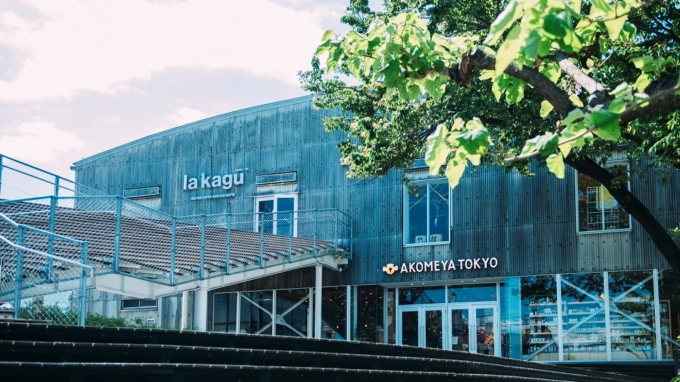
I headed to “AKOMEYA TOKYO in la kagū,” located about a 30-second walk from Kagurazaka Station.
The store sells rice, food items, and miscellaneous goods. Its most significant feature is the attached “AKOMEYA Shokudo,” where you can enjoy set menus and white rice cooked in a traditional hagama (large iron pot).
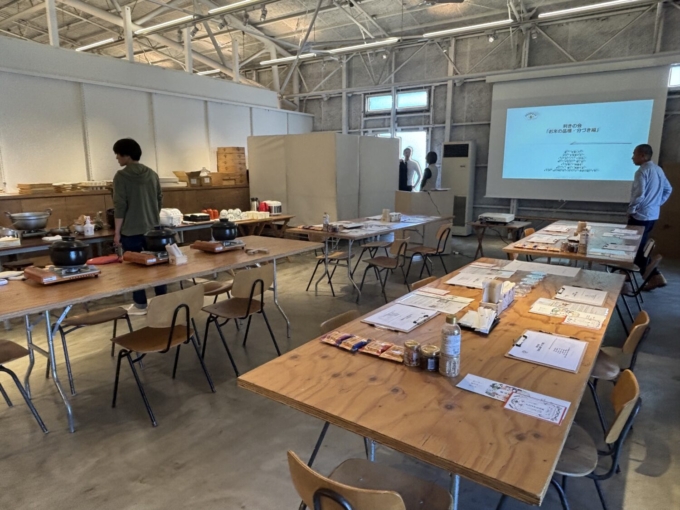
This rice workshop for the media was held on the second floor of “AKOMEYA TOKYO in la kagū.” Events for the general public are also frequently held here. (I arrived early and full of enthusiasm, so no one else was there yet.)
Once the media representatives had gathered, the “Kiki-no-Kai” began.
During this session, an “AKOMEYA Rice Concierge” taught us various things about rice. In regular stores, staff members wearing a gold rice badge are certified AKOMEYA Rice Concierges. They can provide detailed advice on how to eat specific types of rice and which foods pair best with them.
In this report, I will focus specifically on the “Selection” aspect of enjoying delicious rice.
Personally, I found the most important tool for “selection” to be the “AKOMEYA Rice Flavor Matrix.”
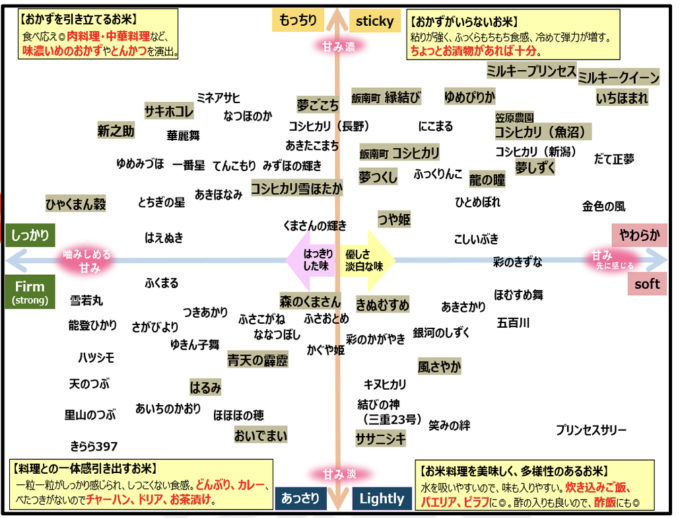
To be honest, what impressed me most about this workshop was the sheer accuracy of this matrix. If you don’t have time to read the rest of this article, you can stop here. If you buy rice based on this matrix, your life with rice will be much richer.
For those who still have time, I will report on the differences in rice that I, a novice, nervously experienced during the tasting, based on the matrix.
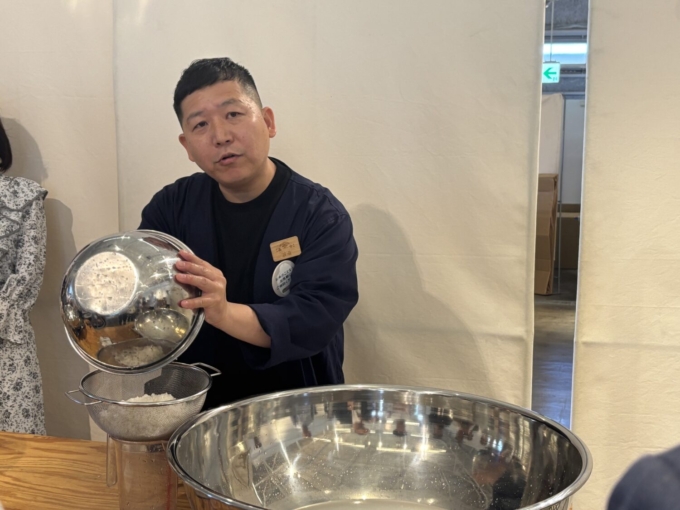
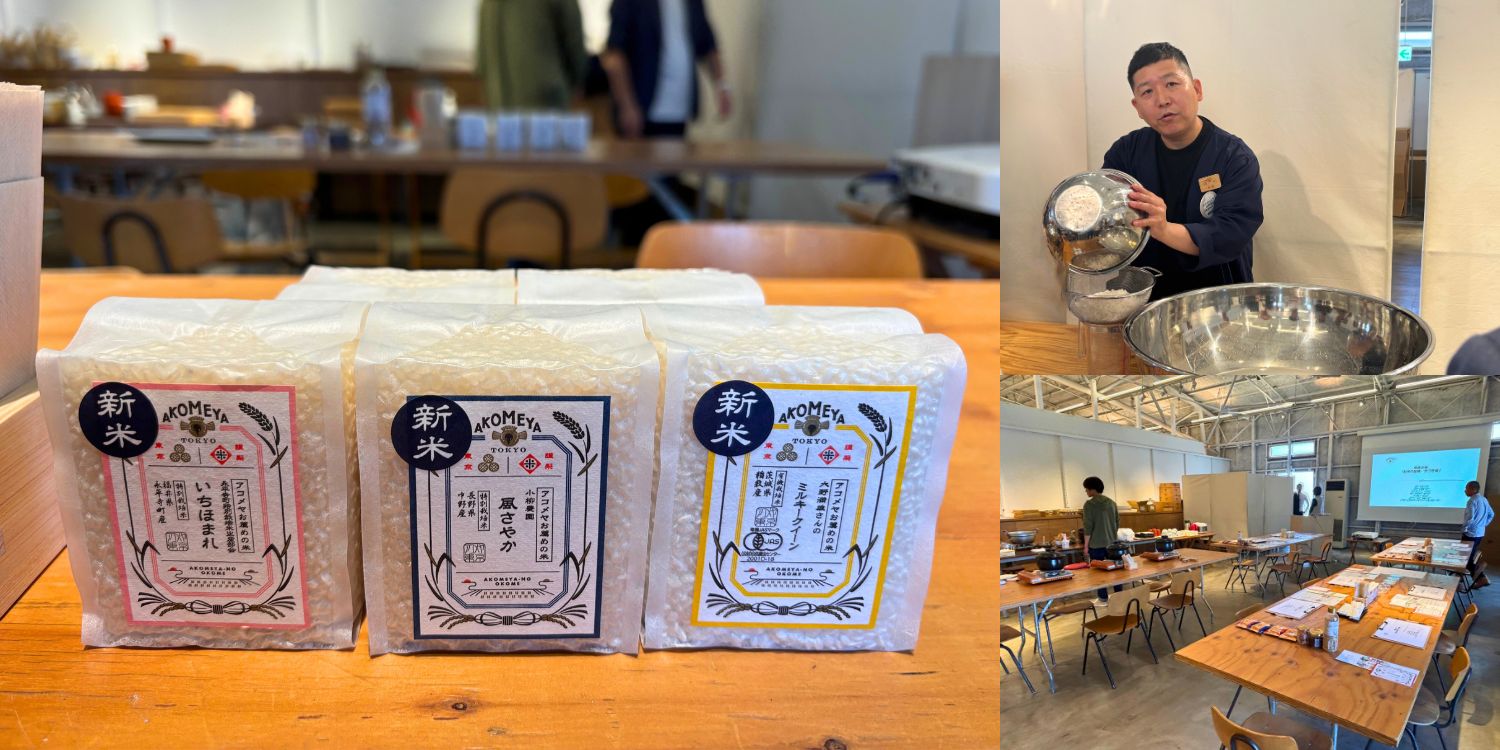
The AKOMEYA Rice Concierge shared key points for cooking delicious rice: “Measuring, Washing, and Soaking.”
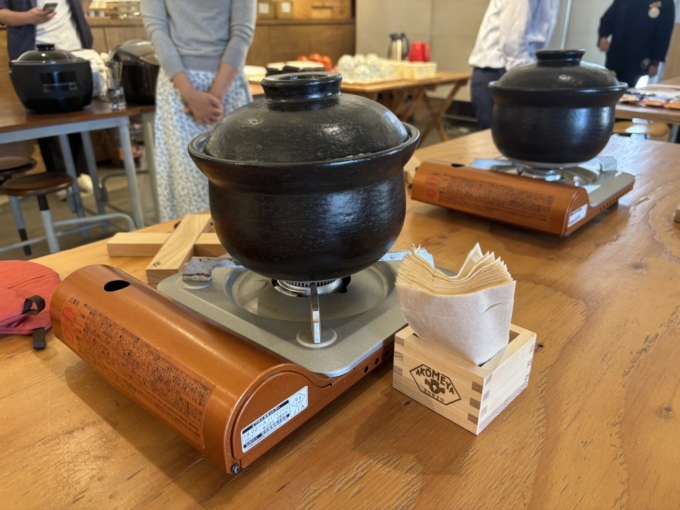
And as we waited for the rice to cook…
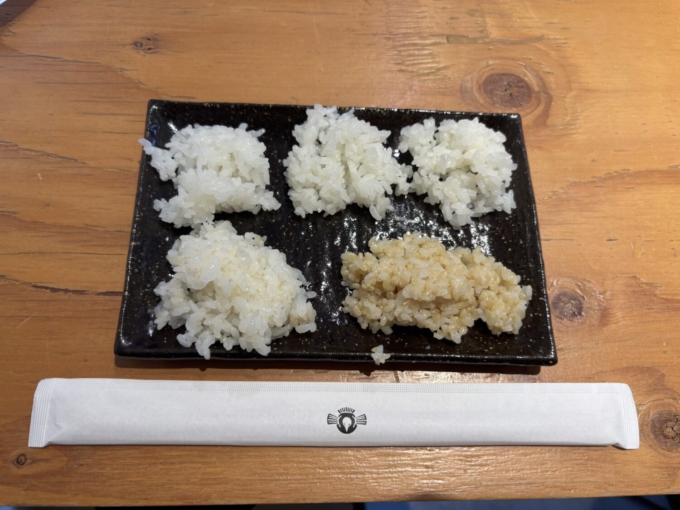
A luxurious tasting set was served!
At first glance, I could only distinguish the color of the “Buzuki-mai” (partially polished rice). Then, the true essence of the workshop began: the actual tasting!
Just before we started, the AKOMEYA representative announced, “Regardless of COVID-19 protocols, please try to eat without talking as much as possible! You might be influenced by others’ opinions.” Realizing I could only rely on my own “happy palate,” I started with the “Ichihomare (Specially Cultivated Rice from Eiheiji Town, Fukui Prefecture)” in the top left.
Sooooo sweeeeeet! (Internal voice)
It was so sweet that I wondered if a certain famous comedian came up with his catchphrase while eating “Ichihomare (*1)” in silence. Even I, who usually can’t eat rice without a side dish, thought, “With this level of sweetness, it would be a waste to eat it with anything else!” It had a soft, natural sweetness inherent to the rice.
And above all, the texture was incredibly chewy. To be honest, I noticed it the moment I bit into it, but the sweetness left such a strong impression that I only fully processed the texture afterward. It was truly chewy! Combined with that texture, I just wanted to eat the rice on its own…
Well, that was my internal monologue and personal opinion. It wouldn’t have mattered if it didn’t match the actual characteristics of the rice, but since this was a tasting workshop, I timidly checked the AKOMEYA Rice Matrix…
The name “Ichihomare (*1)” was in the top right, exactly where the matrix said it should be… (Internal voice)
Because the sweetness is so intense, “a few pickles are more than enough.” It truly is “rice that needs no side dishes.”
My impressions regarding the chewy texture were also exactly as described in the matrix, giving me newfound confidence in my own palate.
Honestly, I wanted to share this excitement with the other media members, but since we were eating in silence, I could only convey the deliciousness through wide eyes and heavy breathing.
Next was “Kaze-sayaka from Koyanagi Farm in Nakano, Nagano Prefecture” in the top center. One bite and it was clearly different from the “Ichihomare (*1)”! While I could sense a faint sweetness, it was more subtle than the “Ichihomare (*1),” which made the texture stand out remarkably! It had a firm bite and was also very delicious in its own way.
Personally, I prefer soft rice, but I think firm rice is better for sushi. I found myself pairing it in my head, thinking that the firm, subtly sweet “Kaze-sayaka (*2)” would be perfect for sushi.
And although I didn’t need to verify it, I took a peek at the matrix…
The name “Kaze-sayaka (*2)” was in the bottom right!
It says it’s perfect for vinegared sushi rice! We’re on the same wavelength! (Internal voice)
Finally, I tasted “Milky Queen by Mitsuo Ohno from Inashiki, Ibaraki Prefecture” in the top right.
After eating two varieties already, I—not being a professional food critic—worried I wouldn’t have any impressions left. But when I took a bite…
Sooooo sweeeeeet! (For the second time)
Personally, I found it even sweeter than the “Ichihomare (*1).” I was moved to discover that rice could surpass other rice in sweetness. And while I had never particularly focused on “mouthfeel” in my life, the texture was “chewy” and “silky.” “Milky Queen (*3)” was also so delicious I wanted to keep eating it on its own.
Marveling that it could exceed the initial impact of “Ichihomare (*1),” I looked at the matrix and saw “Milky Queen (*3)” located near “Ichihomare (*1).”
So, this is the type of rice I like…My “rice type diagnosis” became very clear.
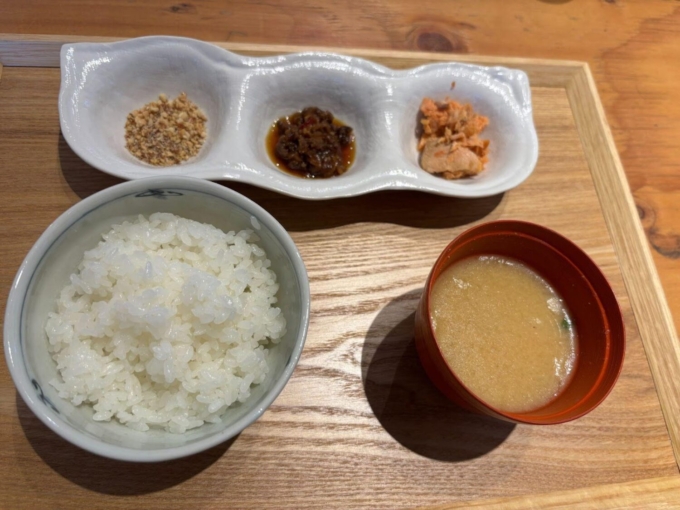
Finally, I enjoyed a full meal with AKOMEYA products that pair perfectly with rice, along with miso soup.
I was finally able to release my excitement with the media representative in front of me, saying, “The rice varieties were completely different, weren’t they!” It was a relief. They were an AKOMEYA user and even recommended some side dishes, saying, “I actually love this furikake and buy it myself! Also, I recommend this…” Seeing how they even had AKOMEYA chopsticks and other items, I realized once again that PR is about creating fans.
Through this workshop, I have become completely captivated by AKOMEYA. From the opening remarks by the representative who carries on the farmers’ passion, to the demonstration by the “AKOMEYA Rice Concierge”—professionals of the 110,000 meals we eat in a 100-year lifetime (assuming three meals a day)—it was an event where everyone’s passion was concentrated.
Just like that media representative, having someone experience the product themselves and share that excitement and quality from their own unique perspective is what PR is all about. It was a day that reminded me to continue my daily activities to create fans for our clients.
|
*1: Ichihomare, Specially Cultivated Rice Production Group, Eiheiji Town, Fukui Prefecture |
SUNNY SIDE UP handles PR and communications for various products and services, including lifestyle shops.
What can be achieved through the power of communication? We welcome consultations starting from such questions. Please feel free to contact us using the “CONTACT” button below.