After 11 years working in Tokyo, he made a U-turn move prompted by raising a child. Why he chose to relocate to Fukuoka, Kyushu—while continuing his Tokyo-based work as is
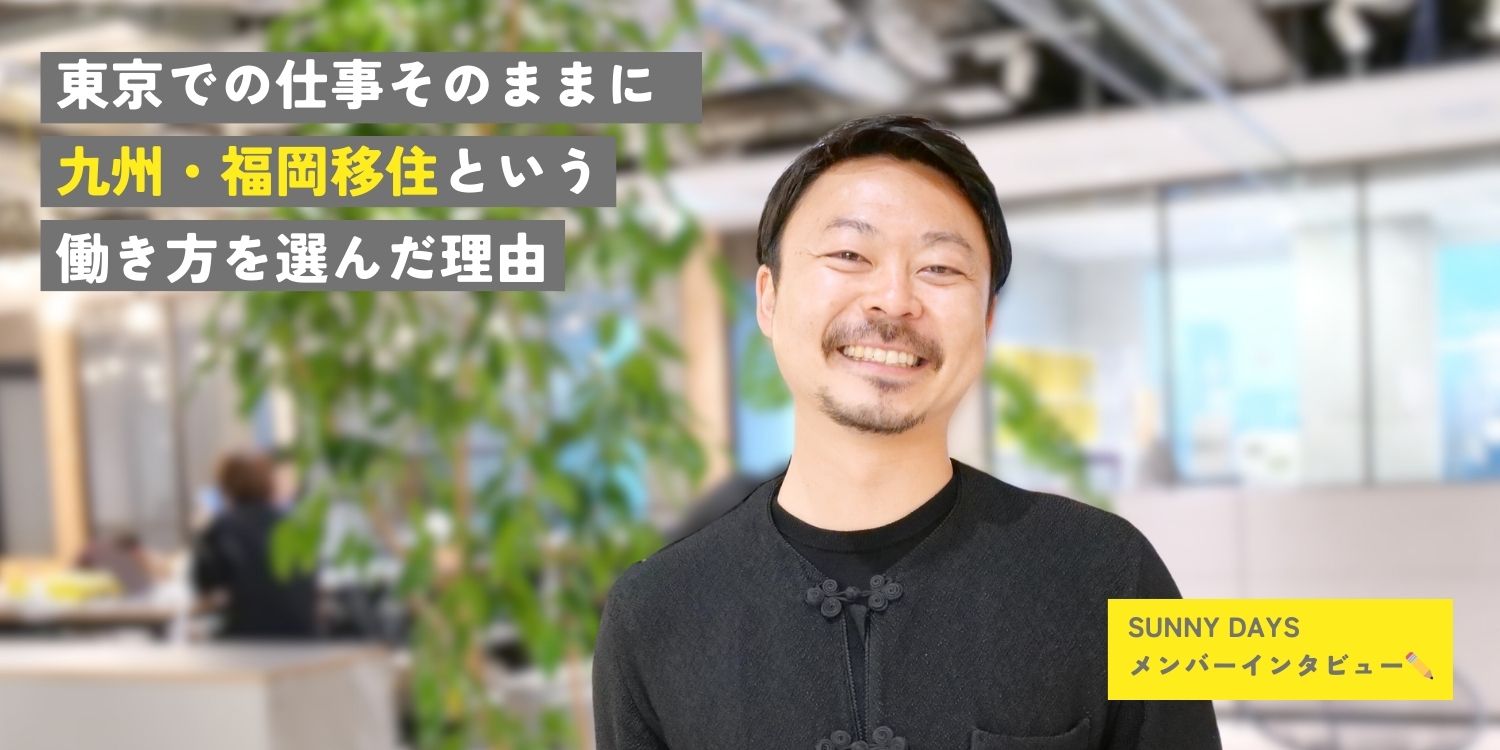
This time, we interviewed a team member who has moved their base from Tokyo to their hometown of Fukuoka, Kyushu, yet continues to fight on the front lines of PR as a manager.
We asked about both the challenges and the enjoyment of working in the Kyushu area, where the concept of PR is still not as widely established as it is in Tokyo!
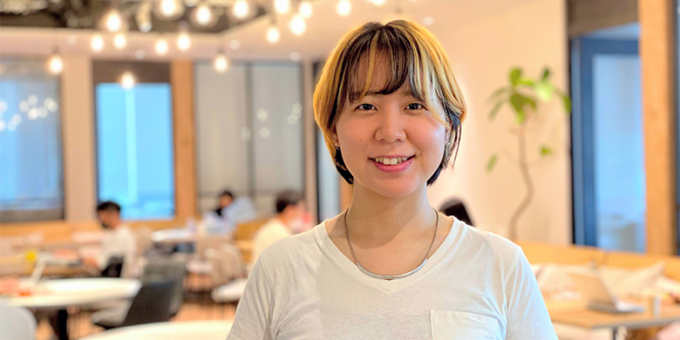
[Member Profile]
Public Relations Division Headquarters / Bureau 4 / Department 1 / Group 2 Leader: Ryutaro Hayashida
––What kind of work have you been responsible for since joining the company?
Hayashida: For about the first three and a half years after joining, I belonged to the Media Relations Department, where I developed and proposed plans to have the products and services of the accounts I handled featured by TV stations, magazines, and web media. I believe it was a period when I truly felt the potential of PR—through the excitement of creating news and the satisfaction of contributing to product sales.
Up to that point, we often started with a fairly well-formed plan and then worked to spread it to the public, but from my fourth year I began working as a PR director, starting from interviewing clients about their issues and needs.
After becoming a director, I was excited when clients found my ideas interesting or when we could deliver exactly as envisioned, but at the same time I also felt anxious and conflicted, wondering, “Is this really okay?” Since we are paid to provide PR, we must contribute to our clients’ sales, so my sense of responsibility grew—I realized that “it’s not enough to just do something interesting.”
From around my fifth year, I was also entrusted with managing team members. With differences in each member’s background and skills, moving the team forward had its own challenges distinct from PR, but I feel that gaining management experience also improved how I communicate with clients.
––Are there any projects you feel particularly attached to?
Hayashida: I have been involved with Shibuya redevelopment-related work since I first joined, and I still am, so I feel strongly attached to it. When I joined in April 2012, Shibuya Hikarie—the first flagship facility of the Shibuya redevelopment—opened, and I was in charge of its PR.
SUNNY SIDE UP now wins PR projects across all kinds of genres, but at the time, the company was in a phase of saying, “Let’s build a track record in commercial facility PR from here.” So I think it became a turning-point project for the company as well.
After that, I was also involved in many major projects that could be called signature SUNNY SIDE UP projects, such as Shibuya Stream and bills.
Deciding to make a U-turn to Fukuoka as remote work became widespread
––When did you start thinking about moving your base to Fukuoka?
Hayashida: When I first joined, I thought, “I’ll do my best in Tokyo for the first few years,” but I also said, “Someday I want to go back to Fukuoka.” However, once work started, I enjoyed what was in front of me and time flew by. I had not thought about a specific timing for returning to Fukuoka.
I began seriously considering a U-turn after remote work started during the COVID-19 pandemic. Until then, I went into the Tokyo office every day, but as more projects could be completed remotely, I started to think I might be able to work from Fukuoka as well.
Another trigger was the birth of my child. When my wife—who is also from Fukuoka—and I discussed where to raise our child, we concluded, “Fukuoka really is best.”
––Mr. Hayashida, you are SUNNY SIDE UP’s first fully remote employee. How did the move of your base come about?
Hayashida: First, I consulted my supervisor about my desire to move my base to Fukuoka in earnest. From there, we began thinking specifically about how to run projects and manage the team remotely. Since it was the company’s first attempt, they made many adjustments—such as changing systems, setting goals, and defining my position within the organization. After about a year of preparation, I moved to Fukuoka.
Energizing PR in Kyushu, and eventually establishing a branch office
––It has been about a year since you moved your base to Fukuoka. How have your life and mindset changed?
Hayashida: I feel, “After all this preparation to bring me to Fukuoka, I cannot go back to Tokyo anymore.” I do have concerns about whether I can properly contribute to SUNNY SIDE UP while working remotely, but I am determined to see it through.
In terms of lifestyle, how I use my time has changed. When I lived in Tokyo, I was more of a night person and often went out for drinks with colleagues after work. But since moving to Fukuoka, because I work from home and am raising a child, I do not go out much at night anymore. I keep an early-to-bed, early-to-rise rhythm.
That said, being in Fukuoka has increased projects and connections across Kyushu, and I feel I have gained new kinds of enjoyment in life. People in Kyushu are often surprised when I tell them I work for a Tokyo company, but I feel welcomed, and I am grateful that they also reach out to me about projects.
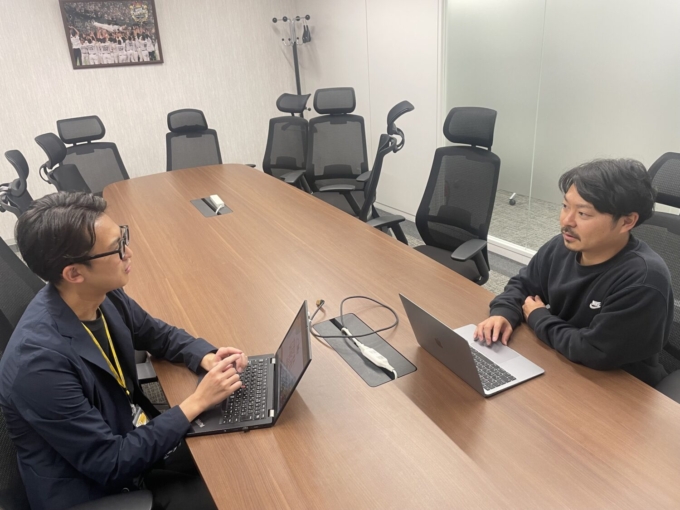
A meeting with a Fukuoka-based professional sports team
––What kinds of projects are you working on currently?
Hayashida: While I continue to handle Tokyo-based clients, I am also involved in projects for municipalities and manufacturers in Kyushu, including Fukuoka. It feels less like “relocating” and more like “adding another base,” so the clients I handle are roughly split half-and-half between Tokyo and Kyushu.
In Kyushu, I often handle projects in partnership with agencies. Because PR results can be difficult to quantify in numbers—such as “If you request PR, sales will increase by X%”—many people in Kyushu still do not know “requesting PR” as an option. Therefore, we are currently working to spread PR by proposing it together with agencies’ advertising.
––Are there any Kyushu projects that left an impression on you?
Hayashida: In a recent project, we had a web media outlet feature a streetcar in Kagoshima Prefecture that has existed for over 100 years. Local topics tend to remain limited to local residents if you simply announce them, but by conveying the intent—such as “what we are aiming for” and “the challenges we are taking on”—you can transform them into news with nationwide reach.
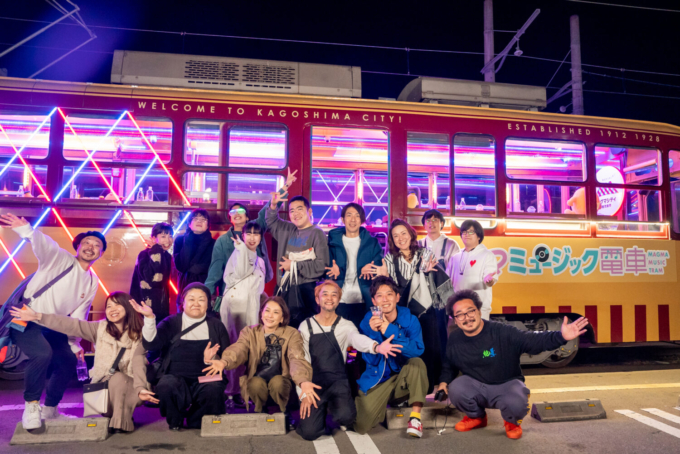
A commemorative photo with participants in the Magma Baked Sweet Potato Streetcar photo event
People in regional areas also have a need to share their stories nationwide, so I would like to better understand and communicate the aspirations of more companies and organizations.
––What potential do you think Kyushu has?
Hayashida: Kyushu is rich in tourism content—such as yatai food stalls in Fukuoka and hot springs in Oita. Kyushu municipalities are also focusing on tourism as part of inbound initiatives, so I see strong potential in doing PR together with local governments.
––Please tell us about your future outlook and what you would like to challenge yourself with.
Hayashida: I would like to share more of PR’s potential and appeal with people in Kyushu. If more people recognize how interesting PR is, requests to SUNNY SIDE UP will increase, and I believe more students will aim for the PR industry as well. At present, I am the only member working in Fukuoka, but in time I would like to build momentum to the point where we can establish a SUNNY SIDE UP Kyushu branch office.
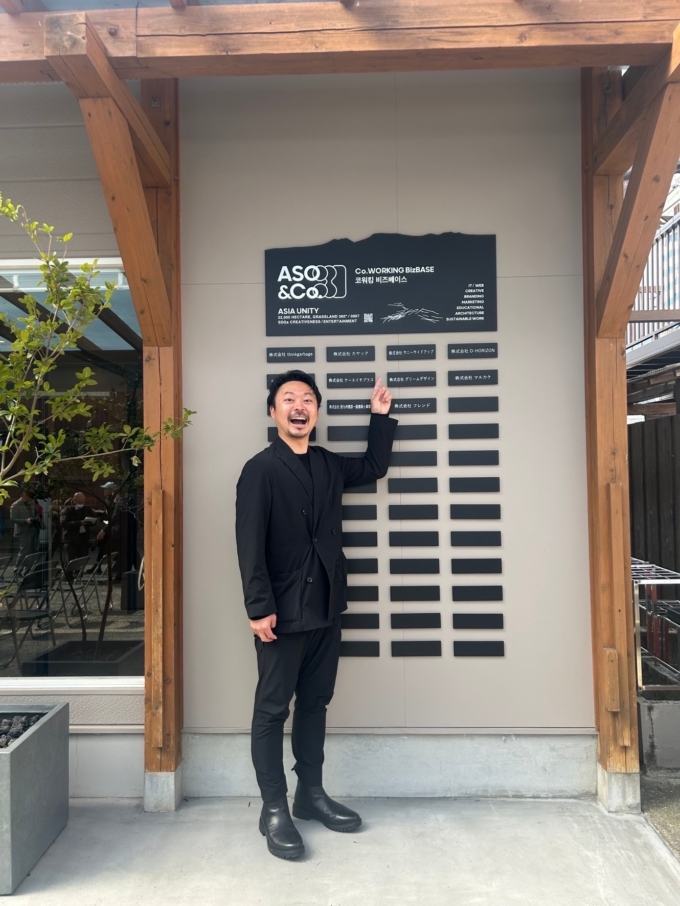
When we moved into the satellite office “ASO&Co.”
At SUNNY SIDE UP, there is an environment where you can take on challenges without being limited by where you live or where you work.
We would be delighted to work with those who want to share the potential of regional areas—including Kyushu, which is still full of undiscovered appeal—with Japan and the world!