Turning “Passion” into Projects: Behind the Scenes of “IP x PR” Manufacturing at SUNNY SIDE UP
Movies, anime, characters…The content around us brings a little bit of excitement to our daily lives.
SUNNY SIDE UP’s “Happy Kuji,” a safe and enjoyable entertainment lottery for everyone, is an IP business (*) that delivers such attractive content as products.From planning and design supervision to factory prototyping and proposals to distributors and retailers, we deliver “excitement” to fans through various processes.
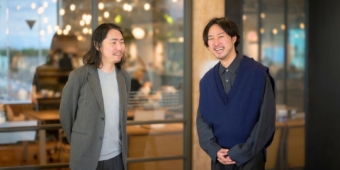
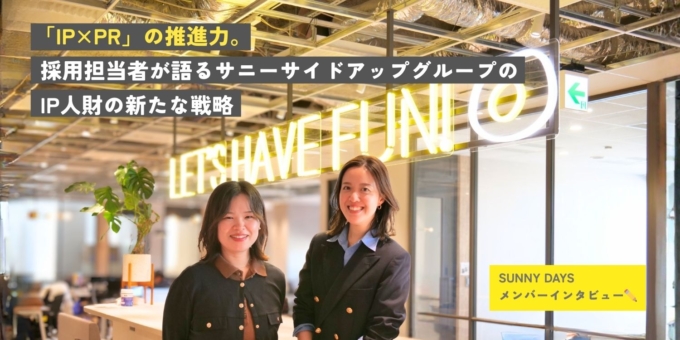
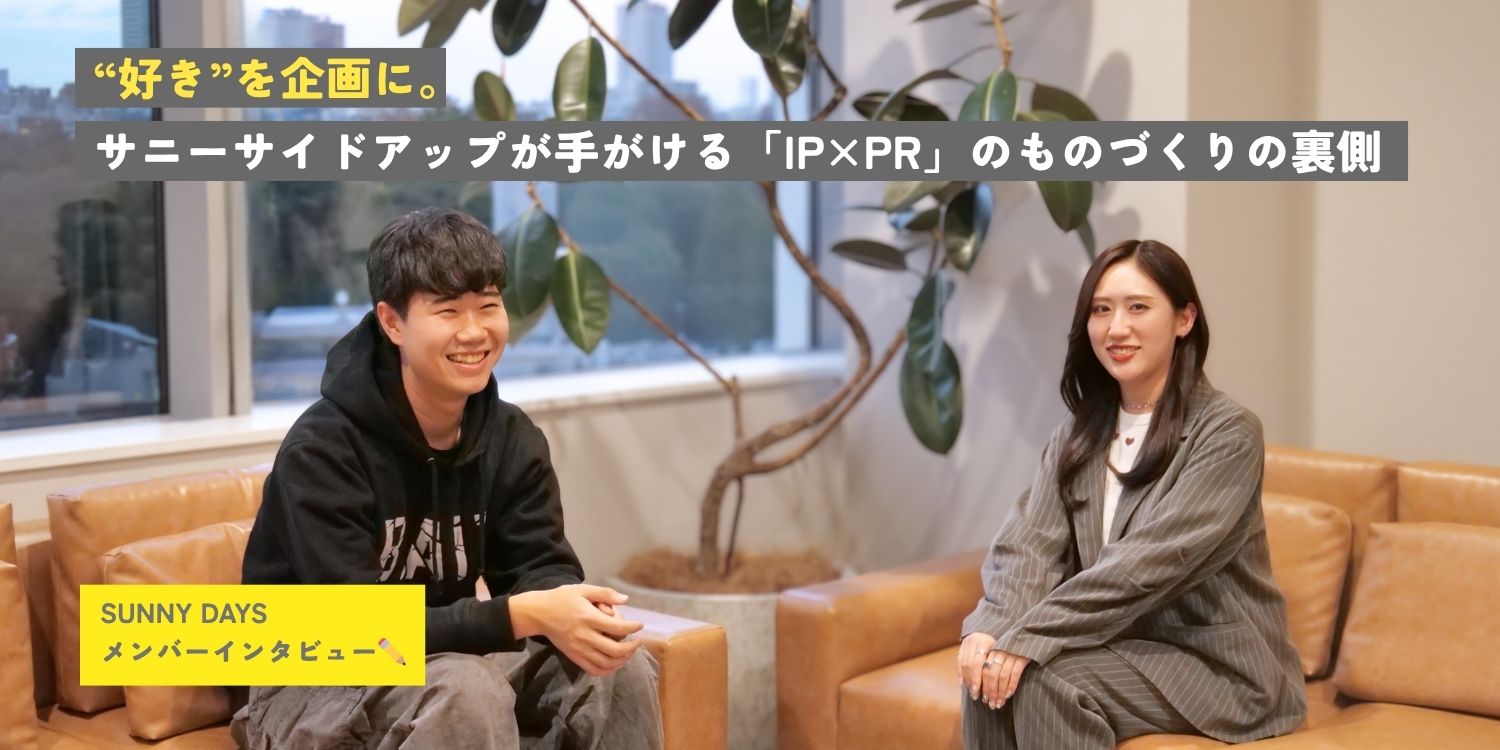
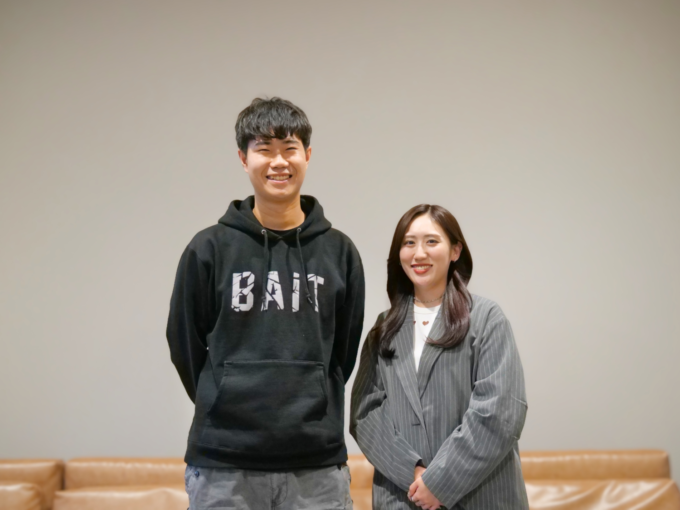
We spoke with Koichiro Sakai and Saki Yamahata of SUNNY SIDE UP, who are involved in planning at the forefront of the IP business.Moving between BtoB and BtoC, they daily pursue “things that will make fans happy.”
“How are projects born and turned into products?” “What is the significance of SUNNY SIDE UP, a PR company, being involved in the IP business?” We asked two professionals working at the forefront of SUNNY SIDE UP’s IP business about what goes on behind the scenes.
*IP Business: A business that utilizes “Intellectual Property” such as anime, games, and characters. For example, selling character merchandise.
From planning to commercialization: The process of giving shape to fans’ “excitement.”
Work that starts with BtoB and ultimately reaches the fans.
Sakai: The reason I joined SUNNY SIDE UP as a new graduate was my desire to be involved in making products for works I love. I love entertainment like movies, anime, and manga, and since my student days, I wanted to turn my “passions” into my job.
After initial training, I was assigned to the manufacturing department, the predecessor of my current department, and have been involved in IP ever since. My work mainly focuses on planning and sales. I am responsible for a wide range of tasks, from creating plans and proposing them to publishers and distributors to consistently seeing them through to the final product.
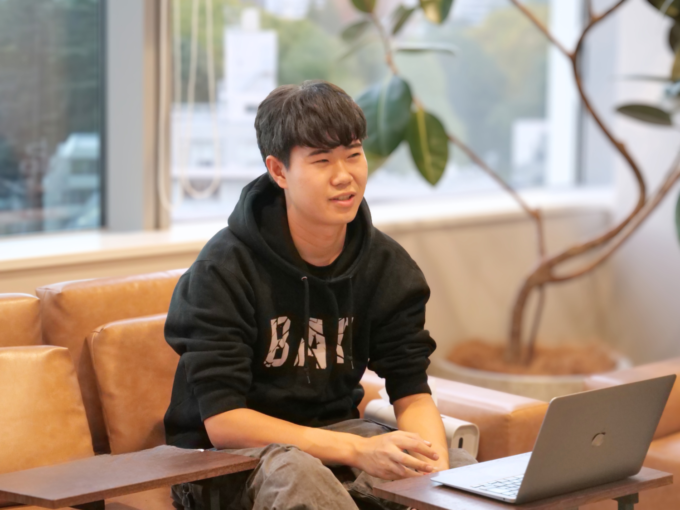
Koichiro Sakai, SUNNY SIDE UP
Yamahata: Unlike Sakai, I started my career in a PR department after joining as a new graduate and later transferred to the current manufacturing department. Like Sakai, I loved entertainment and theater, so I was drawn to an environment where I could work while being in contact with things I like.
My area of responsibility is about 60-70% production and 30-40% planning. I often handle fancy-type IPs. By experiencing both planning and production, I have become able to make balanced proposals from both perspectives: “what can actually be realized” and “what will truly please the fans.”

Saki Yamahata, SUNNY SIDE UP
Sakai: To put it simply, our work is BtoBtoC. Since a project starts with a proposal to a publisher or distributor, it looks like BtoB work at first glance, but the people who ultimately pick up the product are the fans. In other words, there is a toC element as well.
That is why, from the planning stage, we think from the perspective of “what kind of items would fans be happy with?” Based on that, we logically explain marketability, timing, and the peak popularity of the IP to the publishers and distributors.
Yamahata: I create plans by capturing “moments that move fans’ hearts,” such as events and trends in the world.
First, we propose to the publisher to obtain permission, and then we introduce the plan to distributors. Once the plan is adopted, the process continues with design production, supervision, prototyping, and mass production.
However, even with the publisher’s permission, there are times when a retailer doesn’t adopt it, so it’s always nerve-wracking as we proceed (laughs). The series of schedules takes at least 3 to 4 months, and some projects can last as long as a year.
Sakai: On average, it’s about six months.
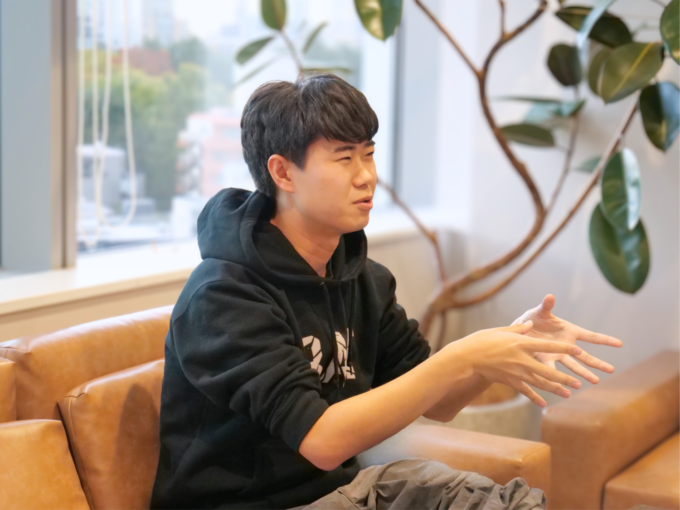
In the team, each person handles 2 to 3 projects simultaneously, so we perform our daily duties under the pressure of absolutely meeting the deadlines for multiple projects at different stages of progress.
Moments of Joy: The first sample is the best reward.
Sakai: The product planning for Happy Kuji that we do involves a lot of difficult daily coordination.
Coordination can be difficult because there are so many stakeholders, including publishers, distributors, factories, and internal teams. However, because of that, there are many opportunities to be told “thank you” when things go well, which leads to a sense of fulfillment.
Most recently, the thing that made me happiest was being involved in a project for a manga that I love the most and had wanted to work on ever since being assigned to the manufacturing department. That manga, which could be called my life’s bible, had already been planned multiple times by other companies, but we made a sincere proposal and were selected. Supervision was tough, but it was a very rewarding project.
Yamahata: Also, I get excited every time a prototype (sample) arrives.
It’s the moment when I feel “it’s finally taken shape!” and no matter how many times I experience it, it’s always a joy.
I also like the time spent looking at reactions on social media after the information is released. When I see responses like “So cute!” or “I want this!”, I feel that all the hard work was worth it.
Turning “Passion” into Projects: The two professionals’ work philosophy
Yamahata: When I do product planning, I am conscious of “not letting my ego show too much.” I prioritize the perspective of “what do fans really want?” over what I personally want to make.
To achieve that, I make sure to visit events, check social media and magazines, and constantly gather input so I don’t forget the “fan’s eye.”
Rather than just “casually browsing” social media, I track daily which posts are growing and which visuals or items are generating a response, so I can catch what fans are looking for.
I also frequently look at seasonal features in magazines, web media, and Instagram. When I feel that “this kind of theme is in demand during this period,” I sometimes use that as a reference for the angle of a project.
Sakai: I place great importance on “whether I would want it myself.” My ideal is to pick up symbolic elements from the world of the work and turn them into “prizes that allow fans to relive the experience” of the work.
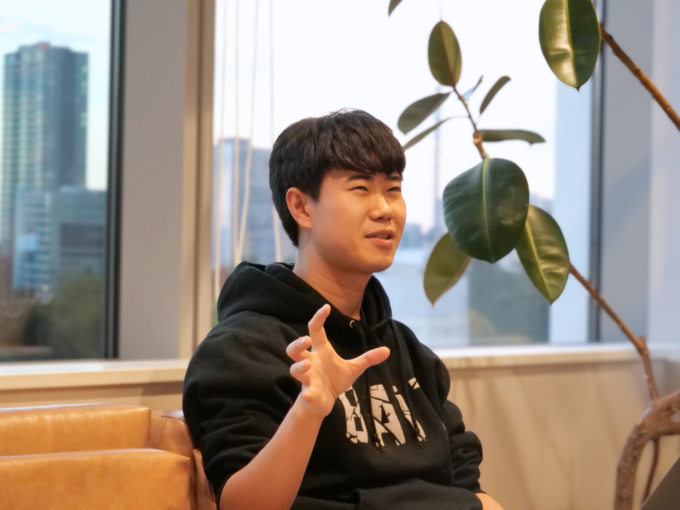
When I look at best-selling products during market research, I try to dig deep into “why they are selling” and extract the essence. Manufacturing work isn’t completed just at a desk; I actually go to convenience stores, movie theater gift shops, and official shops to observe materials, construction, and design features. I end up doing it naturally. It’s like an occupational hazard (laughs).
If I find something there and think “this is good,” I actually buy it and share it within the company. I believe there is a lot to be learned from the actual physical objects.
Of course, the fan perspective that Yamahata mentioned is also important, so I am conscious of thinking from both directions.
The form of IP business only a PR company can achieve: Planning by working backward from the “headline” of the release.
Yamahata: Since SUNNY SIDE UP is a PR and communications company, we build our product planning based on a PR perspective—in other words, “how to make it a hot topic.” I believe the culture of thinking backward from “what constitutes a ‘strong project’ that works as a press release headline?” is a unique characteristic not found in other companies.
Sakai: In addition, we accelerate projects by crossing internal networks, such as creating press releases in collaboration with media promotion members and cooperating with the sports management department.
There have also been times when we leveraged routes with publishers established through PR projects to lead to new proposals.
Yamahata: From now on, I want to further strengthen the combination of PR and manufacturing and get involved with even more IPs. I also want to increase internal knowledge sharing and cross-border collaboration.

Sakai: On a larger scale, I personally would like to invest in and participate in production committees for anime and characters, and get involved in manufacturing from the IP side’s position.
Gratefully, our company is already involved with many IPs, but I believe it is also important to nurture new IPs. By combining a PR perspective with manufacturing experience, I want to increase the number of projects that will make even more fans happy.
|
Happy Kuji Official Website: https://www.h-kuji.com/ |