What Will Happen to PR in the AI Era? An Executive Planner Who Wrote the Opening Keywords for “Koho no Mikata 2026” Shares Insights
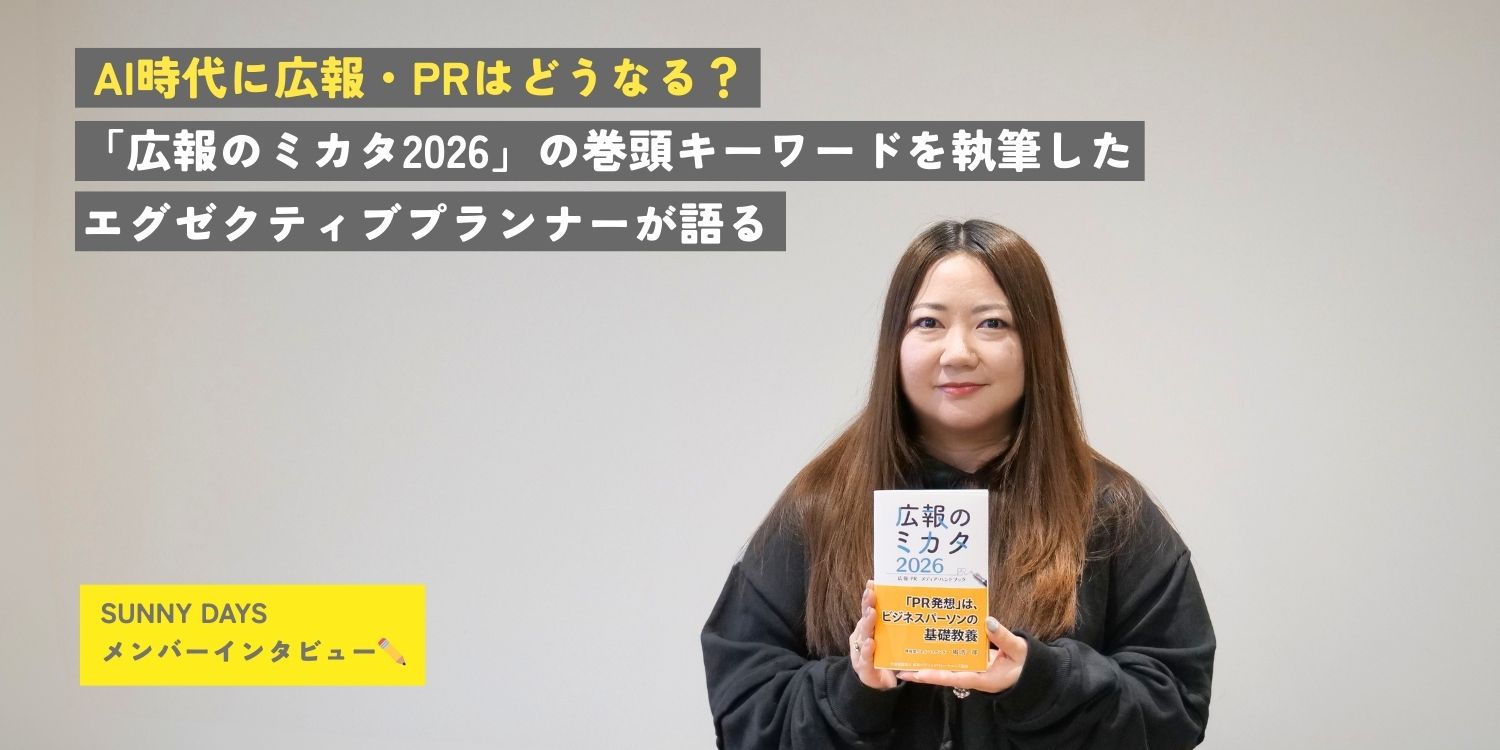
The PR Handbook, published by the Public Relations Society of Japan (PRSJ)—an organization dedicated to promoting and educating about public relations and certifying PR planners—has been renewed this year with a new title, Koho no Mikata 2026, and redesigned in a new book format.
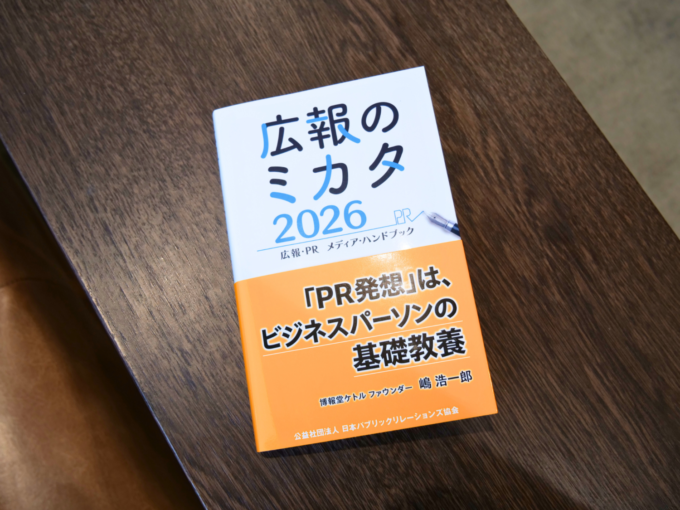
“Koho no Mikata” is an essential handbook for PR professionals, compiling various information in one volume, including schedules of events held throughout the year and contact information for media outlets.
Members of our team at SUNNY SIDE UP have written part of the keyword explanations featured at the beginning of this handbook. In particular, Yumi Sekiya, an Executive Planner in the Communication Planning Department, used an entire page to explain the current state of AI utilization and how to approach it, under the theme “PR × AI.”
What does AI represent from the perspective of a planner, who can be considered the brains of SUNNY SIDE UP? We spoke with Sekiya to find out.
—What career path led you to your current role, and what kind of work do you do now?
I currently work as an Executive Planner in the Communication Planning Department at SUNNY SIDE UP. I handle a very wide range of work, from formulating MVV (Mission, Vision, Values) to developing communication strategies and detailed planning.
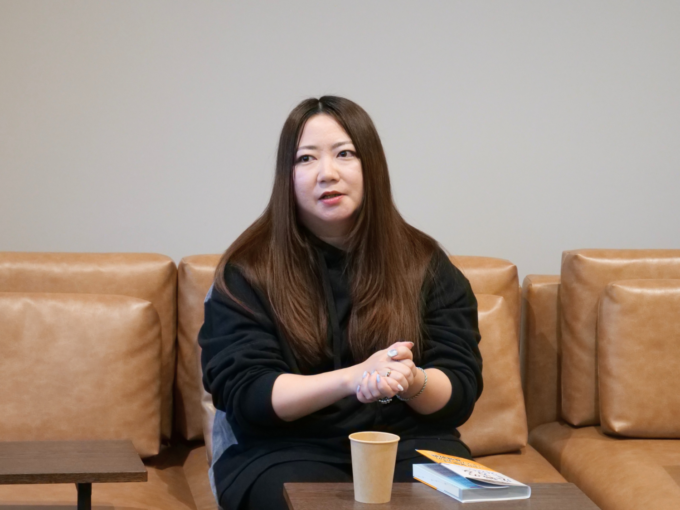
I was interested in planning work since my student days, but I couldn’t secure a satisfactory job offer as a new graduate, so I became an assistant director at a television production company.
I thought that if I experienced the most demanding environment I could imagine at that time, I might be able to advance my career based on “potential” afterward.
The AD work itself was more enjoyable than I expected, but I still wanted to get closer to planning work, so I changed jobs to an advertising agency as a sales representative.
There, I began studying for the PR Planner certification offered by PRSJ and obtained the Associate PR Planner and Junior PR Planner qualifications. After gaining three years of practical experience, I obtained the PR Planner certification. At that time, PR was not as widely recognized as a general concept as it is now, so objectively it served as a statement that “I am studying PR” and was an appeal both internally and externally.
After that experience at the agency, I joined SUNNY SIDE UP as a planner.
|
▼At SUNNY SIDE UP GROUP, multiple members actively obtain PR Planner certifications, not only planners. |
—What kind of work have you been handling recently?
On average, I have about 5 to 6 new projects per month, and 2 to 3 ongoing projects that we continue to work on alongside clients—that’s the typical overall volume. I handle a wide range of genres, including bidding projects for local governments, beauty and cosmetics, and pharmaceutical companies.
Among recent work, I was personally happy to be involved in PR and communication for the Tokyo Game Show.
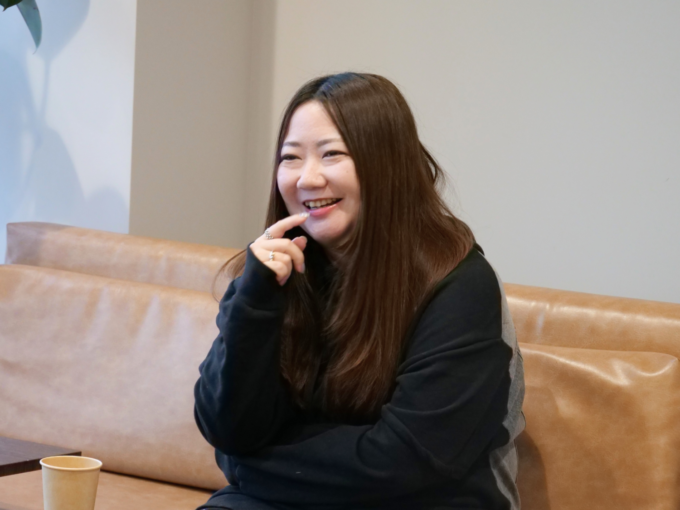
I’ve loved games since I was very young, and even now I play them late into the night, saving the world (laughs). I’ve helped exhibiting companies before, but being able to help on the organizer’s side was a particularly memorable job as a game enthusiast.
—We heard that you wrote the opening keyword explanation on PR × AI for “Koho no Mikata 2026.” How did you come to write it?
“Koho no Mikata” is a media handbook for people involved in PR work, published by PRSJ. Our Managing Director, Rie Matsumoto, serves as Vice Director of the association, and the Communication Planning Department, to which I belong, received a request to brainstorm ideas for this year’s featured keywords—that was the starting point.
In previous years, we received requests only for writing after the keywords were largely decided, but this year we were asked to be involved from the selection stage, with the request that “PR company planners with high sensitivity to society should think about choosing the keywords themselves.”
As an Executive Planner, I selected keywords that I believe are important for future communication and keywords I personally find interesting.
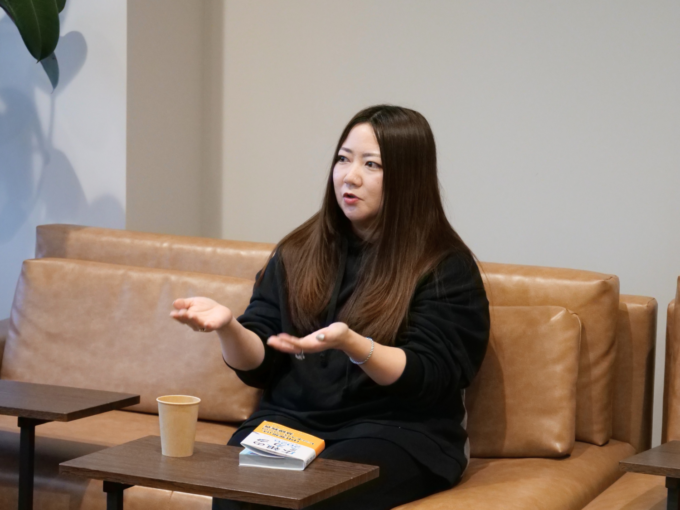
In fact, I proposed over 20 ideas during the internal review stage, and multiple AI-related keywords were included among them. I consolidated them into the keyword “PR × AI” for my writing. I explained AI-related terminology and how to approach AI from a PR perspective.
—What did you particularly focus on when writing the opening keyword “PR × AI”?
AI-related terms are often “incomprehensible at first glance.” In particular, AI-related terms tend to use many katakana and English words, which can be difficult to understand. So I made a conscious effort to break down the text as much as possible so that even first-time readers could understand “I see, that’s what it means.”

There has been a movement within the company to promote AI utilization for some time, and each department has AI promotion members. In addition, we have been holding regular meetings on AI from the perspective of incorporating it into communication, not just using AI as a tool. Such prior knowledge and discussions in meetings are also reflected in the content of my writing.
—How do you view the relationship between PR and AI?
I believe that if we only use AI as a convenient tool, people will stop thinking more and more.
So I’m rather opposed to that approach. In PR, I think it’s important to view AI as one of the stakeholders and consider how to build relationships with AI, which is becoming a “trusted third party” for consumers, and how to deliver “trustworthy information” to AI.
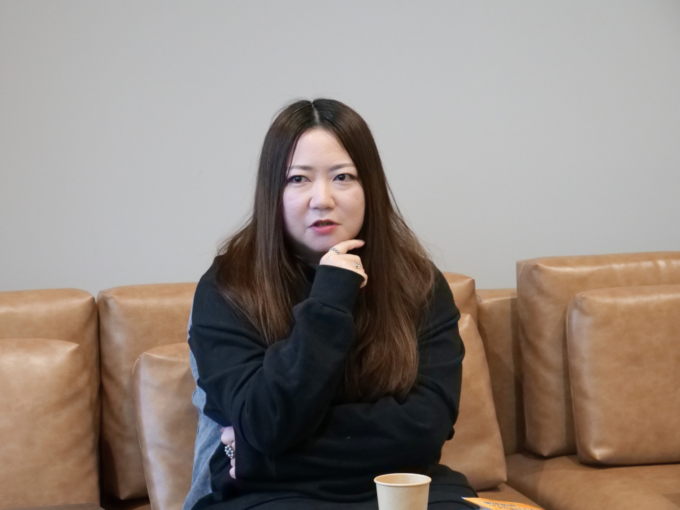
And as AI develops, “areas that AI cannot replace,” such as human qualities, will be questioned for their value even more. For that reason, we ourselves must first correctly recognize AI, and then consider the division of roles between “what only humans can do” and “what AI is good at.”
AI continues to learn and evolve daily. To capture that evolution and deepen mutual understanding with AI, we established a specialized team, the “AI Dialogue & Relations Team,” on November 6, 2025. With our Executive Officer Shinnosuke Iwasaki at the core and Takayuki Fukatsu—who serves as CEO of creative firm THE GUILD and CXO of note Inc.—appointed as AI Relations Advisor, we aim to establish our approach to AI as a PR company leading the AI era.
First, through regular meetings, we compiled materials on “how to approach AI,” “how to explain to clients,” and “points we can propose,” and shared them internally in December 2025.
We are ensuring that all employees, not just specific teams, can handle AI-related matters.
|
▼Articles about the “AI Dialogue & Relations Team” and “AI Relations Advisor” can be found here |
—Do you have any advice for PR professionals who feel anxious about AI?
Currently, it’s fine not to know anything. However, if you think not in terms of “what can be done with AI” but rather “how to build relationships with AI and enhance the value of the experience provided,” there should be many things that PR professionals can do.
So even if you’re not familiar with AI or don’t have a concrete image, as long as you let us know that you’re “interested,” we can help expand the possibilities.

For example, recently a client asked us, “Can we do something with AI utilization?” and we introduced them to an AI-related service company with which we have a business relationship. We receive many inquiries like “We want to utilize AI in some way, but we don’t know what to do.” Even things that cannot be discovered with your own services or technology alone might reveal new value by joining hands with others.
We have the know-how cultivated through over 40 years of PR and communication, as well as relationships with many clients, and we can think through various ideas together.
Please, let’s start together from knowing nothing and build a good relationship with AI!