Aokigahara Forest Report Part 2: Introducing the Sightseeing Loop Course ⛰️

Hello, everyone! I am Yuki Ota from the 3rd Division of the Social Relations Bureau, currently in my first year as a new graduate hire.
This may be sudden, but what comes to mind when you hear the name “Aokigahara Jukai” (the Sea of Trees)?
Some people might have pleasant associations like “rich nature,” “camping,” or “close to Fuji-Q Highland,” while many others likely hold negative impressions such as “scary” or “dangerous.”
To be honest, I was one of them. Based on urban legends and anecdotes surrounding the forest, I had an image of it being a frightening place.
However, after participating in a media tour recently that visited Aokigahara and its surrounding tourist spots, my perspective was completely transformed.
\\ “Aokigahara is a wonderful place rich in nature!” //
That was my honest impression after finishing the tour.
In this article, I would like to report on my experience during that tour!
▼ Click here for the previous article:
Truly “Mystical”! A Report on Three Hidden Charms of Aokigahara Jukai
〈What is Aokigahara Jukai?〉
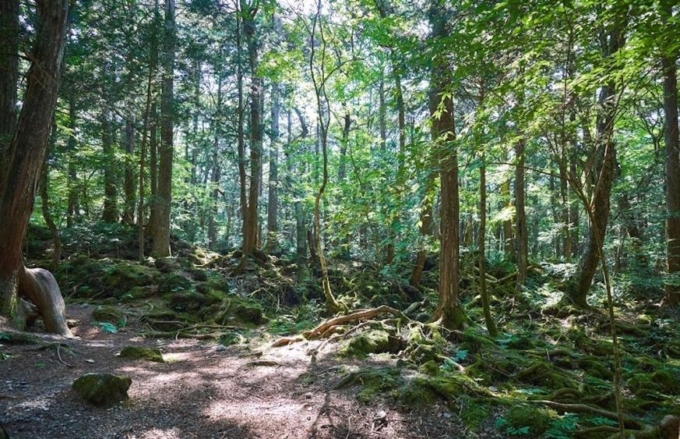
Aokigahara Jukai is a primeval forest spanning Fujikawaguchiko Town and Narusawa Village in Yamanashi Prefecture. It was formed approximately 1,200 years ago on top of lava flows from the great eruption of 864 (the Jogan Eruption). Located northwest of Mt. Fuji, one theory suggests it was named “Jukai” (Sea of Trees) because the trees swaying in the wind look like waves when viewed from the summit.
It belongs to the Fuji-Hakone-Izu National Park and is designated as a National Natural Monument.
〈The Tour Begins〉
It takes about an hour from Shinjuku on the Limited Express Kaiji No. 19.
We gathered at JR Otsuki Station, and the tour officially began.
First, we headed to the Mount Fuji Research Institute, Yamanashi Prefectural Government.
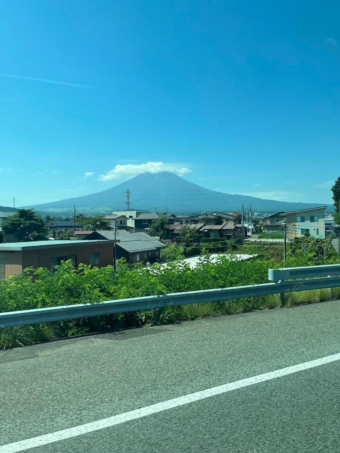
As soon as we boarded the bus, we were treated to a beautiful view of Mt. Fuji!
The Mount Fuji Research Institute is a facility that examines Mt. Fuji—a symbol of Japan—from various angles. It scientifically pursues measures to “protect” and “utilize” the mountain as a shared global asset. On this tour, we visited this facility before heading into the forest, where we learned about the origins of the Sea of Trees from Mr. Uchiyama, a researcher.
Even though it is simply described as a primeval forest on lava, there are different types of lava (rugged ‘a’a lava and smooth pahoehoe lava) and specific mechanisms for how trees grow on top of it. These unique characteristics of Aokigahara reminded me of my high school earth science classes.
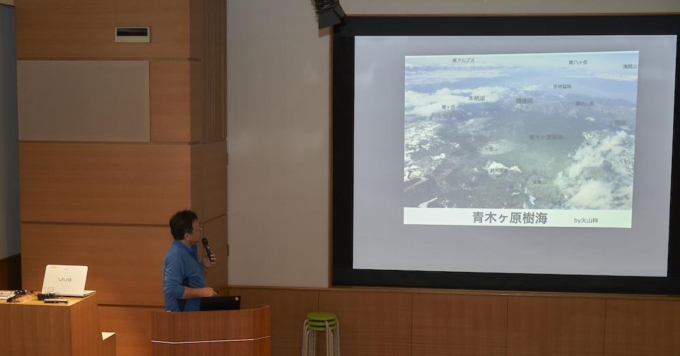
The institute also features charts representing the topography of Mt. Fuji and its surroundings, lava samples, and exhibits of animals found in Aokigahara. There are also books and video materials where you can learn about the nature of Mt. Fuji and the local environment. It is a perfect spot for children’s independent research projects, and adults will find it educational as well.
・Mount Fuji Research Institute, Yamanashi Prefectural Government
https://www.mfri.pref.yamanashi.jp/
〈Lunch and Shopping〉
Studying certainly works up an appetite. To fuel up before our trek, we stopped at “Tabi-no-Eki Kawaguchiko Base,” which just opened in July 2022.
While the menu changes seasonally, I treated myself to the “Koshu Beef Roast Beef Bowl.”
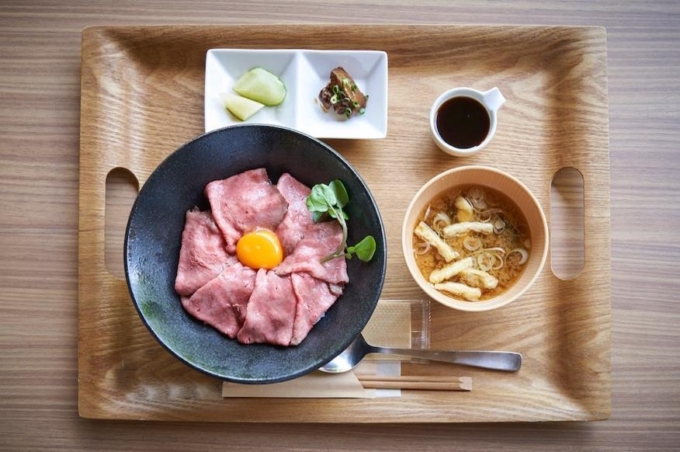
The meat was incredibly tender, and the combination of the egg yolk and sauce was absolutely delicious.
After satisfying our hunger, we enjoyed a brief shopping session. The booth selling local specialties featured Yamanashi’s famous peaches and fresh vegetables. There were so many products on display, but since we couldn’t stay long that day, I hope to visit Tabi-no-Eki again soon for a proper shopping trip.
・Tabi-no-Eki Kawaguchiko Base
https://www.kawaguchikobase.com/
〈A Stylish Spot That Feels Like Being Abroad!〉
Now that we were full, was it finally time for the forest trek…?
Not quite yet—we visited a few more recommended spots in Yamanashi.
Next, we visited “Fuji Oishi Hana Terrace,” a spot so beautiful with its Western-style buildings, greenery, and flowers that you might forget you are in Yamanashi.
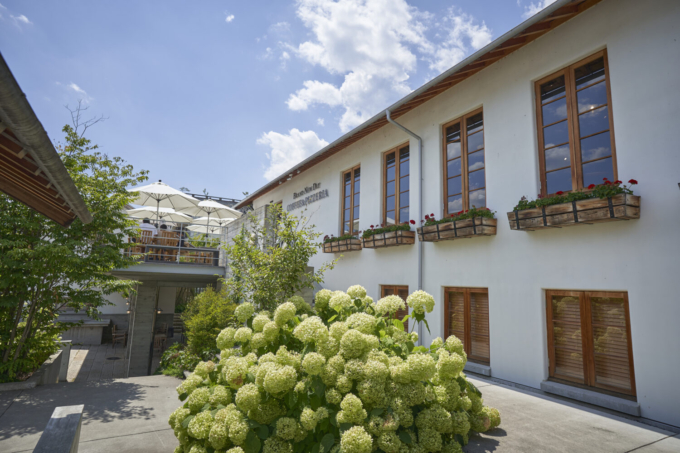
It is adjacent to Oishi Park, where you can view the trees along the shores of Lake Kawaguchi and Mt. Fuji. During lavender season, it is a highly recommended spot where you can capture the perfect trio of lavender fields, Lake Kawaguchi, and Mt. Fuji. There were also shops selling Yamanashi-made sweets and souvenirs, stylish cafes, and a general store carrying Japanese-style items!
Here, I enjoyed a seasonal peach parfait.
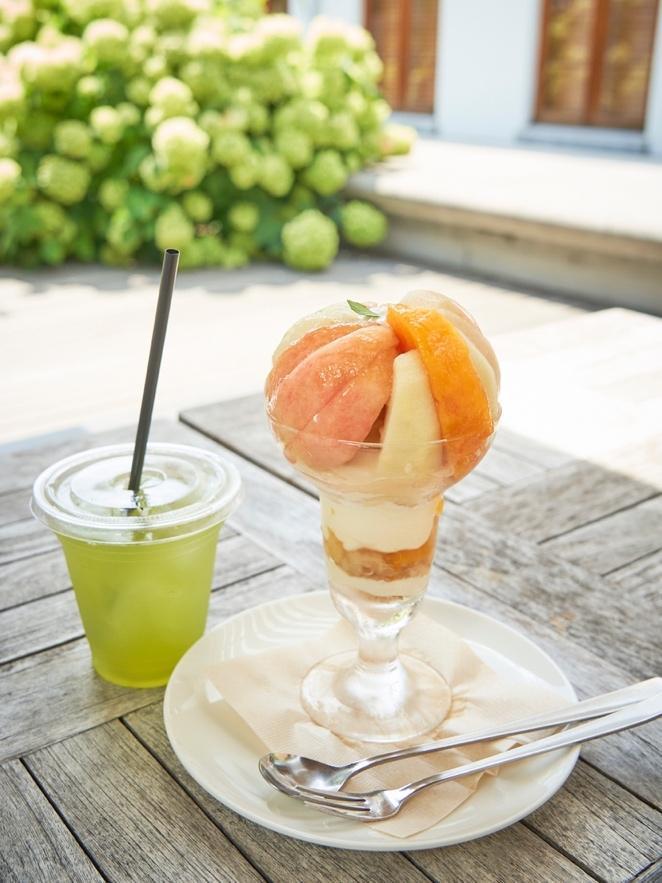
・Fuji Oishi Hana Terrace
https://www.fujioishihanaterasu.com/
〈Finally, Into the Sea of Trees〉
Between the studying, the lunch, the shopping, and the dessert, the tour had already been packed with activities, but now we come to the main event. Finally, the forest trek begins.
As soon as we stepped off the bus along the national highway, we were already inside the Sea of Trees.
After walking for about 10 minutes while enjoying the fresh air, we arrived at “Ryugu Sea Cave,” one of the lava caves located in the Aokigahara region of Mt. Fuji.
This cave is also a nationally designated Natural Monument and houses the 5th sacred site of the “Fuji-ko Eight Lakes Pilgrimage.” Although the temperature that day exceeded 35°C, it gradually became cooler as we descended the stairs. It was almost a bit chilly in short sleeves.
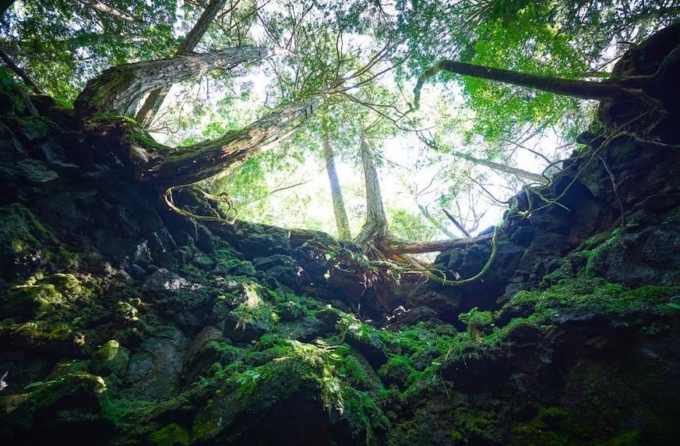
Looking up from inside the cave, I could see sunlight filtering through the green forest.
It was truly mystical.
Since the tour took place on a clear day, we thoroughly enjoyed this brief moment of cool relief.
Next, we visited “Fugaku Wind Cave.” This is a lateral cave formed by lava flows after an eruption. With a total length of 201 m and a height of 8.7 m, it is easy to walk through even for children and the elderly, and it was bustling with tourists.
The average temperature is 3°C. As I descended halfway down the stairs to enter, the temperature plummeted! It was so cold that I hurriedly put on the jacket I had been too lazy to wear earlier (lol).
Until the early Showa period, it was used as a natural refrigerator to store silkworms for silk production and plant seeds.
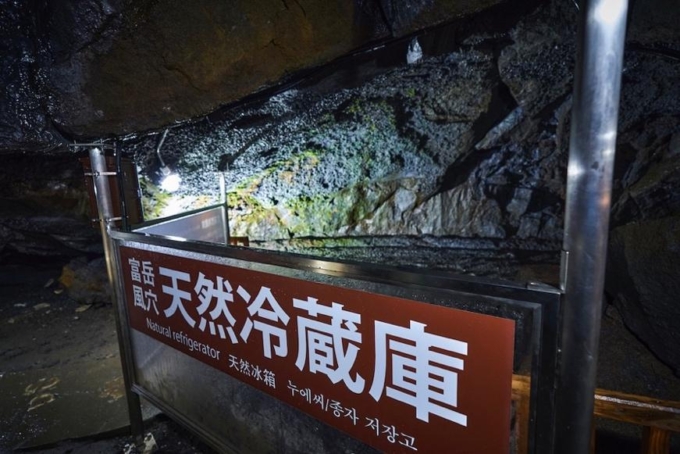
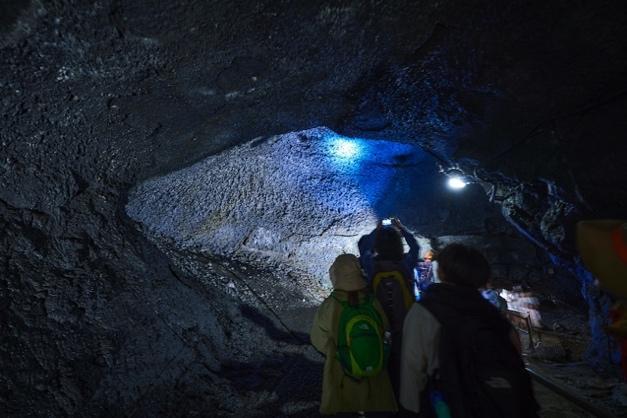
The inside of Fugaku Wind Cave was not as cramped as I expected; at 158 cm tall, I was able to explore without having to crouch much at all.
Inside, we could see rope-like lava formed by rapidly cooling lava, ice that doesn’t melt even in summer, and luminous moss. The illuminated interior was very mystical.
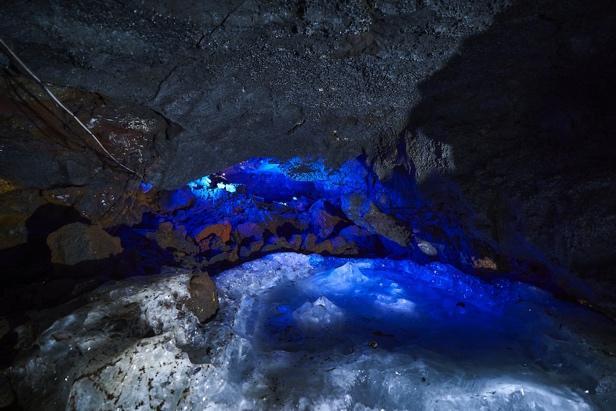
To reach our next destination, Narusawa Ice Cave, we walked along the “Tokai Nature Trail,” where we could enjoy trekking through the forest.
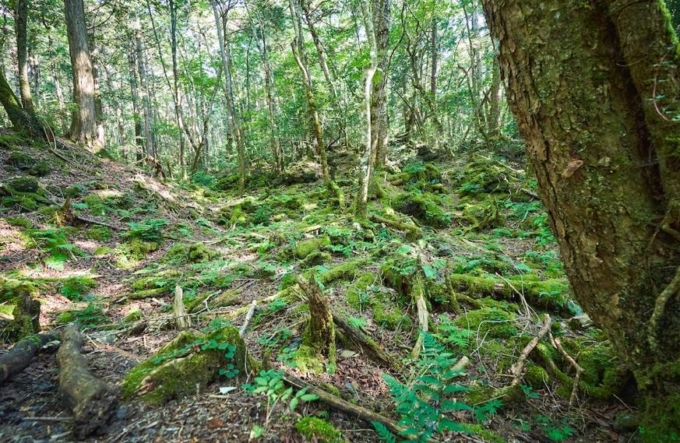
I had an image of Aokigahara being dim and gloomy, but the sunlight filtering through the lush green trees was beautiful, looking like something out of a Studio Ghibli film. With the shade and the fresh air, it wasn’t too hot, and we proceeded with the feeling of a pleasant hike.
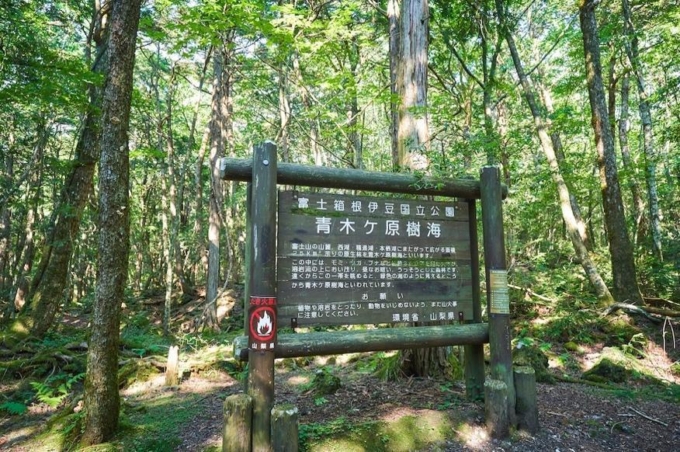
Now, everyone.
Have you ever heard the rumor that once you enter the Sea of Trees, you can never get out?
You often hear stories about compasses spinning wildly, making it impossible to tell which way is which. Before I left, my colleagues even half-jokingly expressed concern, saying, “Please make sure you come back safely.”
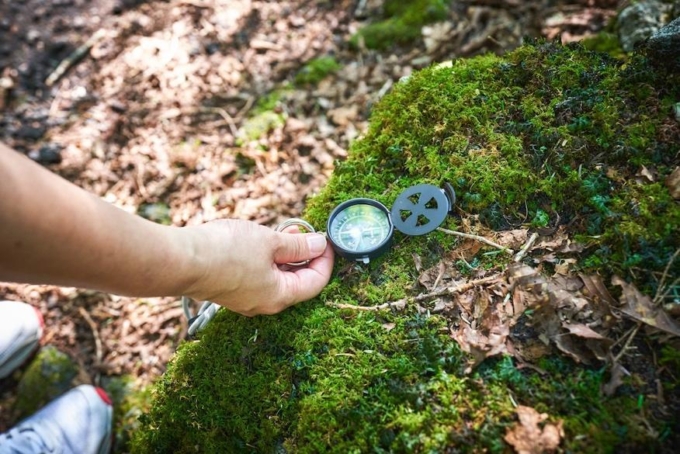
Do you really lose your sense of direction in the forest? I actually tested a compass, but it didn’t spin around at all.
The reason such myths spread is that some lava contains components that are attracted to magnets, which can rarely cause the needle to flicker or rotate. However, if you use a compass about 30 cm away from the ground or lava, it won’t be affected, and the needle generally won’t malfunction. I actually held it close to the rocks on the surface because I wanted to see the needle spin, but unfortunately, it didn’t budge.
As we walked along the trail, we saw many trees with interesting shapes, which is typical for a forest grown on top of lava.
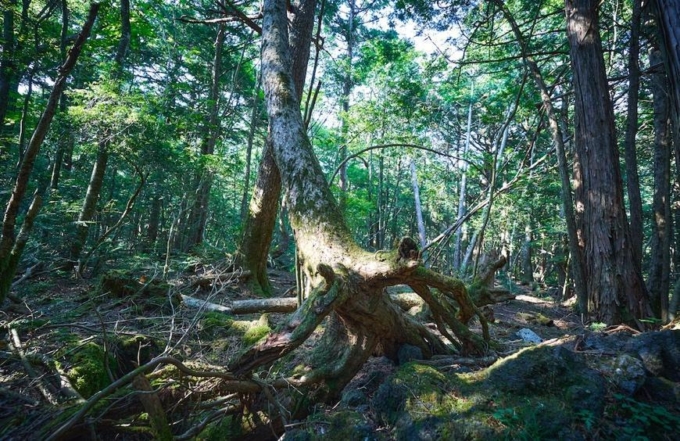
There were trees with roots growing sideways and developing at unstable angles,

and trees where two trunks were wrapped around one another, supporting each other.
Because the ground is made of lava, the roots cannot grow deep, making them prone to falling in strong winds. Despite such a harsh environment, seeing them strive to live allowed me to truly feel the strength and beauty of life in nature.
While the Tokai Nature Trail has some sections where lava protrudes, the path is well-maintained and easy to walk. There were several photogenic spots, and I was able to feel nature with my whole body in the quiet atmosphere.
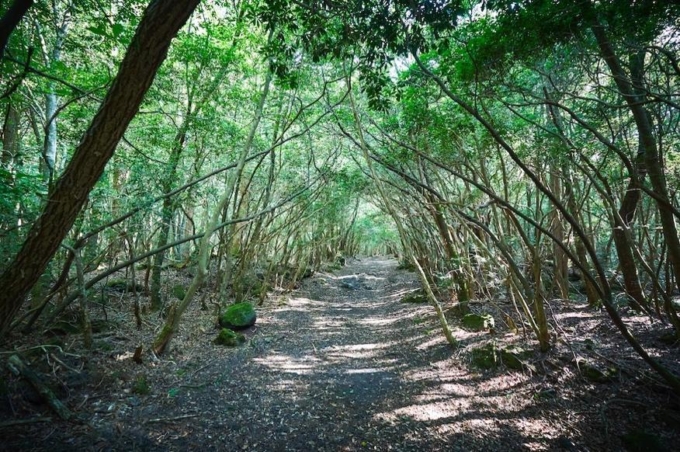
After about an hour of trekking, we arrived at our final destination, “Narusawa Ice Cave,” where a sign at the entrance indicated the temperature inside was 0°C.
Applying what I learned at Fugaku Wind Cave, I put on my jacket and headed inside.
The staff warned us to watch our heads because the ceiling was low in some places, but it was even lower than I imagined.
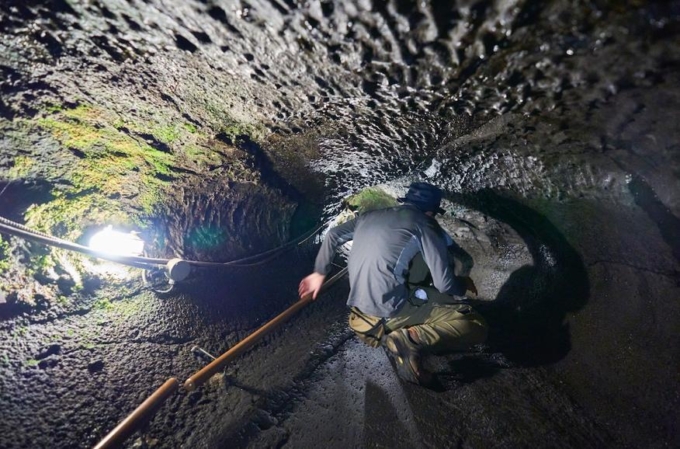
Moving forward in a crouched position like a sports drill while being careful of the ceiling, I was able to see ice that doesn’t melt even in summer. The illuminated view was incredibly fantastical.
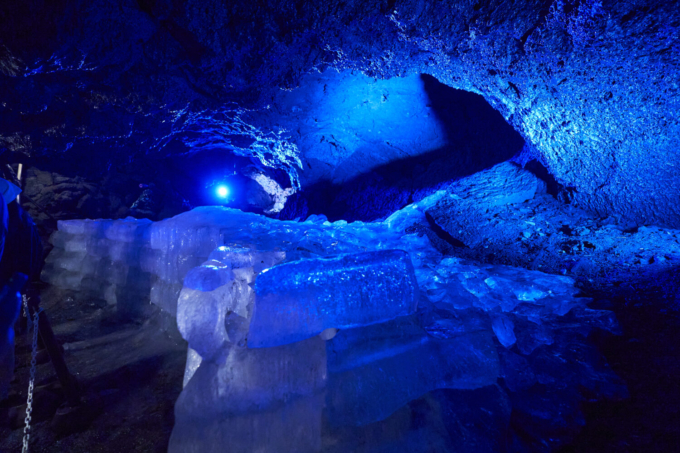
Narusawa Ice Cave has a total length of 153 m and is a vertical circular cave, so you can walk all the way around it.
・Natural Monuments: Fugaku Wind Cave & Narusawa Ice Cave
https://www.mtfuji-cave.com/
〈Ending the Trip with a Hot Spring〉
After finishing the forest trek, we soothed our travel fatigue at “Fuji Yurari Hot Spring,” located near Narusawa Ice Cave. It is a refreshing spot with several types of baths, including a cave bath and a rose bath, and you can even see Mt. Fuji from the open-air bath when the weather is clear.
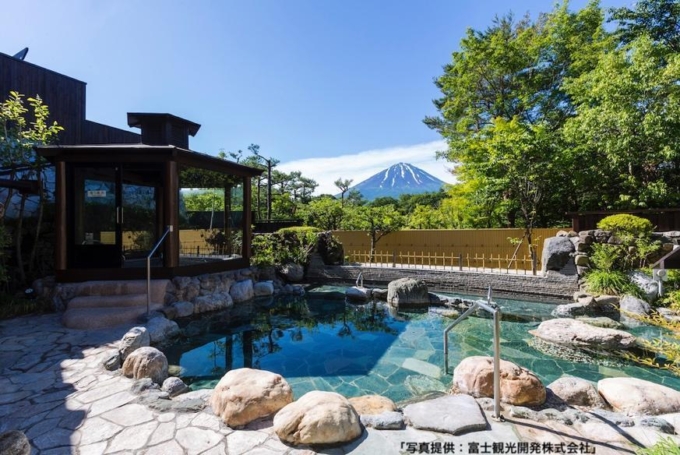
・Fuji Yurari Hot Spring
https://www.fuji-yurari.jp/
〈A Changed Perspective! The Forest Tour〉
This is a course I highly recommend exploring if you visit the Lake Kawaguchi area. It is about a two-hour drive from central Tokyo, making it an ideal spot for an autumn drive!
Furthermore, Aokigahara Jukai offers different scenery for each of the four seasons, so it can be enjoyed no matter when you visit.
My image of the forest changed 180 degrees through this tour, and I came to love everything about it—the beautiful nature, the fresh air, and the mystical atmosphere.
And it wasn’t a scary place at all.
If reading this blog makes you feel even slightly like visiting, please do go! I am sure you will discover the charm of the Sea of Trees!