Y’s Integration’s Tamiya Robot School Sendagaya Classroom Now Open! Teaching Programming to Children in an Office-Based Classroom
Y’s Integration, a member of SUNNY SIDE UP GROUP, has been operating the Tamiya Robot School Sendagaya Classroom for elementary school students since April 7 of this year, utilizing a conference room within the office. This classroom, which started as part of the Educational ICT Team’s initiatives, currently has four enrolled students.
We would like to introduce what kind of learning the children are experiencing in the Tamiya Robot School classroom, the atmosphere of the lessons, and our reflections on starting classroom operations as a company.
What is Tamiya Robot School?
 Tamiya Robot School is a joint venture between Tamiya Inc. and Natural Style Inc. that started in 2018 with the theme of “Manufacturing and Programming.” It aims to provide children across Japan with opportunities to create and challenge themselves, nurturing their motivation and curiosity to “create!” and enabling them to develop the ability to realize their own ideas through proactive trial and error.
Currently operating as a franchise with 62 classrooms across 27 prefectures, we have now joined as one of them.
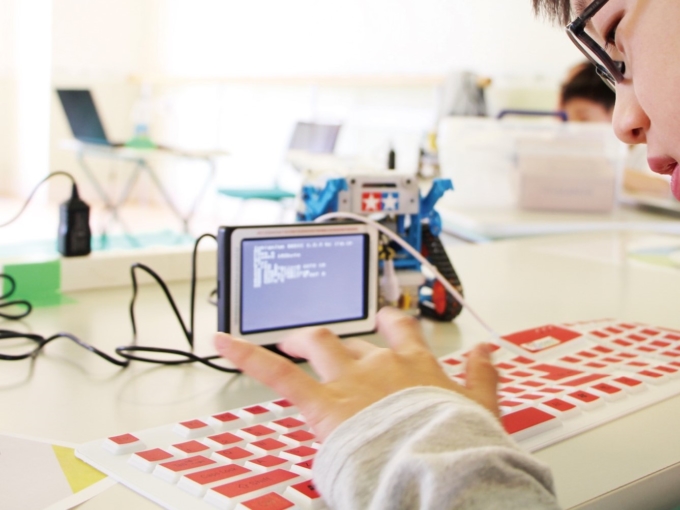 In the school, students learn authentic programming by entering program code using a keyboard to control robots. For example, the code “OUT1” means “rotate the left tire forward.” Each movement has a specific code assigned to it, and students need to think about what order to combine each movement to achieve their intended motion.
If the code is incorrect, it will result in an error or the robot will move in an unintended way, so students program while checking on a small monitor to ensure they are entering the code correctly.
Why We Started Tamiya Robot School
We began our relationship with Natural Style, which operates Tamiya Robot School, through the joint development of our programming educational material “SOVIGO,” and that connection led to this opportunity.
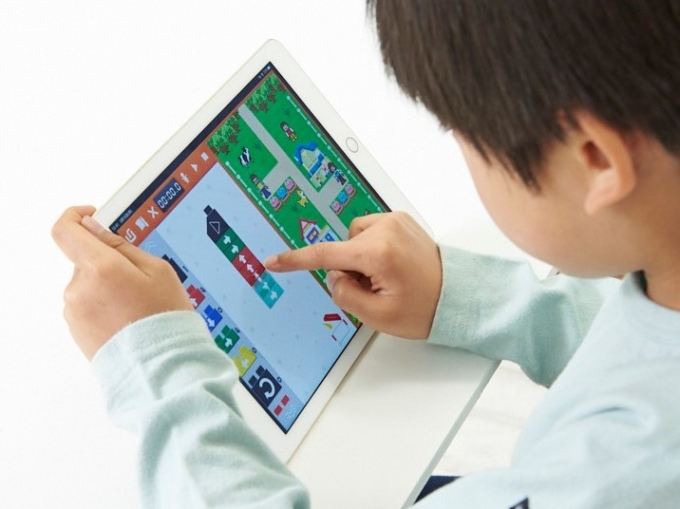 ※SOVIGO app educational material, a programming tool provided by Y’s Integration
As a children’s programming educational material manufacturer, we are coordinating the expansion of learning classrooms with the following two major objectives to enhance our corporate (business) value:
・Communicating that we operate classrooms aimed at improving children’s programming education
・Implementing classroom operations on a trial basis to build operational know-how
Personally, having belonged to the Faculty of Education during my university years and obtained an elementary school teaching license, being able to stand before children as an instructor was also one of the motivating factors.
Conducting Trial Sessions
Prior to opening, we held free parent-child trial sessions starting in March, one month before the first class. These sessions were held to familiarize participants with the classroom atmosphere and learning content to encourage enrollment, and they also marked my debut as an instructor.
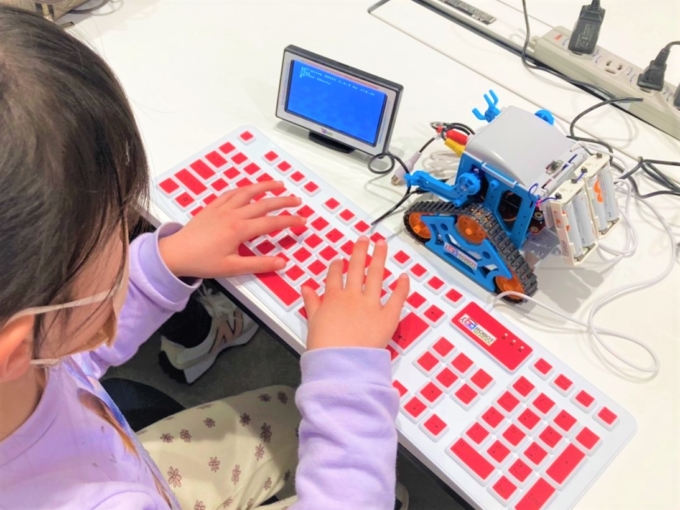 First, we confirm the basic movements of the robot one by one. The children are completely focused on their first programming experience.
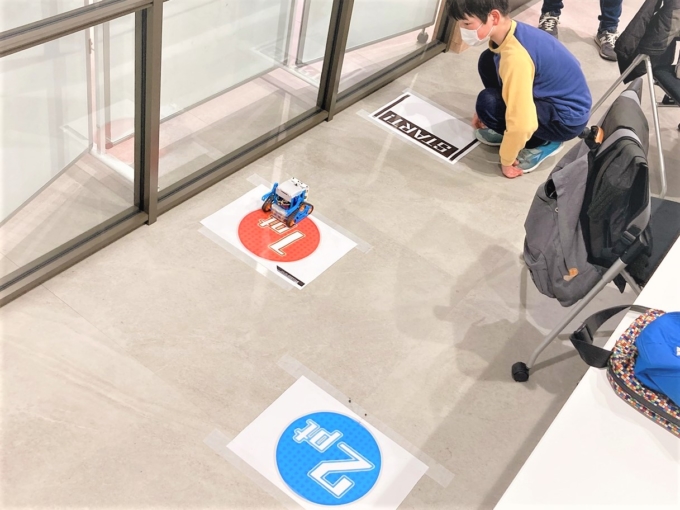 After that, they challenge themselves with a programming game. They program the robot to proceed in order through 1pt, 2pt, and 3pt markers placed on the ground. The children were so absorbed that they wanted to reach the 3pt marker so badly that they pleaded with their parents, “I still want to program more!” even after the session ended.
Following this trial session, four students enrolled, and we were able to successfully start classes in April!
Classes Finally Begin
In the memorable first lesson at Tamiya Robot School Sendagaya Classroom, instead of using the robots from the trial session, students challenged themselves to program a simple game using a small computer called “IchigoJam” built into the robot.
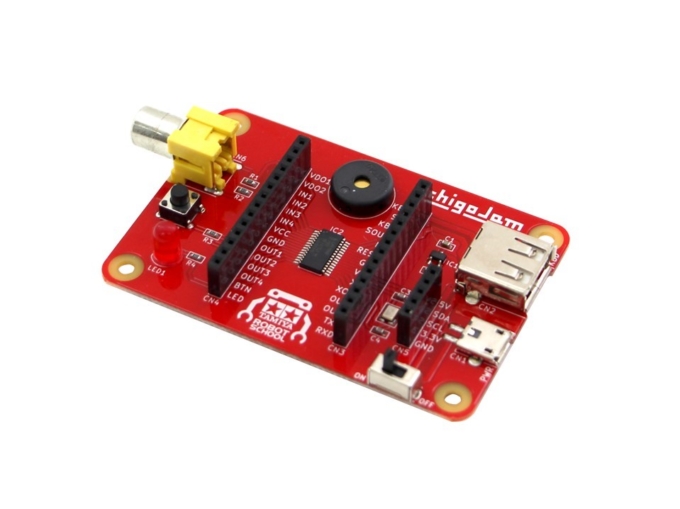 ※Small computer: IchigoJam
Unlike the trial session, the children were nervous at first, but once they actually started programming, those feelings quickly disappeared and they enjoyed the activity, saying “Teacher, I did it!”
The reason I had the beginner programming students challenge themselves with the slightly difficult task of “game creation” from the first session was not only to help them enjoy programming, but also to make them realize that the games familiar to them in daily life are also made with programs, and that game creation is not beyond their reach—through programming, they too can accomplish many things.
In the second lesson, students create with their own hands the same robot they operated in the trial session. Since they handle tools not typically used in school arts and crafts classes, such as nippers and grease, everything is new for the children.
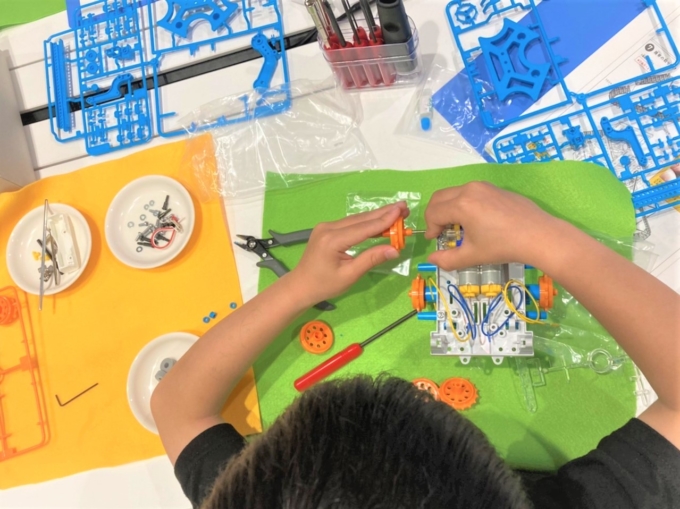 At Tamiya Robot School, we value not only programming education but also hands-on manufacturing experiences. For children who will live in an era where robots and AI technology are more advanced than today when they become adults, the experience of programming something they built with their own hands is invaluable.
Robot creation will be completed in the following third and fourth lessons, and from the fifth lesson onward, full-scale programming education using those robots is scheduled to begin.
After Two Months Since the Trial Session
At Tamiya Robot School Sendagaya Classroom, I serve as the instructor conducting classes, the classroom director managing operations, and also handle tasks such as parent communication and ordering educational materials.
Drawing on my university experience teaching children at elementary schools, I naturally feel no nervousness about conducting classes as an instructor—in fact, I feel more excitement than anything.
Of course, there are many challenges. Particularly since this classroom has many lower elementary grade students, careful consideration is needed in teaching methods, such as choosing simple and easy-to-understand words, determining the order of explanation, and preparing images for visual comprehension. Furthermore, among the children, some are quiet and cannot express when they are struggling, while others make mistakes without reading instructions carefully, so during lessons I constantly observe the children’s expressions and hands and make an effort to communicate according to each child’s personality.
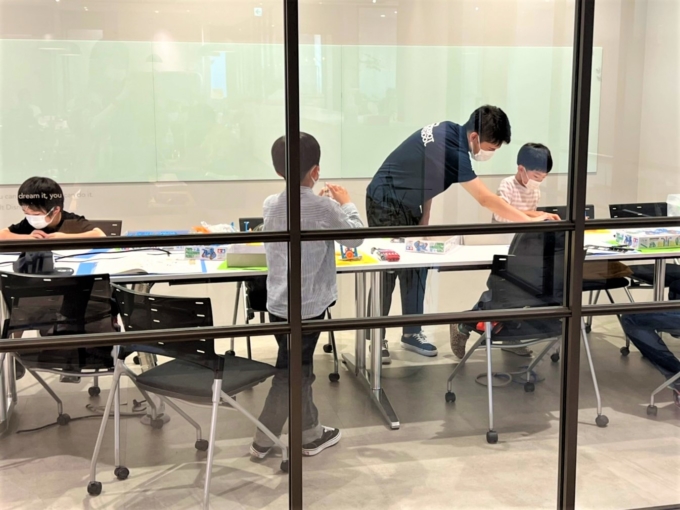 The conference room where classes are held has a design that allows visibility from outside, so if you are interested, please come and observe the children!