One person’s worries can be solved by everyone. Hints for women living today, as revealed through the story behind the birth of the women’s self-care brand “WRAY.” [Part 1]
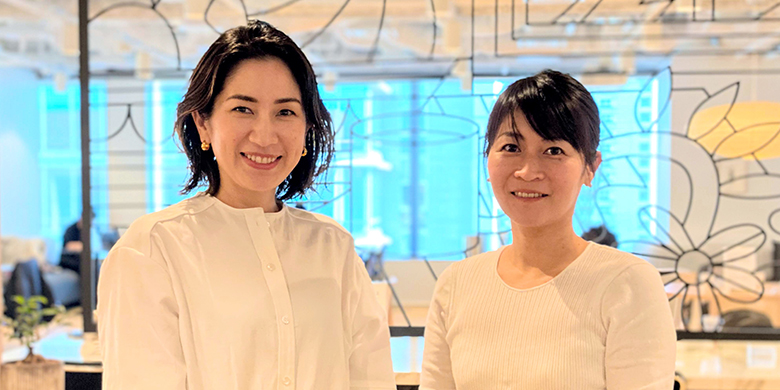
The women’s self-care brand “WRAY” was launched in September 2020.
As a brand that supports women’s biorhythms and lifestyles, it has attracted attention from many women.
The founder who launched WRAY with the desire to “help women demonstrate their true potential” is Yukiko Taniuchi.
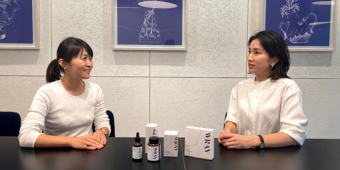
Together with Emi Tanimura, General Manager of the President’s Office at SUNNY SIDE UP GROUP, who supports the brand through PR and investment, they discussed the brand’s origin story and career perspectives unique to women.
What is the “message that encourages women” shared by these two women living in the same era? This will be delivered in two parts: Part 1 and Part 2.
—Let’s start by hearing about the background and thoughts behind launching the brand.
Taniuchi (honorifics omitted):
Since my mother ran a company, I witnessed firsthand from a young age “the challenges women face in working.”
After I entered the workforce myself, I experienced difficult situations and frustrating moments. I deeply felt that for women to succeed while navigating life events, they must overcome various challenges. Especially after having children, I faced numerous issues such as gaining understanding from those around me, time management, children’s mental care, and workplace practices, and my own physical health tended to be neglected.
Furthermore, as I went through various life stages, I experienced a succession of concerns unique to women. In my case, these concerns began with menstrual irregularities in my first or second year as a working professional.
Based on these experiences, after considering “what I could do to solve the problems working women face,” I arrived at one answer: “our bodies are our greatest asset.”
With the desire to approach solutions to issues unique to women, I started this brand.
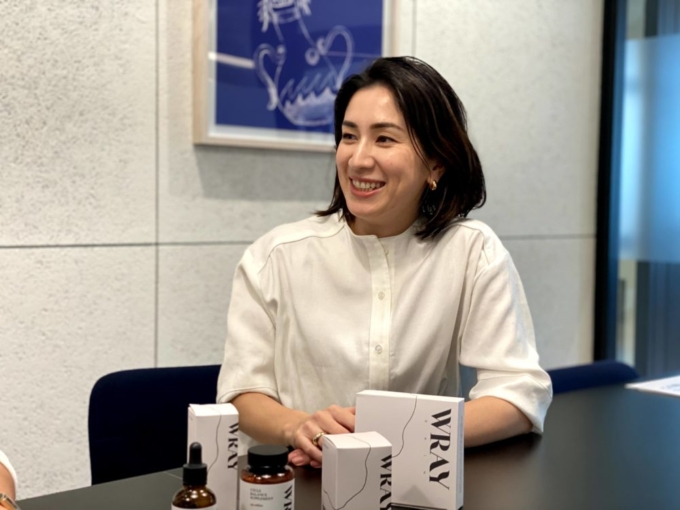
—So you felt something even as a child watching your mother.
Taniuchi:
Even in my mother’s era, there were working women, but women in the position of “president of a company” were very few. Watching my mother work in a male-dominated society, I sensed as a child that gender issues existed and that she was trying to overcome them.
The working women of my mother’s generation overcame challenges one by one, which has led to the present era. Within that flow, what can our generation do? The desire to “do something and make changes to pass on to the next generation” grew stronger.
Technology has also evolved now, and this is an era well-suited to creating “good products.” I thought it would be good to leverage that as a strength and challenge something. Additionally, to fulfill the desire of our generation to “change something,” it would be better to have a greater impact. With that thinking, I chose the path of starting my own company.
—Please tell us about the brand overview and product features.
Taniuchi:
WRAY is a self-care brand that supports women’s biorhythms and lifestyles. We develop and sell products related to inner care, skincare, and warming activities, provide menstrual cycle tracking services via LINE, and distribute informational content.
—Please tell us what led SUNNY SIDE UP GROUP to become a partner company.
Tanimura:
Speaking personally, I also suffer from PMS, and sometimes it’s more painful than during my period.
I’ve had severe nausea and have even had to get off the train mid-commute. Yet I couldn’t tell anyone around me. I think the issue of PMS is a concern that hasn’t been brought to light in Japan.
Because the symptoms aren’t always visible, many people think it’s “not something to tell others about.” They go through their daily lives carrying the feeling of “not feeling well” alone. I felt a strong connection to the brand’s concept of proposing solutions to that concern.
From a corporate standpoint, our group launched the project “SSU’s Social Action 3.2 for SDGs” last year, which promotes activities toward achieving the SDGs (Sustainable Development Goals) through both our own business and support for other companies. Recently, in addition to providing PR services, we began initiatives to support the growth of SDGs-promoting companies through investment. WRAY was selected as the first recipient, and we proceeded to provide support.
Taniuchi:
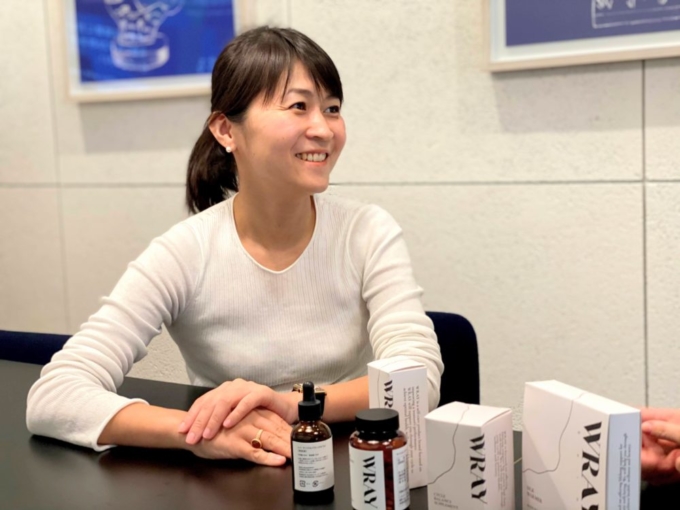
About 70% of people don’t talk about or consult anyone regarding PMS. The most common reason is “because everyone else endures it.” Since they’ve been enduring it since around age 12 when menstruation begins, many people may feel that not talking about it is normal.
I want to convey the message to these women that “you don’t have to endure it—there are solutions, and everyone is struggling with the same things.”
—How has it felt since starting the business?
Taniuchi:
We often receive feedback through social media.
“I was happy that you focused on small concerns,” “The barrier to going to the hospital was high,” “I didn’t know so many people were struggling with the same thing as me.” These are some of the empathetic voices we received in response to the question “Please tell us about your PMS concerns.” I felt once again that there are many issues that haven’t been brought to light.
Tanimura:
I often hear that people around them worry and recommend going to the hospital, but it’s often not quite to that extent. I think having a place of emotional support during times of discomfort is important.
Taniuchi:
That’s right. I’m always thinking about creating products that many women will want to try. We aim to be a brand that naturally blends into daily life, provides an opportunity to pay attention to one’s own body, and works together toward solutions.