What was the power of “PR” that brought the voice of pro windsurfer Natsuki Iijima, featured in “If I Could Meet You in Heaven,” to the world?
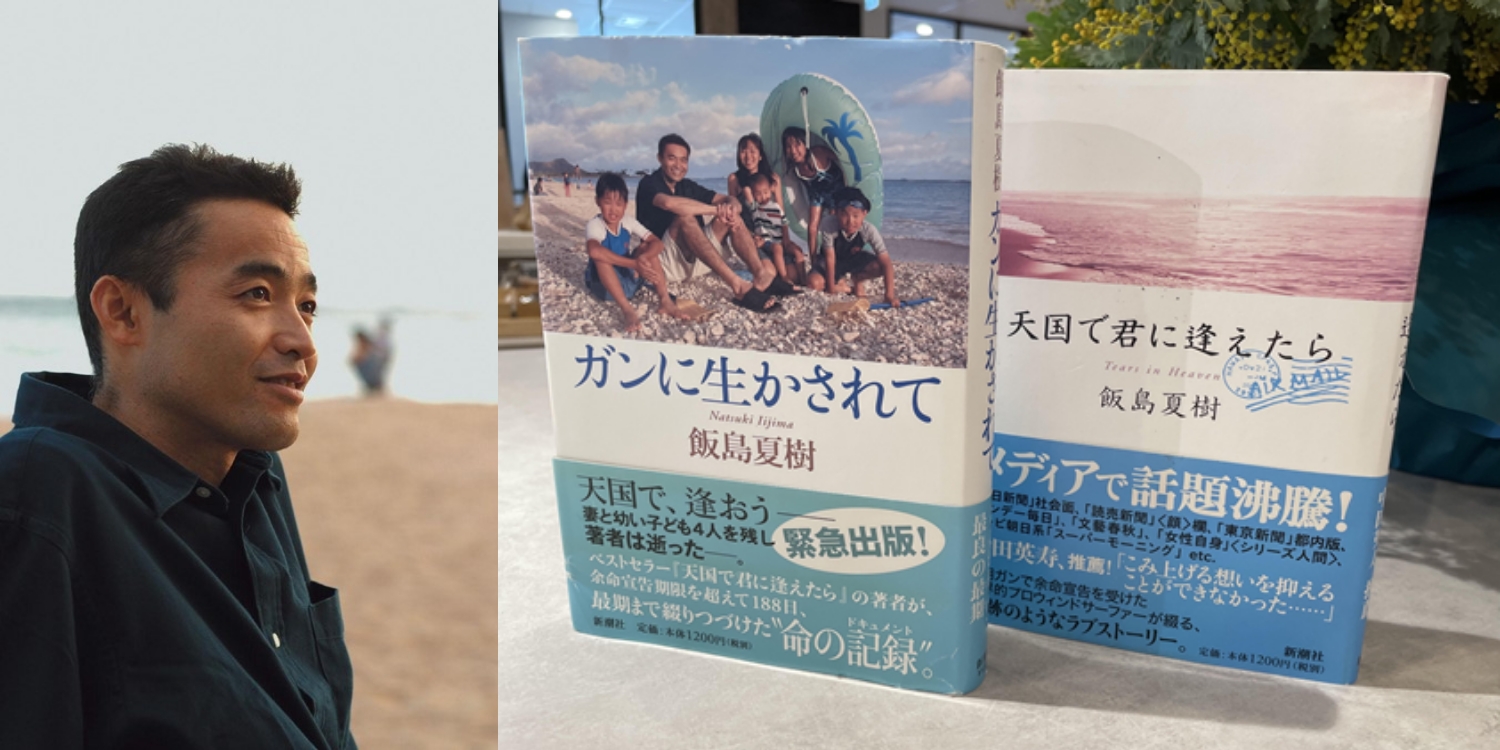
This article has been produced by reconstructing a speech delivered at an internal morning assembly by our Group’s President CEO, Etsuko Tsugihara. It looks back on the life of world-class professional windsurfer Natsuki Iijima and the PR stories behind it. We invite you to read on.
Natsuki Iijima profile: https://www.ssu.co.jp/service/ssupeople/natsuki_iijima/
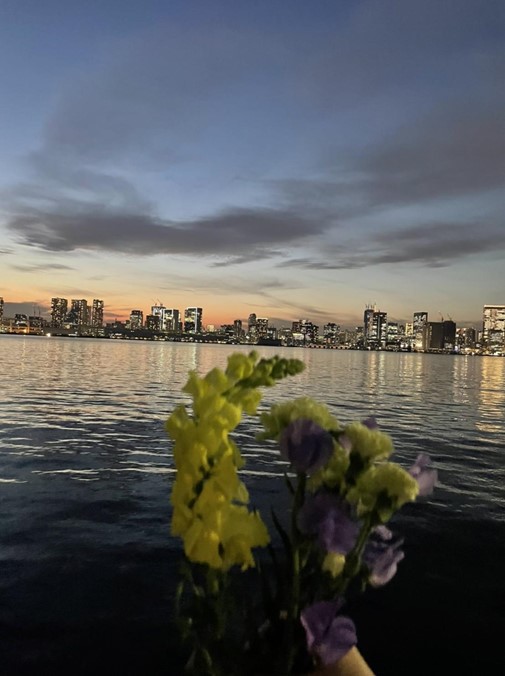
February 28. For the past 17 years, without fail, every year I have gone to a certain place with Mr. Matsumoto (Editor’s note: Director, SUNNY SIDE UP Inc.). It is the sea of Tokyo Bay—the Pacific Ocean. We do so because it is the anniversary of the passing of our colleague, Natsuki Iijima, who died 17 years ago.
Because we scattered his ashes in the waters of Hawaii, his grave is the sea. And since Tokyo Bay would connect to the waters of Hawaii, we offer flowers at the sea every year. Over the past few years, the bay area has changed dramatically, and we can no longer offer flowers at the Harumi quay, so recently we found a good spot in a park in Toyosu.
Natsuki was a windsurfer introduced to us by triathlete Hideya Miyatsuka, the first athlete SUNNY SIDE UP ever managed. We first met 30 years ago—long ago (laughs).
A big man with a deep tan. As a professional windsurfer, Natsuki competed in the World Cup for eight years. He was a popular figure in the marine sports world.
After retiring from competition, he established a sailing center in Guam called “SUNNY SIDE UP Guam” and worked in marine sports. Blessed with four children, he lived a picture-perfect, happy life.

Many of you may know what happened next: at the age of 35, he was diagnosed with a serious cancer. He returned to Japan with his family for treatment, and we supported our friend through his fight with the illness.
While hospitalized at the National Cancer Center, he began scribbling down his experiences on manuscript paper and started writing something like a novel. He would often lie on the orange sofa in my room and talk to me about the story.
“I want to publish this novel”—before we knew it, that became his dream.
Everyone except him believed he did not have much time left and that finishing the novel—let alone publishing it—would be impossible. But when he asked, “Do you think we can publish it? Ecchan, please,” I could not not act.
With those manuscript pages covered in messy handwriting, I went to Shinchōsha to appeal directly to a senior executive.
As I bowed my head in tears, Mr. I, who was Shinchō’s editor-in-chief at the time, looked surprised and said,
“All right. By summer. I’ll make it happen somehow.”
Overjoyed, I immediately called Mr. Matsumoto and jumped for joy. When I called Natsuki at the hospital to report the news,
I still remember him shouting loudly into the phone, “Yes!”
However, at the next meeting with Shinchōsha, I realized I had made a major misunderstanding.
Mr. I’s intention was, “Let’s make just one book for Natsuki.” In other words, the manuscript was far from publishable, and there was simply no time. The plan was to hand-make a single sample book to deliver to Natsuki in his hospital bed.
I had made everyone happy. I could not say that now. Even if we could deceive Natsuki, I felt, “That can’t be right.” This was disappointment in the truest sense. That day, I could not even tell Mr. Matsumoto.
However, a few days later, a miracle occurred. Overwhelmed by the intensity of the moment when I—usually a tough, unpleasant woman—had bowed my head in tears, after I left, a literary editor, Mr. K, read the manuscript properly. He advocated internally, saying, “If we edit this properly, the premise and story are interesting. Let’s do it,” and it became possible to publish it for real.
To make a long story short, that scribbled manuscript was successfully turned into a book. A documentary program capturing the process drew an enormous response, and it became a blockbuster bestseller with total sales exceeding 800,000 copies. Natsuki’s life was later adapted into a film starring Takao Osawa.
Incidentally, the theme song, “Kaze no Uta wo Kikasete,” sung by Keisuke Kuwata, came about because a producer—Mr. H, a fellow windsurfer and close friend of Natsuki—took a long shot and appealed to Mr. Kuwata directly, and Mr. Kuwata graciously accepted.
Some of you may be thinking, “Not this kind of story first thing in the morning!”
In any case, while I cannot say I have neatly summarized what I want to convey, the point is this: when I acted with a single-minded determination to make it work somehow, it drew people in, and then drew in more people—until it grew into a book, a TV program, a song, and a film, expanding more and more.
Natsuki’s four children have each grown up—becoming a police officer, an engineer, and more—and all have become fine adults. The Iijima family had been at a loss, so it truly made me happy that the novel became the education funds for all four children.
I do not know whether this should be called a PR success story, but I always feel that small actions inevitably shape someone’s heart and the actions that follow. Let us continue to face each task, one by one, this month as well.
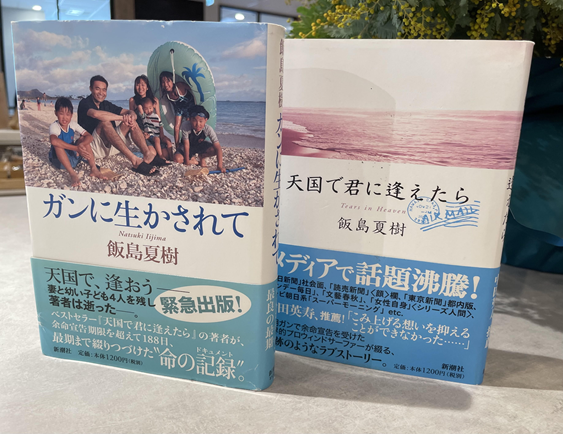
[A well-worn copy for internal reading. It is still lined up on the office bookshelf so anyone can read it.]