I Visited EXPO 2020 Dubai [Part 1]: What is the Dubai Expo?
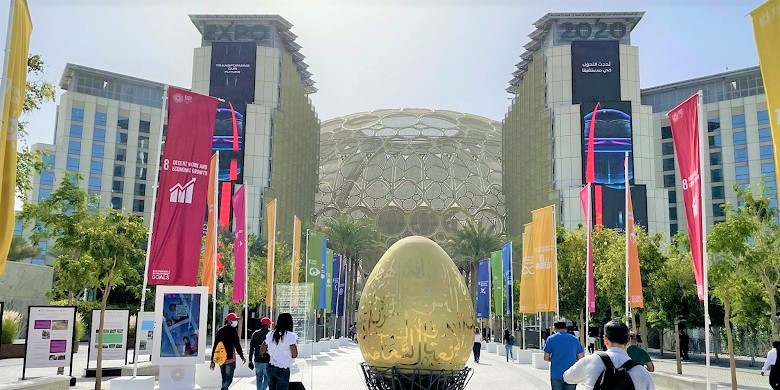
Introduction
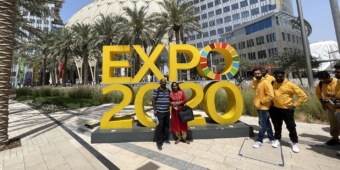
With the World Expo, a major international event held once every five years, taking place in Dubai, I wondered what kind of events were being held on-site.To grasp the current state of international events, our SUNNY SIDE UP investigation team headed into the depths of Dubai…(In reality, the Dubai Expo venue is about 30 to 40 minutes by taxi from Dubai International Airport, so it is not actually that remote.)
In this blog, Kameyama from the Dubai Expo investigation team will provide a report on the Dubai Expo divided into two parts.The first part will summarize basic information about the Expo and introduce the Dubai Expo and the Japan Pavilion. The second part will report on pavilions other than the Japan Pavilion, Expo gourmet food, and more. Click here for Part 2!
I Visited EXPO 2020 Dubai [Part 2]: 3 Most Impressive Pavilions
■What is a World Expo (International Exhibition)?
■What is EXPO 2020 Dubai?
■Infiltrating the Popular Japan Pavilion at the Dubai Expo!
■The Next Expo is…
What is a World Expo (International Exhibition)?
About the Expo
An event officially registered or recognized by the Bureau International des Expositions (BIE) based on the Convention Relating to International Exhibitions. According to the Convention, an international exhibition is “an exhibition which, whatever its title may be, has as its principal purpose the education of the public: it may exhibit the means at disposal of mankind for satisfying the needs of civilization, or demonstrate the progress achieved in one or more branches of human endeavour, or show prospects for the future.”
Reference: Ministry of Foreign Affairs Website
While that is a somewhat formal explanation, put simply, it is a venue for countries to showcase their technological prowess, culture, and history to the world.
History of the Expo
The history of international exhibitions began with the “Great Exhibition of the Works of Industry of All Nations” held in Hyde Park, London, in 1851. Japan’s first participation in an international exhibition appears to have been the second Paris Expo in 1867.The first Expo held in Japan was the Osaka Expo (1970). I wonder if any of our blog readers participated in it?Even if you did not participate, you may be familiar with it through the “Tower of the Sun,” which was the symbol tower at the time, or the “Expo ’70 Commemorative Park.”
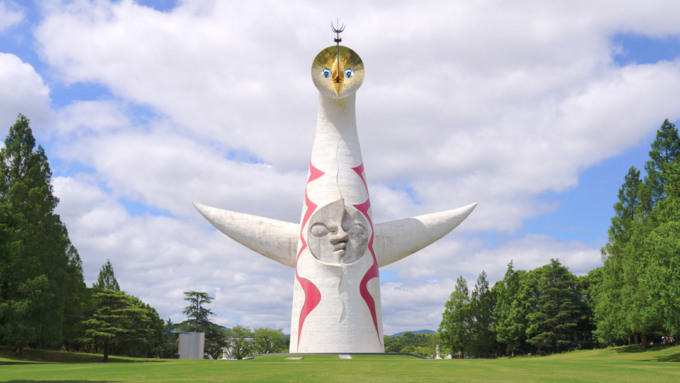
Image source: Tower of the Sun Official Website
The next one held in Japan was “Expo 2005 Aichi.”The theme was “Nature’s Wisdom,” and the official characters were “Morizo and Kiccoro.” It was an Expo in which over 120 countries and 22 million visitors participated.
What is EXPO 2020 Dubai?
*Due to the spread of COVID-19, the event was postponed for one year and opened on October 1, 2021. It closed on March 31, 2022.
Theme: “Connecting Minds, Creating the Future”
Subthemes: “Mobility,” “Opportunity,” and “Sustainability”
A record 192 countries participated. The venue spanned 438 hectares, which is equivalent to 93 Tokyo Domes, or 20 times the combined area of the two Tokyo Disney Resort parks!!The official theme song has cool English visuals, and the choice of a male and female duo for the singers might reflect a conscious effort toward diversity and gender equality.
Dubai Expo Venue Map
The venue is largely divided into five areas, three of which correspond to the subthemes.
・Jubilee
・Mobility (Subtheme)
・Sustainability (Subtheme)
・Al Forsan
・Opportunity (Subtheme)

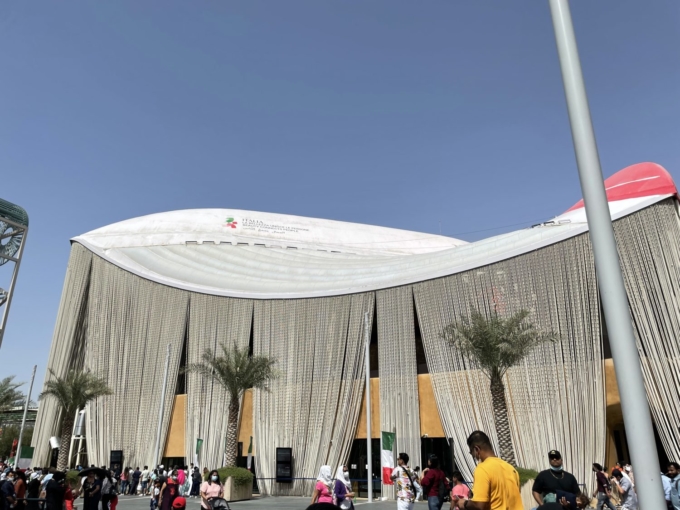
Within these areas, there are exhibition venues (pavilions) for each country, pavilions aligned with the themes set by the host country, and pavilions for sponsoring companies.For the larger pavilions, you can imagine a scale similar to an exhibition at a single art museum. (The photo below shows the Italy Pavilion.)
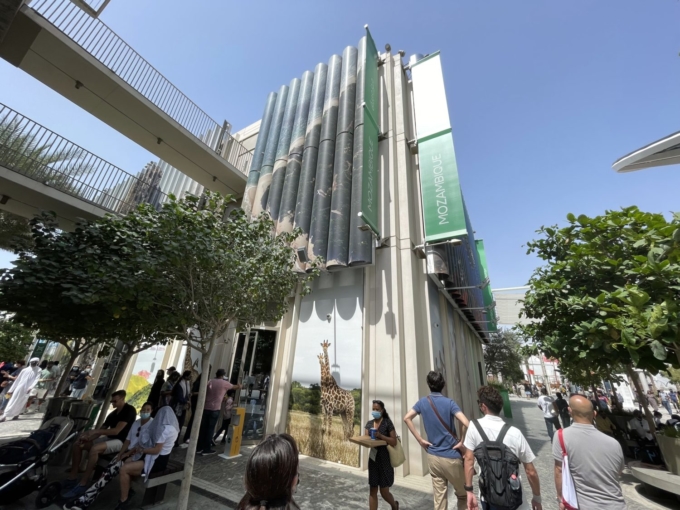
Smaller pavilions are like a single-room space in a small art gallery. (The photo below shows the Republic of Mozambique.)
Nearest Station to Dubai Expo
While both buses and the metro run in Dubai, the metro was convenient for accessing the Expo venue as it is only a few minutes’ walk from the nearest station.The nearest station is Expo 2020 station, but when I tried to top up my card (similar to a Suica card in Japan) at the station on the way back, there was a line this long.
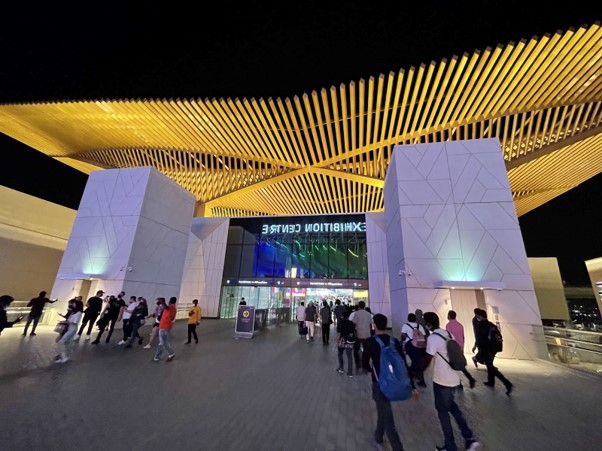
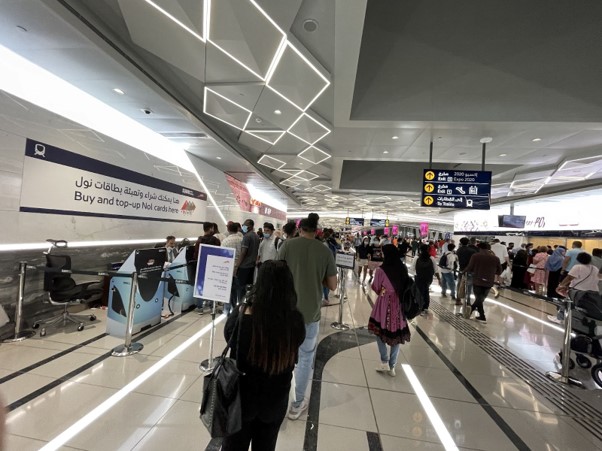
In Japan, when a train arrives at a station, priority is given to those getting off, but there seemed to be no such rule in Dubai. As soon as the train arrived at the station, people started running to get on, and a scramble for empty seats began.Seeing that sight, I thought, “The commute during rush hour in Dubai must be tough…” and felt that Japan still has a national character of cooperation that follows implicit rules.
Dubai Expo Venue Entrance
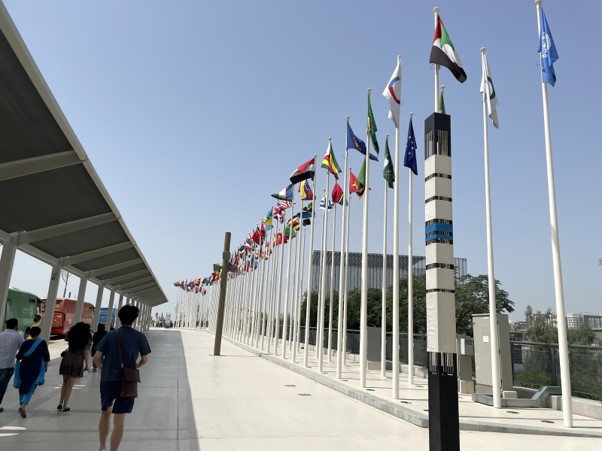
There were, of course, other entrances to the Expo venue besides the one in front of Expo 2020 station, such as those from the parking lots.I was shocked by the sheer size of the venue, where even after parking a private car, you had to take a bus to get to the entrance.The flags of participating countries were displayed near the entrance. It is a wonderful sight to see so many flags lined up. One factor is that Dubai’s location makes it easily accessible from all parts of the world, but another major factor is likely that the Dubai Expo Corporation supported pavilion exhibitions for countries with limited economic resources.
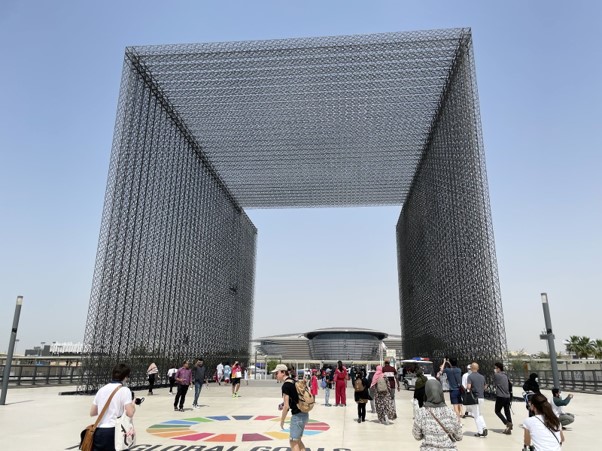
Here is the entrance gate.It is a massive gate with a truly innovative design. Many people were taking photos here (although there were “Instagrammable” spots all over the venue, not just here).
Dubai Expo Venue Decorations and Rest Areas
The main highlight is the dome-shaped plaza located at the center of the venue, “Al Wasl Plaza.”The Al Wasl Dome towering over the plaza features one of the world’s largest 360-degree screens, with a diameter of approximately 130 meters. Projection mapping performances are held on the inner surface of the dome at night.
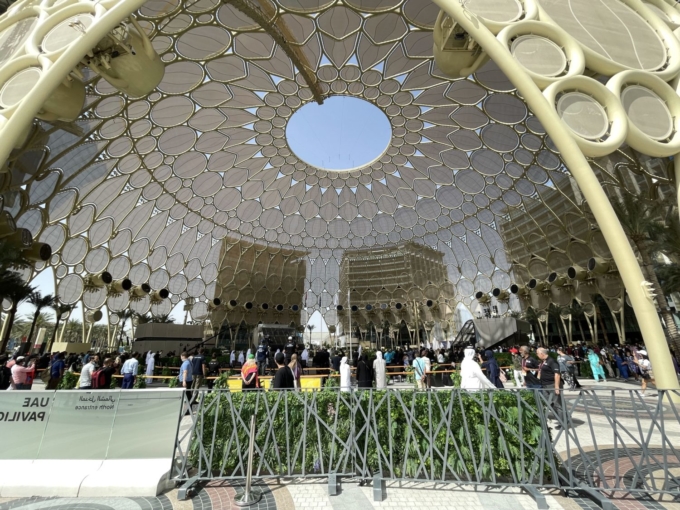
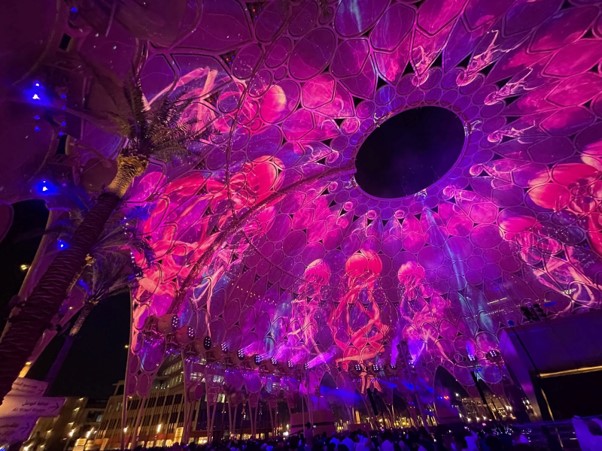
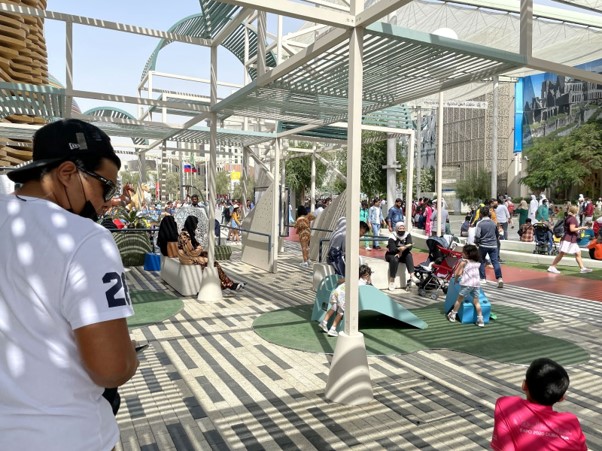
Because of the high temperatures and strong sunlight, roofs were installed over the walkways used to move around the venue, providing proper measures against heatstroke and sun exposure (on hot days, temperatures can exceed 40°C!).
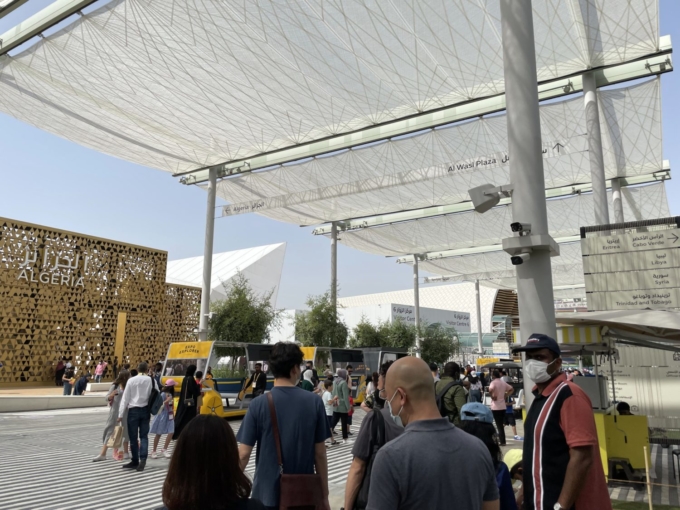
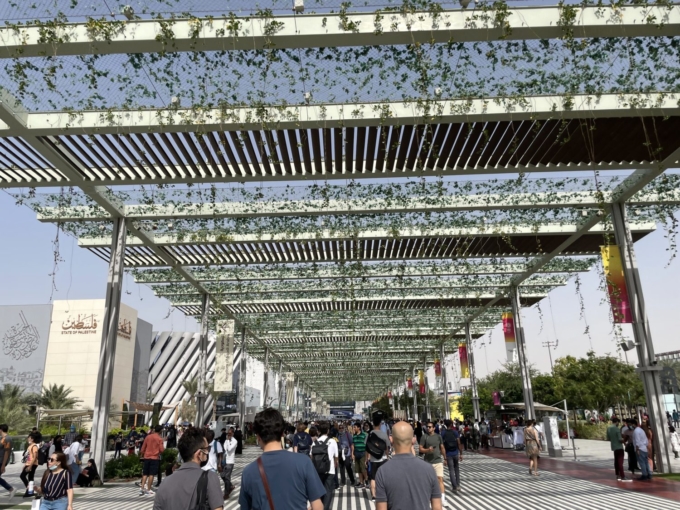
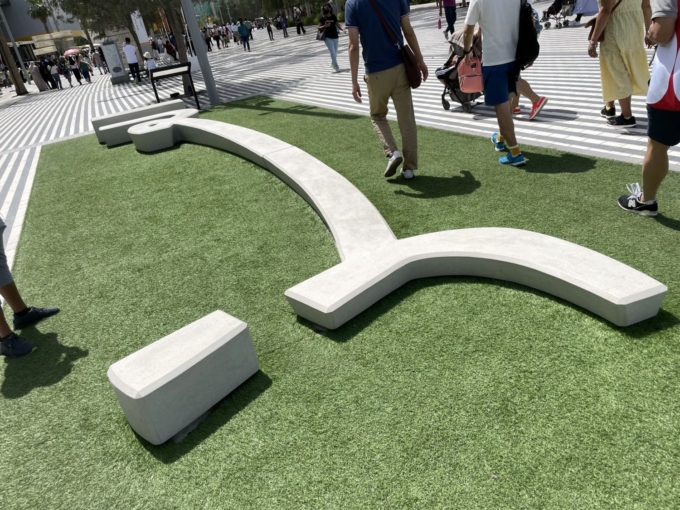
There were benches for resting with designs like this.These benches appear to be modeled after Arabic script, and it is interesting to see UAE culture expressed in this way. *Dubai is one of the seven emirates of the UAE (United Arab Emirates). The capital of the UAE is Abu Dhabi, and Dubai is the largest city.
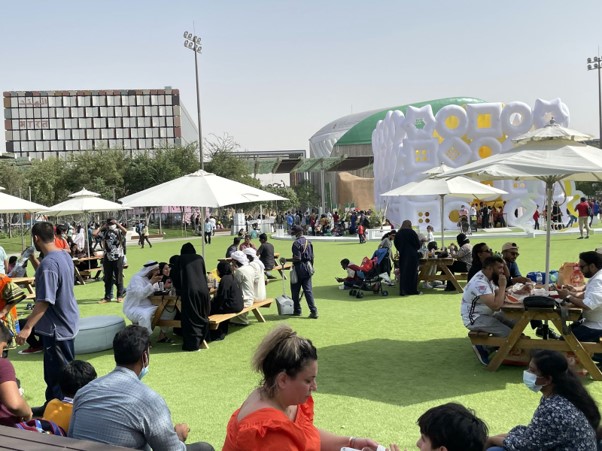
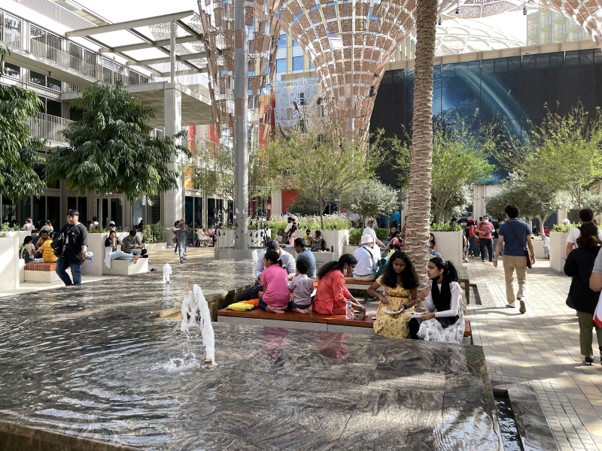
Many such rest areas were set up, and families with children could be seen taking a break and relaxing in various spots.
Commemorative photo spots were also properly provided. Unlike on the trains, people were lining up properly here (laughs).
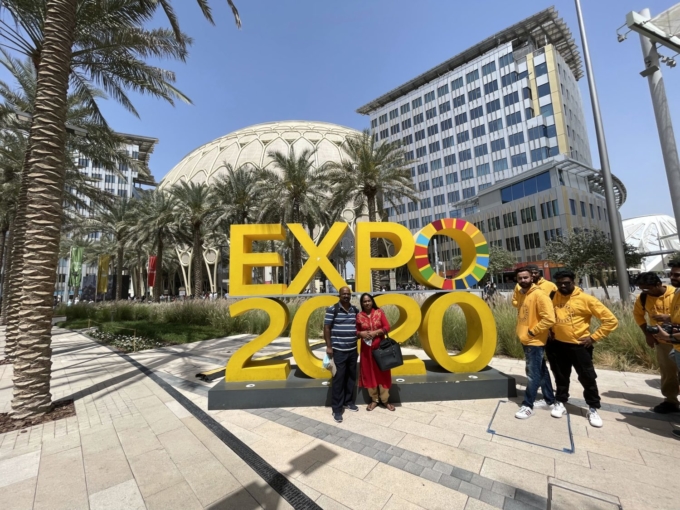
Infiltrating the Popular Pavilion: Dubai Expo Japan Pavilion!
Japan Pavilion Theme: “Where ideas meet”
Designed by Yuko Nagayama (Principal of Yuko Nagayama & Associates), the architectural design concept allows visitors to feel the connection between Japan and the Middle East.
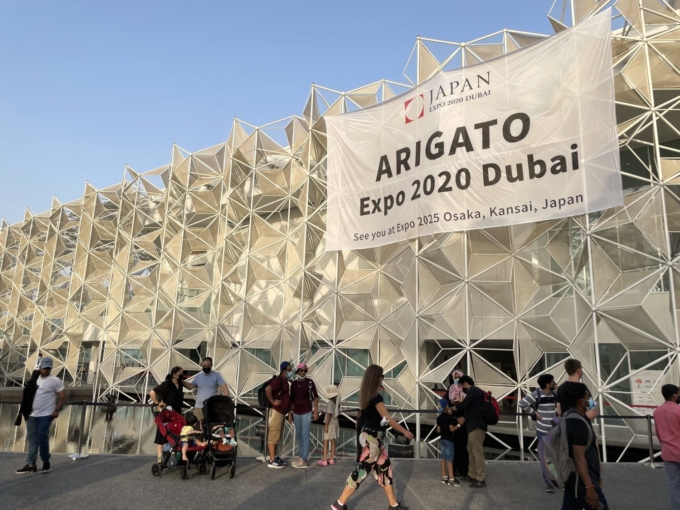
While many pavilions allow visitors to walk around freely and view exhibits, the Japan Pavilion featured a tour format where groups moved through the building with attending staff. Because this limited the number of participants per day, a reservation system was eventually adopted (due to the unexpectedly long lines).Due to its immense popularity, same-day numbered tickets reportedly sold out immediately after opening every day. As expected of the Japan Pavilion.
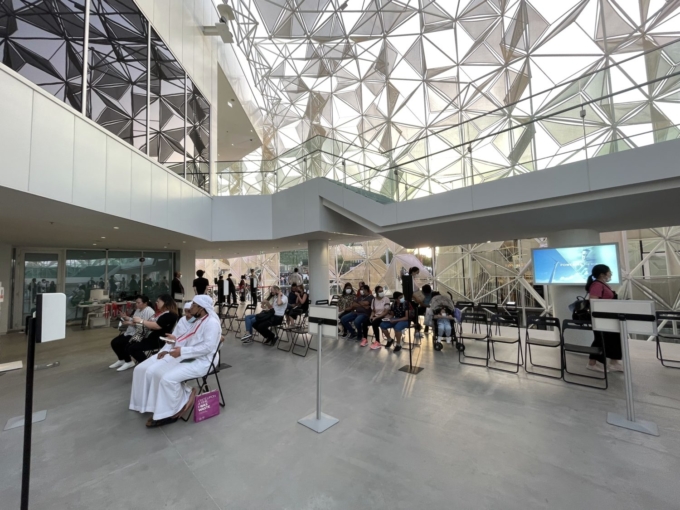
As it was a tour format, smartphones were distributed upon entering the Japan Pavilion, and guidance was provided by the staff. We received explanations on how to use the smartphones and how to enjoy the Japan Pavilion.
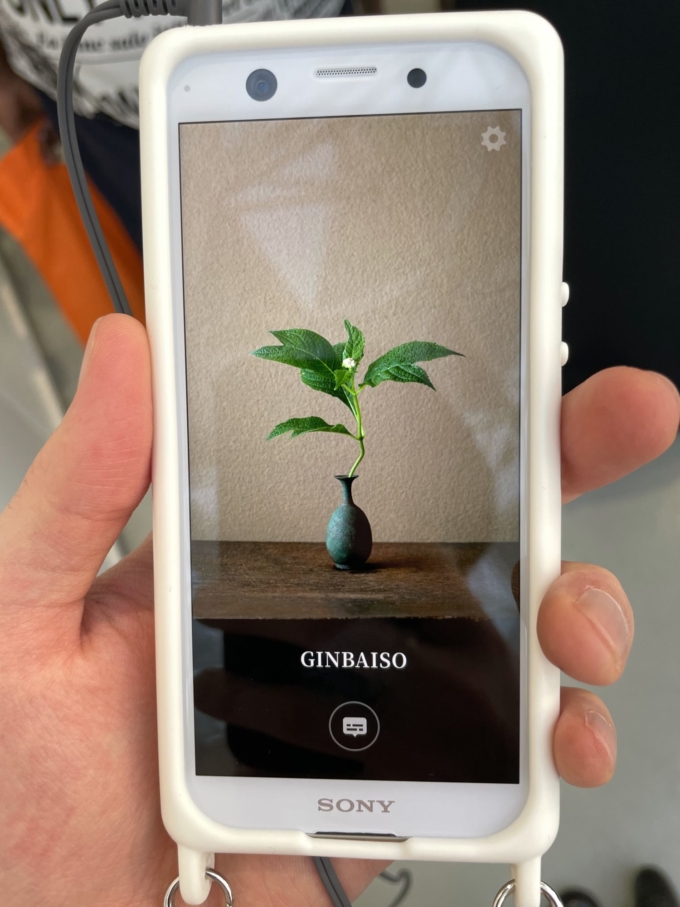
Finally, the Japan Pavilion tour began. I was assigned a plant called “Ginbaiso” (Japanese Silver-leaf).
First, amidst a drifting mist that doesn’t get you wet (I think this was a consideration for Dubai’s hot climate—true hospitality), we watched a video projected on a large screen expressing Japanese culture (anime, harmony, the four seasons, etc.).
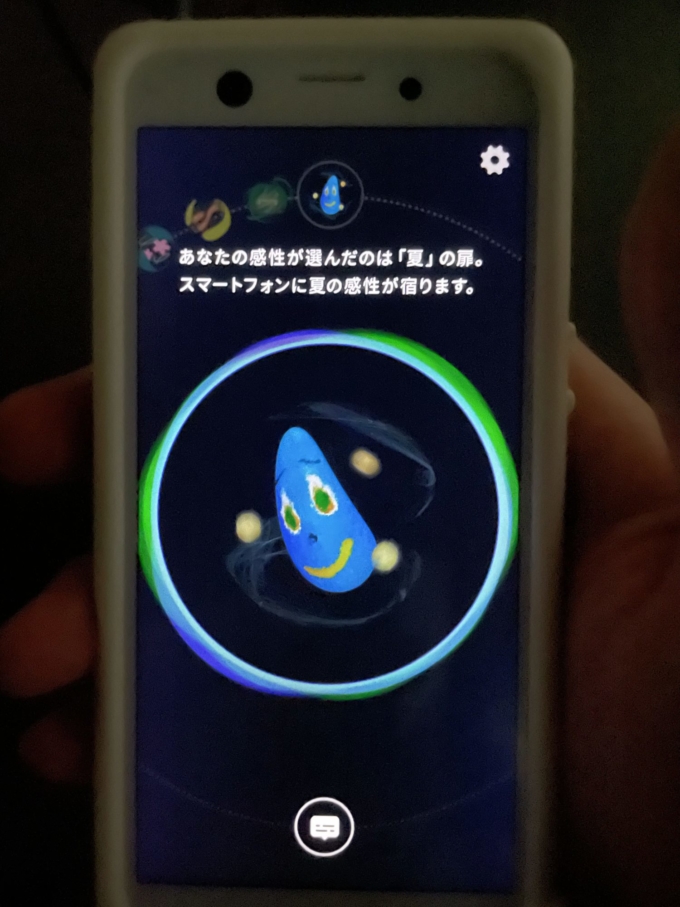
Afterward, the four seasons were projected onto four exits, and each person chose their preferred route. Although everyone ended up in the same room, a character from the chosen season appeared on the smartphone. We were then instructed to walk around the room freely to “grow” the character.It was a very unique pavilion with dynamic and interactive exhibits rather than just static, one-way displays.
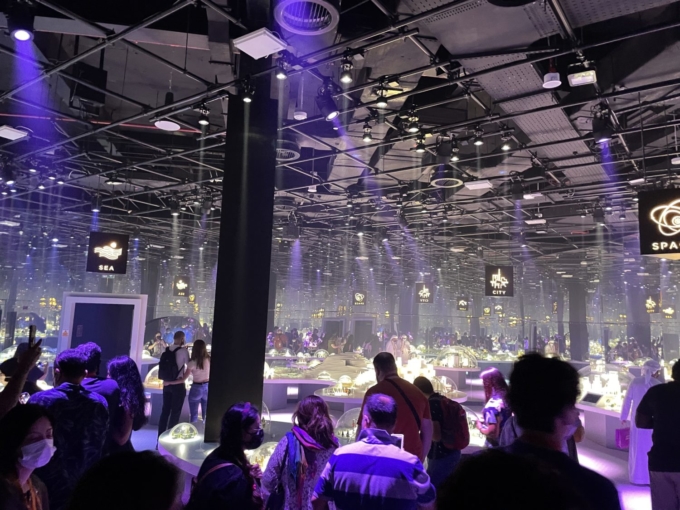
The next room featured Tatsuya Tanaka’s miniature sets displayed inside a dome, which made us think about the SDGs. This may have also been intended to showcase Japan’s technological capabilities.
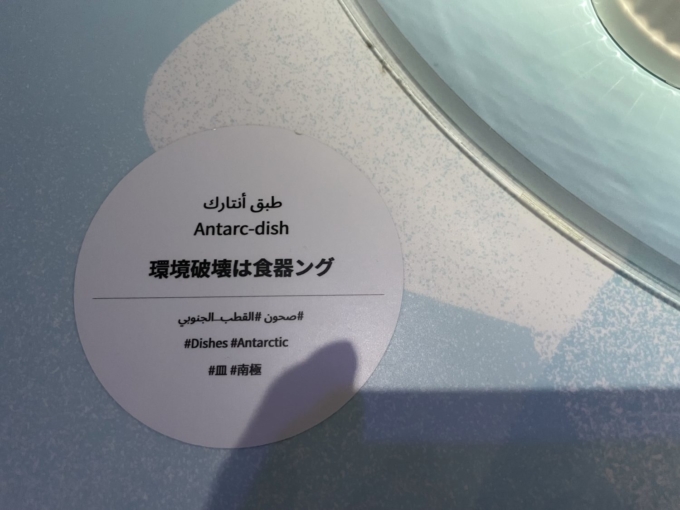
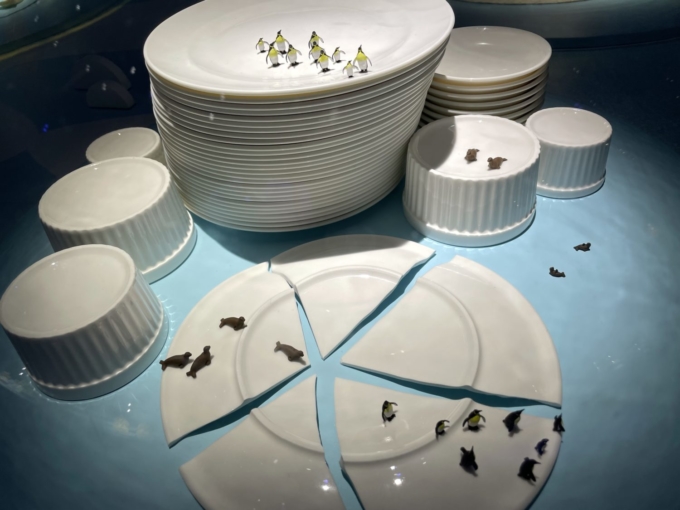
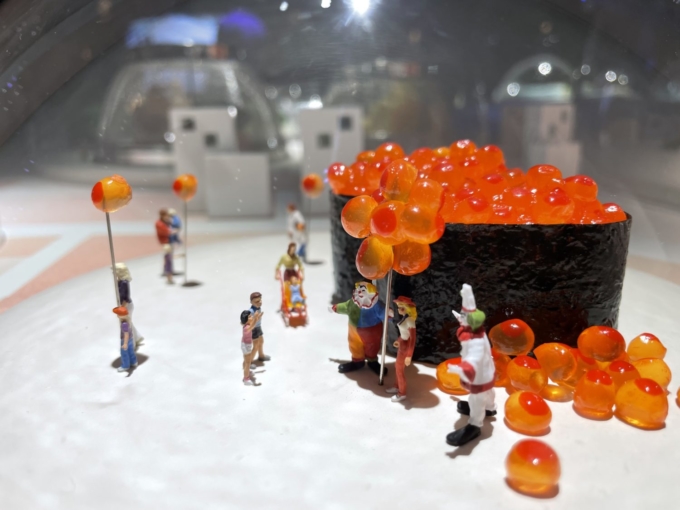
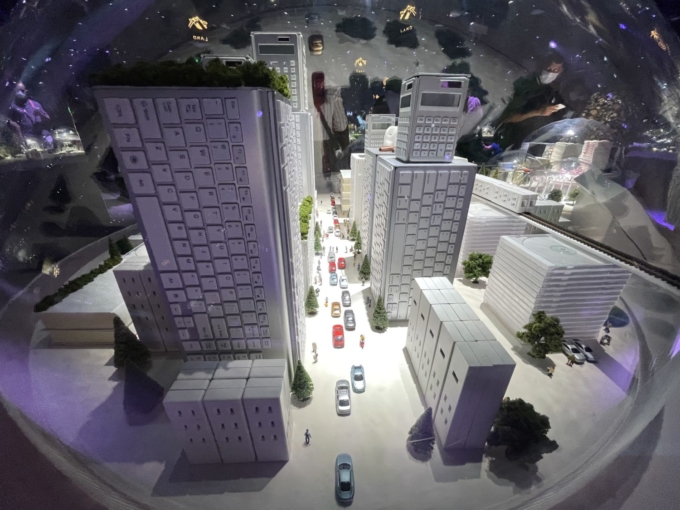
The next room featured an exhibit with projected images that reminded us of how humans are causing the destruction of the natural environment, food chains, and ecosystems through activities such as deforestation and microplastics.
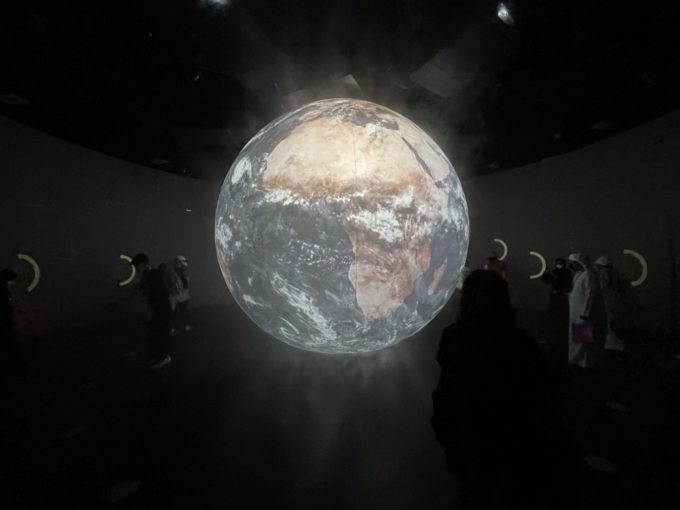
The final room of the Japan Pavilion’s story-driven exhibition was a cubic room with a large globe projected in the center.When each person turned toward the wall with their back to the globe, the plant they were initially assigned was projected in front of them. I suspect the system adjusted the projected images by recognizing the smartphone’s location and device information.
As we continued watching the video, plants divided into four colors appeared on the walls. I believe these four colors corresponded to the four seasons each person initially selected.We were instructed to move around the venue to the rhythm, and the plants projected on the wall followed our movements.Then, we were told to gather by color, and participants enjoyed themselves with high energy, shouting things like “We are blue color. Yeah!!” and “Whoooooooo!!!!”As the images on the wall moved, each group moved around the venue to follow them.Finally, the tour concluded with a video projected on the central globe.
I visited about 30 pavilions, and the Japan Pavilion was the top in terms of interactive exhibits. Furthermore, the theme “Where ideas meet” was clearly conveyed through the content. Above all, I believe this tour format, which created a “once-in-a-lifetime” (ichi-go ichi-e) experience, was truly memorable for participants.That is likely why it became a hot topic through word of mouth, generated long lines, and became a pavilion where reservations were hard to get.
At the final ceremony, the Japan Pavilion won the Gold Award in the Exhibition Design category. I believe this award was earned because of this specific exhibition content and format. Although I wasn’t involved, as a Japanese person, I felt a sense of pride (laughs).
The Next Expo is…
The next Expo is Expo 2025 Osaka, Kansai, Japan!The final exhibit at the Japan Pavilion in the Dubai Expo was also about the Osaka/Kansai Expo.
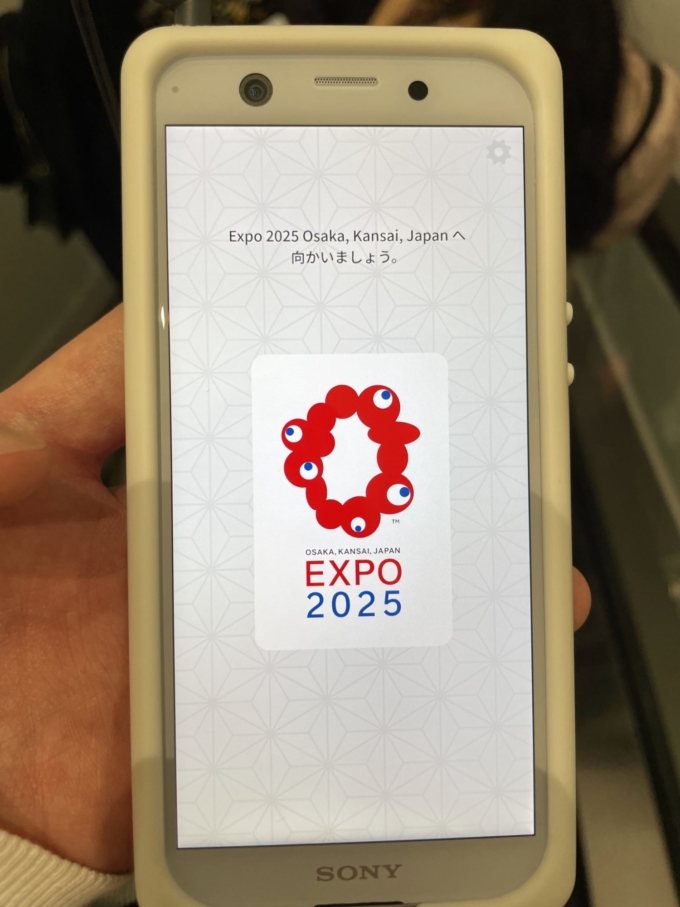
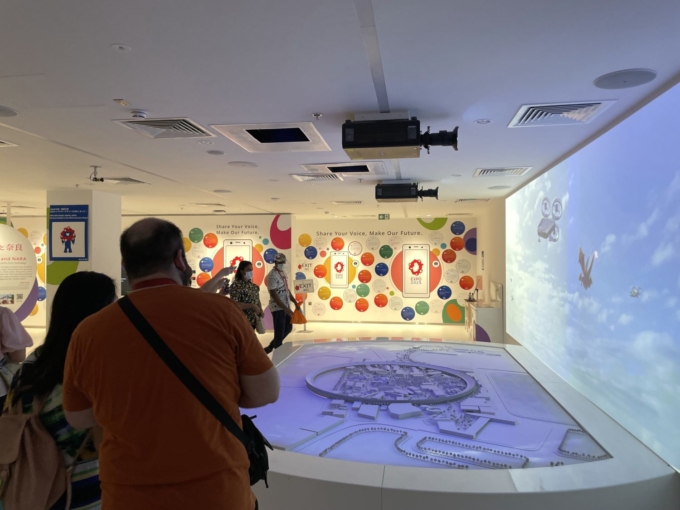
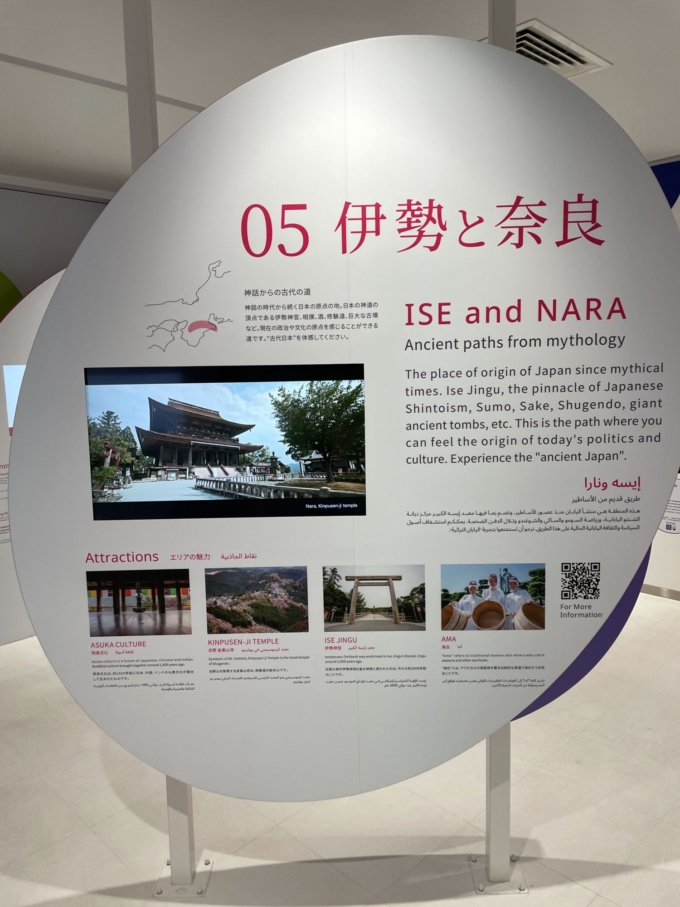
As shown in the exhibit, the theme of Expo 2025 Osaka, Kansai is “Designing Future Society for Our Lives.”Since an Expo themed around “life” will be held in Japan, I am looking forward to that as well!
Teaser for the Next Blog Post
In the next Part 2, I plan to report on the following:
– Expo Gourmet Food
– 3 Personally Impressive Pavilions
– On-site Content
– Dubai City Sightseeing, and more.
Please look forward to future blogs from me and other members!(Of course, if you have missed any past articles, please be sure to check them out!!)