A full 21-hour work-experience program with five second-year students from Shoto Junior High School, Shibuya City—10 years younger than Gen Z—followed up close!
■1A phone call—and what moved us
In October 2022, we were approached by a junior high school in Shibuya Ward with a request to accept students for a work-experience class.
“When you accepted students a few years ago, they were very satisfied, so we would very much like to ask you again.” The person in charge on the phone told us so. We learned that most of the places offering these work-experience opportunities were small, independently run shops—so-called specialty stores—along with restaurants and nursery schools, and that there were almost no general companies participating.
It is certainly not easy for any workplace to create a solid program and accept junior high school students amid regular operations. However, what moved us was their childlike curiosity. “Junior high school students coming to the office—this sounds interesting!”
■“I want you to help the children gain confidence.” The teacher, tanned from the sun, said so.
Members gathered across departments—PR, HR, and General Affairs. Every member had an exceptional sense of curiosity. Our first destination was Shoto Junior High School, Shibuya City, the requester. We were greeted by a teacher in a tracksuit, deeply tanned. He was a PE teacher with an impressively cheerful laugh. After brief greetings, we got straight to the point.
“What would you like the students to learn through this work-experience program?”
After a short pause, the teacher slowly began to speak.
“Above all, I want them to have all kinds of experiences. Please leave the entire three-day program to you. Through that experience, please, by all means, help those children gain confidence.”
An experience that builds confidence in three days… Behind the other members’ smiles, their confusion was hard to miss. How on earth could we…? We pushed our anxiety deep down and made a point of acting upbeat.
“Please leave it to us. We will certainly meet your expectations.”
On the school route bathed in the bright western sun, wrapped in the voices of students devoted to club activities and the after-school chime, three long shadows stretched out. Perhaps because of the difficulty of what lay ahead, no one tried to speak.
■“If it’s just that, there’s no point doing it at SUNNY SIDE UP.” One of the members insisted.
How should we structure the three-day program? The meeting hit a wall from the very first session.
Some argued that, since it would be the students’ first work experience, we should focus on professional etiquette such as exchanging business cards and answering phones. Others objected, saying that if it ended up being nothing more than an etiquette workshop, there was no point doing it at SUNNY SIDE UP.
Which direction should we take?
Of course, for 14-year-olds, everything would feel new. But would the memory of a simple etiquette workshop remain with them into adulthood? In ten years, they will be thrown into society whether they like it or not. Days like ours—being given tough challenges by clients and supervisors and pushing forward somehow within limited time—are just around the corner for them. If so, perhaps letting them experience that reality, and giving them even one thing that might help when they enter society…
“Let’s go with an original concept.”
That was the answer we adults arrived at—adults who know how quickly ten years can pass.
■A genuine work-experience program—not child’s play
—To you 14-year-olds who will take flight into the world—
The assumed client is the all-day dining restaurant “bills Omotesando,” launched in Sydney, Australia and operated by SUNNY SIDE UP GROUP. Using December 1, 2022 to February 28, 2023 as the target period, propose a plan to encourage junior high school students (families welcome) to visit the restaurant, and present how you would promote it to the target audience.
Second-year junior high school students would take on this challenge—one that even professionals struggle with—in the short span of just three days. What is more, on the final day they would present to the client’s executive team. It was a very demanding assignment.
■Day 1 Theme: Arm yourselves
To think through a difficult assignment, you need knowledge as your weapon. Acquiring that knowledge was the goal of the first day.
9:00 AM First day at the office
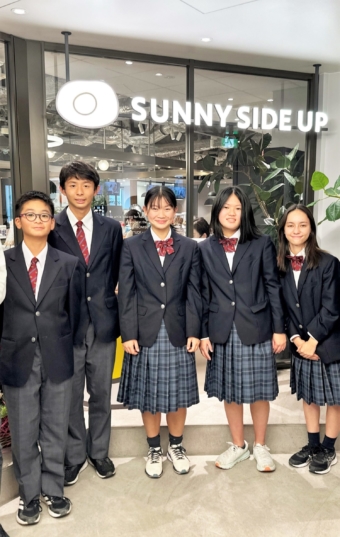
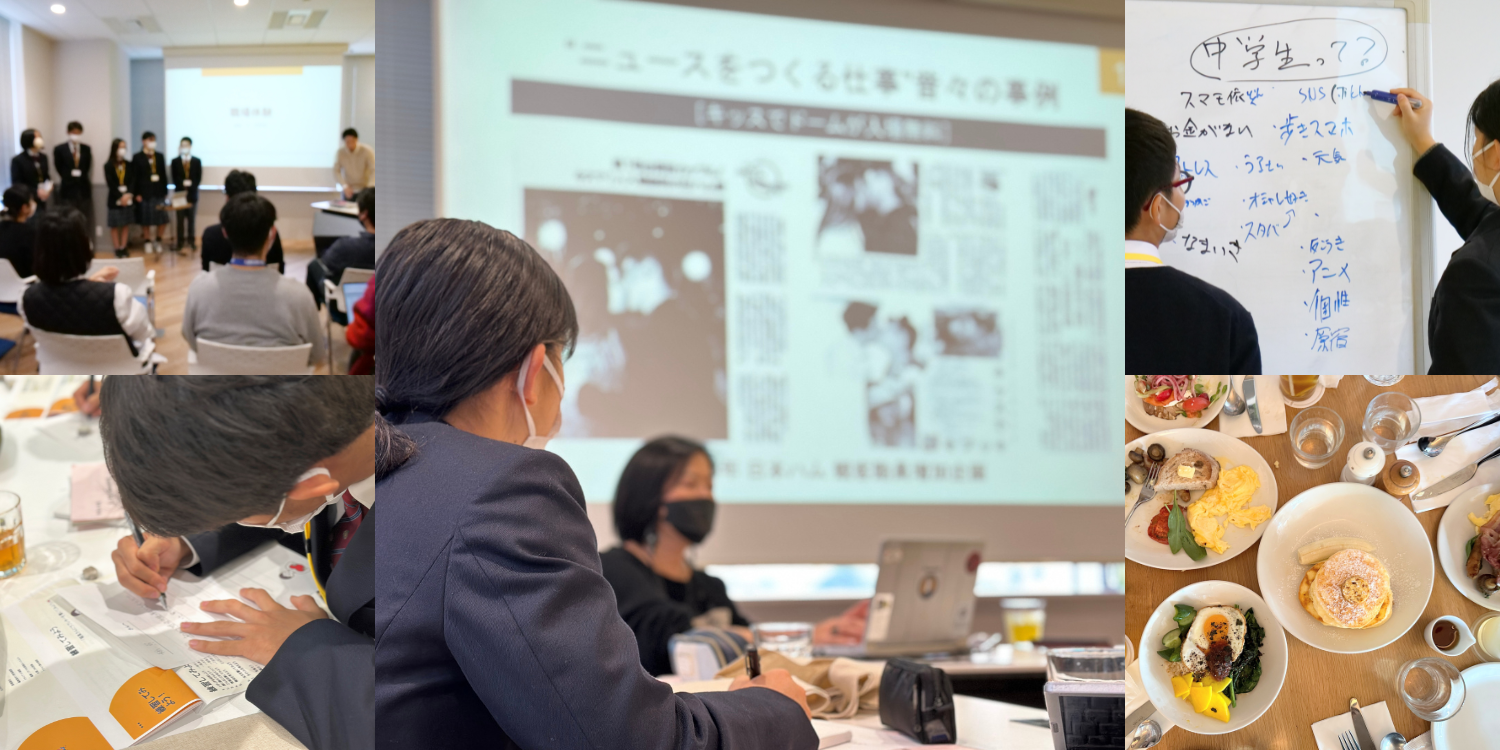
Confusion, excitement, embarrassment—every possible emotion was racing through them. They likely did not know what to do themselves. The corners of their mouths, forced up with effort, dropped below where they started the next moment. They wore expressions that were neither quite smiles nor quite frowns.
9:30 AM First meet-and-greet
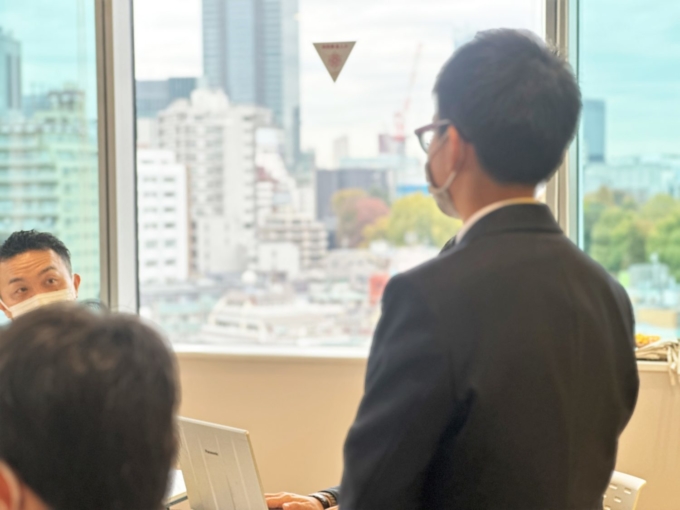
We began with self-introductions and sharing their enthusiasm. In their own words—each packed with personality—they spoke about what they were feeling. What they all had in common was: “What is PR, anyway?” The only ones anxious about the final-day presentation were not the children.
10:00 AM What is PR? Learning its essence
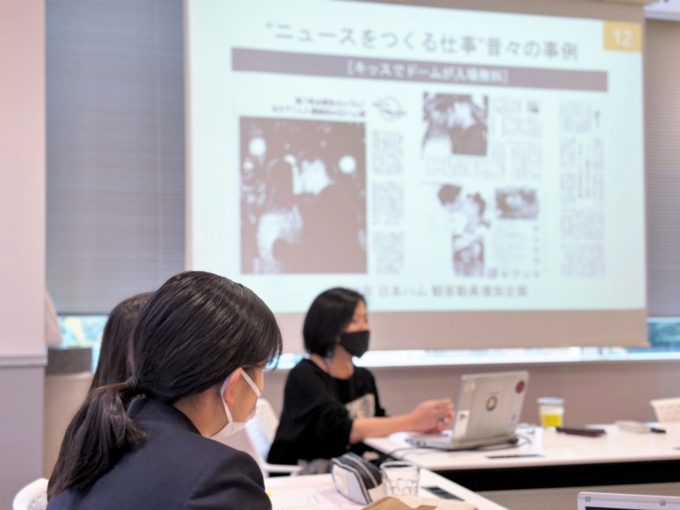
We needed this person’s help. It was Rie Matsumoto, our director, who also serves as a board member of the Public Relations Society of Japan. What is PR? She spoke from the perspective of SUNNY SIDE UP’s history of making PR its profession. Creating news, and the power of PR to move society. What lay behind a newspaper article from more than ten years ago—seen in her gaze—was revived before the children now, transcending time.
11:00 AM Workshop: How to write press releases/articles
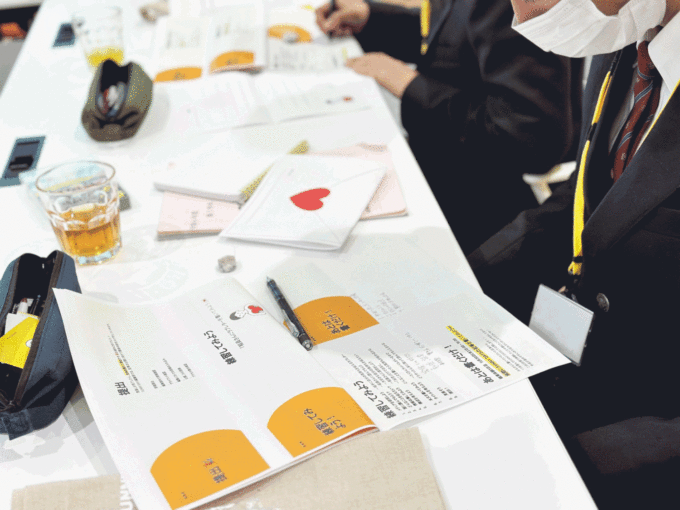
A press release is often said to be like a love letter. So first, you write a love letter—so your feelings come through. If emotions run ahead, they will not reach the other person. They learned thoroughly how to communicate so that it is truly received.
1:00 PM Exchanging business cards with the bills representative
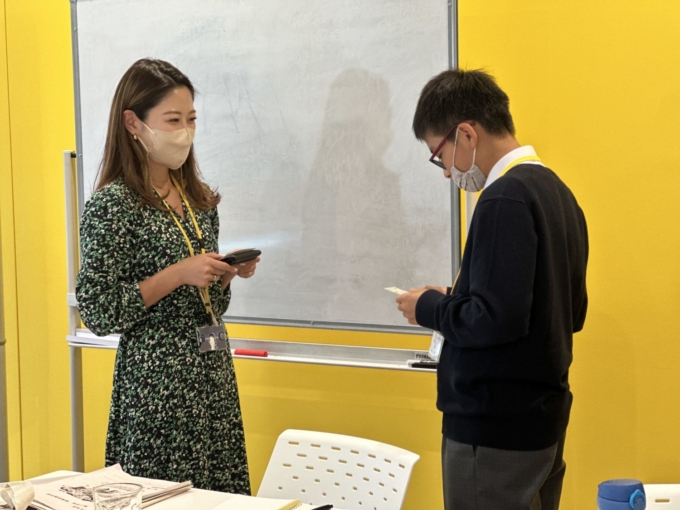
“Thank you—I will take it.”
It is ordinary Japanese, yet he cannot say it well.
The woman in front of him keeps saying things to him one after another.
“Do not cover your name with your finger.” “Try making a little small talk with the other person.”
Small talk…? With how I am right now, that is impossible…
In this scene, you can almost hear that inner voice. Exchanging business cards is the starting point of communication.
The day you exchanged business cards for the first time—did you not feel the same as this child?
2:00 PM Lecture on bills

Everything they heard and saw was unfamiliar. They took notes desperately so they would not forget. But before they knew it, they had forgotten to take notes. It was not that they were dozing off—they were captivated by the world of bills as described by the representative.
3:00 PM Interview with senior members
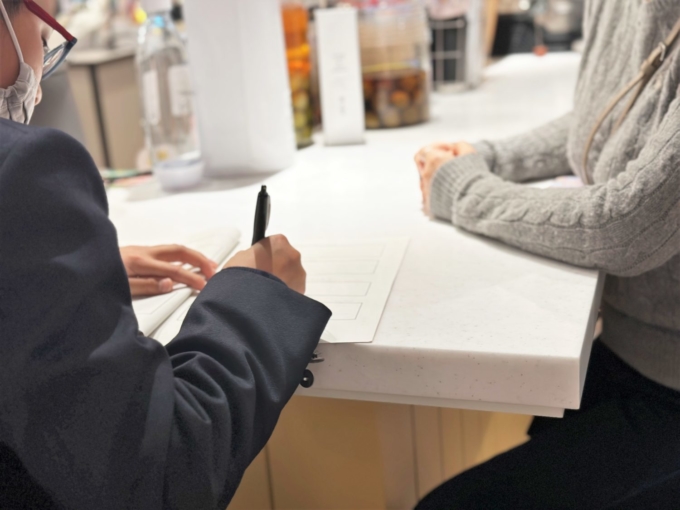
“Why do you do this job?” “Well…”
The positions of the questioner and the one being questioned gradually merged and blended. The children’s questions all led the members to reflect on themselves. The answers the members arrived at after thinking—perhaps they were proof of having reaffirmed their own feelings.
■Day 2 Theme: Squeeze out your ideas
Based on what they learned the day before and the site visit, they brainstormed a proposal. “I cannot come up with any more ideas…” The moment you think that is when it starts. How long can you keep pushing from there? See with your own eyes what lies beyond the struggle. That was the goal of day two.
10:00 AM Site visit to bills Omotesando

It was the moment they found something more dazzling than the yellow and green markers in their pencil cases.
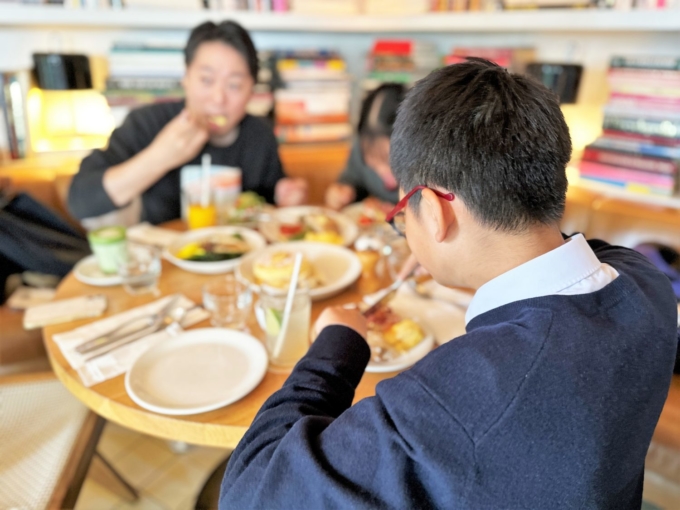
They were hungry, but they tried eating slowly, using the set fork and knife. Before the word “delicious” even came out, they were already taking a second bite.
“Ah! This is what we learned yesterday!”
Things that did not quite click in text or images suddenly made sense on site. From their seats, the children learned viscerally that behind the many customers’ smiles was the work of the woman they met yesterday.
“How can we get our friends to come?” “I want my parents to try it too.”
That is right—we must not forget. We did not come to eat breakfast today; we came to work. The children’s conversation made us stop short.
1:00 PM Brainstorming at the office
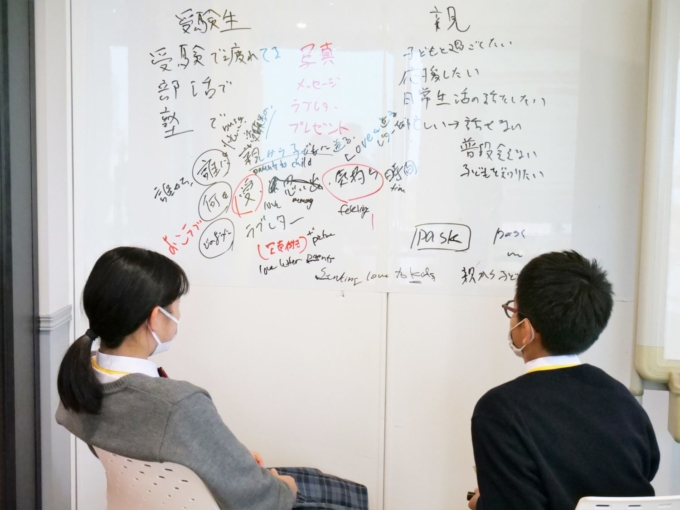
They wrote down every idea they could think of across the entire whiteboard. Having just been to bills, ideas should have overflowed endlessly—or so we assumed. But they ran out in no time. The presentation was already tomorrow. What should we do? The heavy silence in the meeting room only intensified the sense of urgency. When they forced something out, it was merely a rehash of an earlier idea…
Of course, we did not give them the answer. We swallowed the advice that rose to our throats and could do nothing but watch over them. The time was 4:00 PM. With nothing taking satisfactory shape, day two ended quietly.
■Day 3 Theme: Change the world with joyful commotion
On the final day, they would present their proposal to the executive team. The young PR people had experienced the pain of giving birth to ideas the day before. Could they shape it into something real in the few hours remaining?
9:00 AM Building the presentation structure
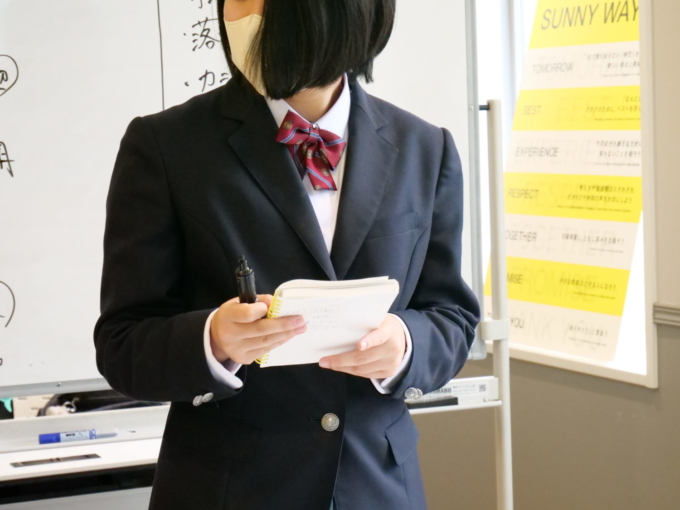
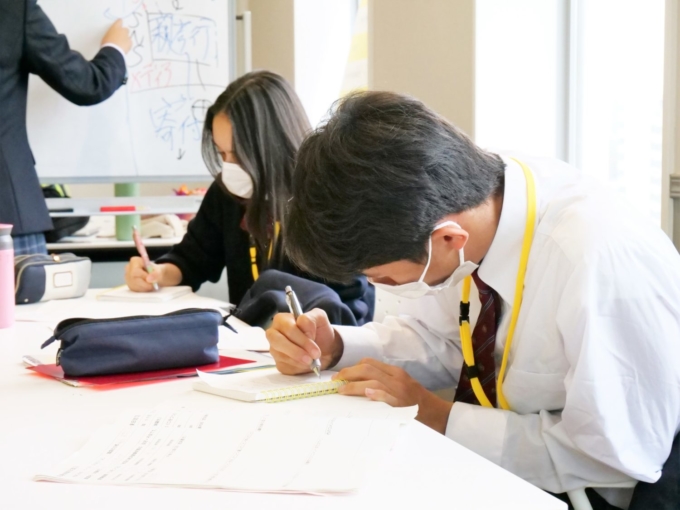
How can we move the audience’s hearts? They rearranged the order of what to say. They tried changing the content. Through repeated trial and error, the outline of a “smooth, seamless structure” gradually came into view. It was close enough to reach for, yet still out of grasp. At that moment, one student pulled out of his bag the love letter he wrote on day one. To deliver your feelings… Returning to the starting point, there was no longer any hesitation on his face.
11:00 AM What is needed for creative work
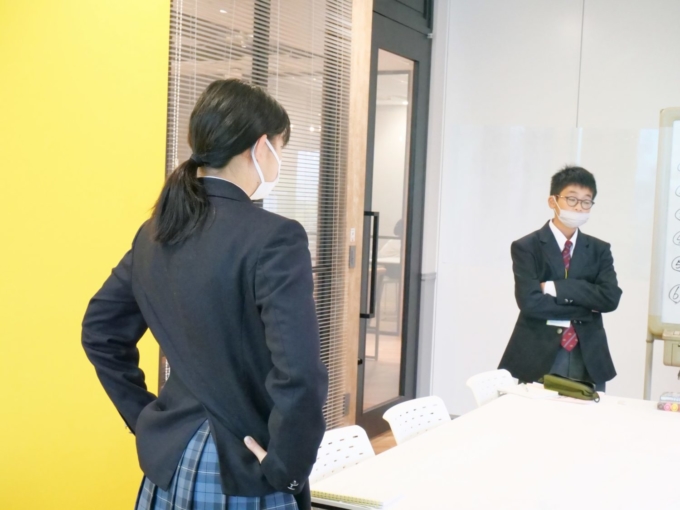
“That is not it!” “But this way is smoother!”
The quiet children raised their voices for the first time. Neither could accept the other’s view. Each child has their own individuality, and the image they aim for differs from person to person. Because they had thought so hard, they could not simply back down. To create something good, clashing opinions is unavoidable.
12:00 PM Presentation rehearsal
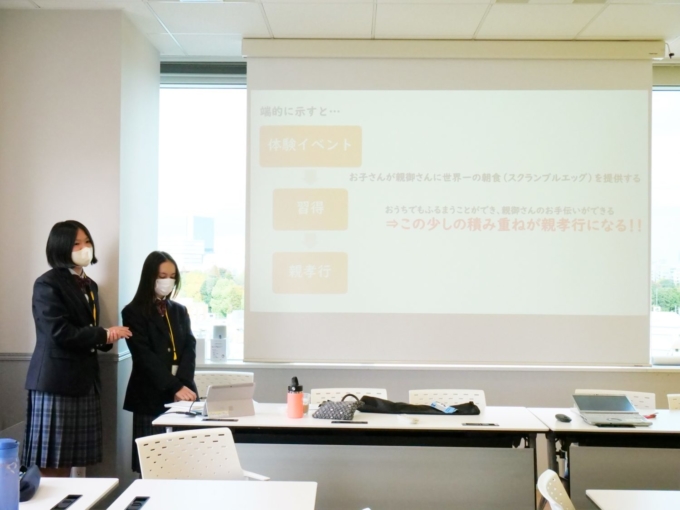
Their bodies sway. They stumble over words. Their voices are too quiet. They speak too fast. They are pointed out one after another for things they do not notice themselves. In time, the children naturally learn that refining a structure and presenting it in front of others are two different things.
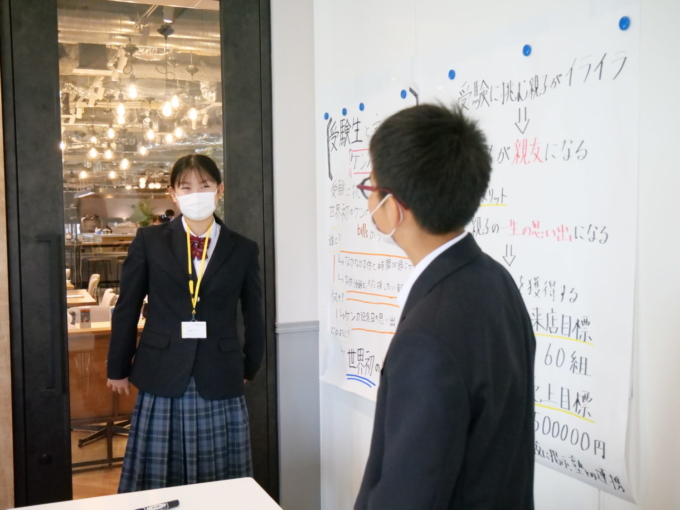
The children absorb what they learn with openness. The number of updates to a 14-year-old’s mind and heart likely far exceeds that of an iPhone. They practice speaking aloud again and again until they can explain smoothly. As time passed, their presentation skills steadily improved.
3:00 PM At last, the real thing
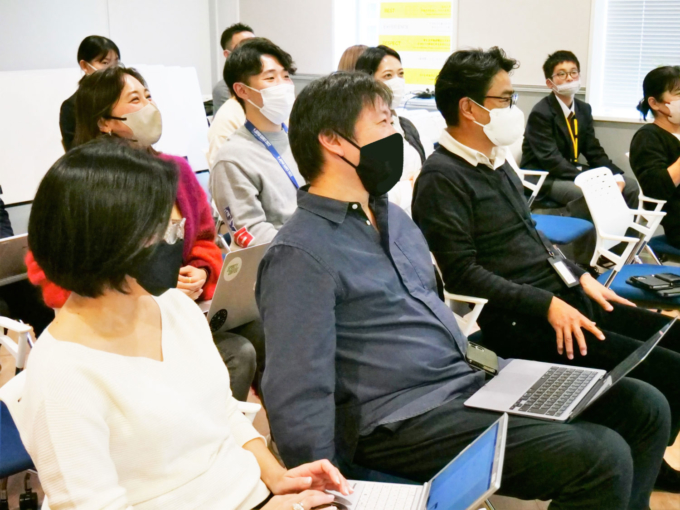
In the front row sat the client’s executive team. Behind them were mid-career and new graduate members. Facing this major stage about to begin, five junior high school students stood opposite them, their faces tense. The taut air in the room showed that this presentation was not child’s play.
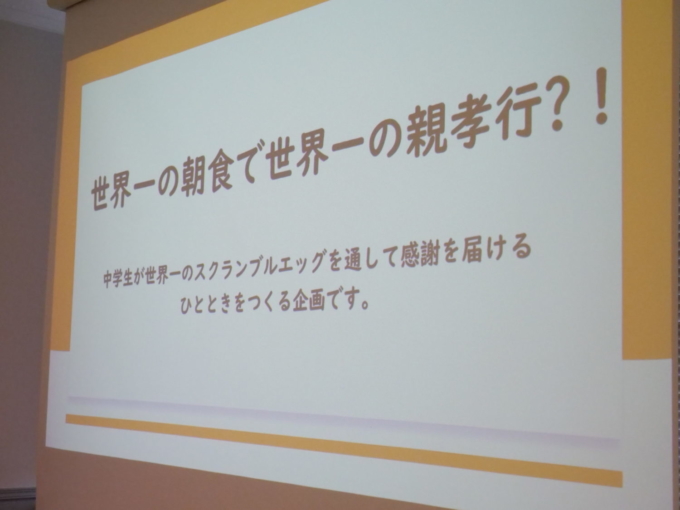
Their pounding hearts, racing with nerves, reverberated through their bones and shook their eardrums. A clammy sweat broke out. Their throats were parched to the limit. Their bodies felt like they were not their own. But they had to do it. Seconds later, they steeled themselves and opened their mouths.
A 15-minute presentation in which they single-mindedly tried to capture the client’s hearts. They were so focused that their sense of time became distorted. When they suddenly came back to themselves, thunderous applause and cheers filled the room.
Starting from knowing nothing about PR, the five of them fulfilled their mission in the short span of just three days. There was no trace of anxiety left on their faces. A sense of fulfillment and relief from having completed a difficult challenge. Their flushed cheeks even hinted at pride. There stood young PR people who had grown one—no, two—levels larger.
■After everything ends, and you return to everyday life
“Please help the children gain confidence.”
When the elevator doors closed as we saw them off, the homeroom teacher’s face came to mind. Had we truly been able to help them gain confidence? I could not stop thinking about it.
A few days later, a letter arrived. The sender was those children.
I was very poor at speaking in front of people.
Because I did not know what the people listening were thinking.
When I heard that I would be presenting a plan in front of many people, I felt despair.
On the day of the presentation, I was afraid of what so many adults would think. I was so nervous that I was drenched in sweat. But I spoke as hard as I could in front of people about the plan I had thought about so much my head felt like it would burst.
Overcoming a big wall gave me a great deal of confidence.
It gave me confidence.
I was happy to see those words written so clearly.
“Work means exceeding the client’s expectations.”
This is our final message to them, who will one day read this article.