What Happened When We Surprised 380 Team Members with ¥32,000? Five Trends Revealed by “Adult New Year’s Money”
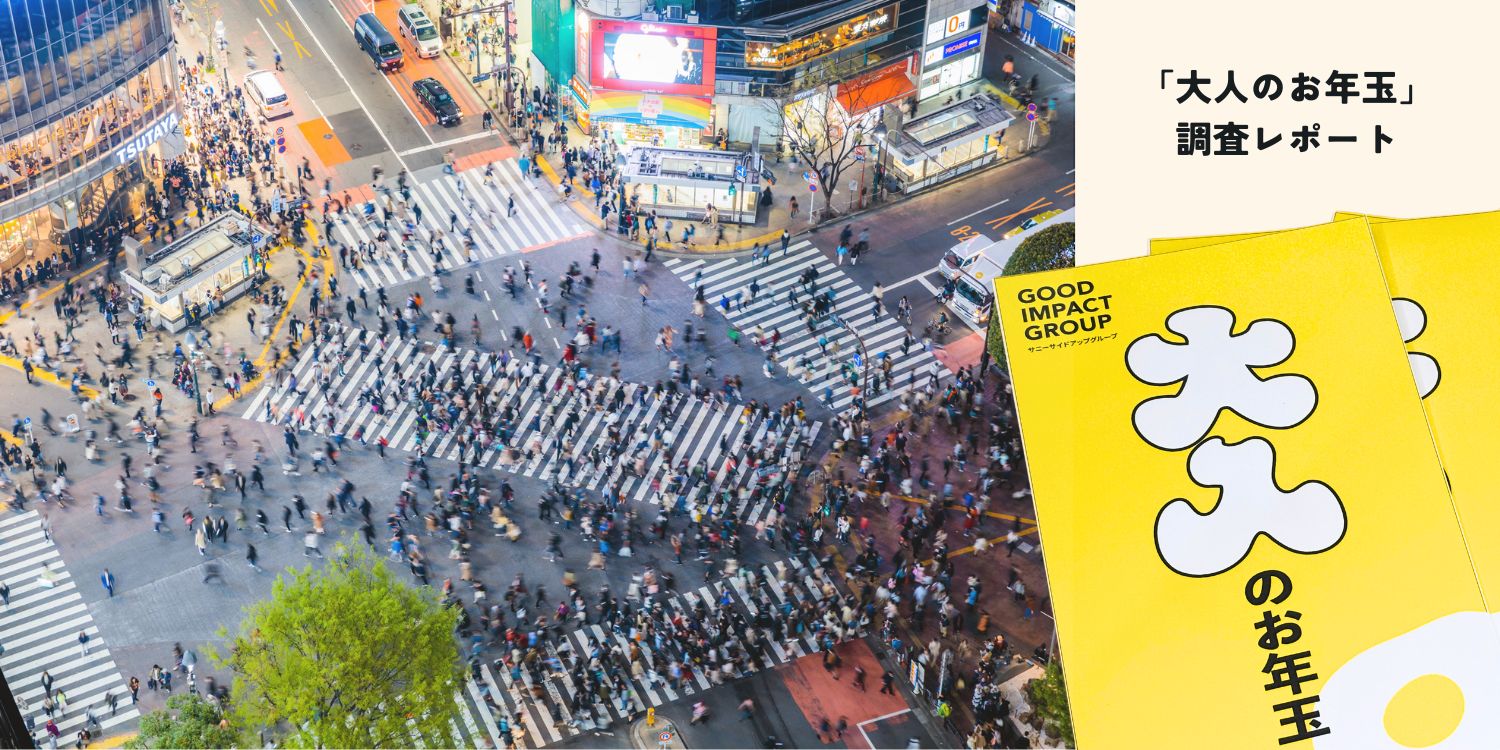
Hello.This is Furumoto from SUNNY SIDE UP GROUP.
“I want it, but… it doesn’t have to be now.”
Have you recently postponed a purchase?
These small postponements are accumulating across society as a whole.
In Japan today, rising prices continue.
The trend of surplus funds remaining in savings rather than being spent on consumption continues.
Therefore, our group focused on Japan’s stagnant consumer mindset and implemented the “Adult New Year’s Money” initiative on January 5, providing ¥32,000 to approximately 380 team members as a “consumption boost.”
What consumer behavior did this payment lead to? What changes occurred in awareness and psychology regarding consumption? In this article, we analyzed information based on a post-initiative survey of team members and compiled it as a research report.
*At the end of this article, we also share some of our team members’ real comments on how they used the money.
Why Implement “Adult New Year’s Money” Now?
The background of this initiative lies in the recent trend where prices continue to rise while wage growth fails to keep pace, resulting in surplus funds “tending to remain in savings” rather than being spent on consumption. As a result, even when accounting for the impact of prices, consumption does not grow, and a “mindset of not spending money” has spread throughout Japanese society.
This “stagnation of consumption” can lead to slower corporate sales, investment, and wage increases, ultimately becoming one of the factors creating a “negative cycle” where spending is suppressed while income fails to increase.
Therefore, our group implemented this initiative with the desire to “create momentum from within the company to stimulate the Japanese economy through active consumption,” deliberately encouraging people to “spend rather than save.”
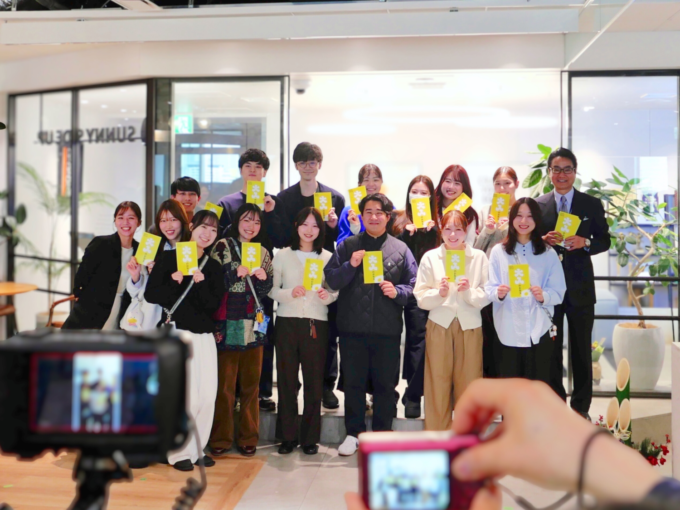
In this initiative, we provided ¥32,000 per person to approximately 380 team members. Usage was limited to consumption excluding savings and investments, and we encouraged spending the full amount within a two-week period, designing the program to encourage consumer behavior that tends to be postponed in daily life.
Five Findings from This Survey
① 82.3% Consumption Stimulation Rate. What Drove It Was “Justification of Consumption”
Of the 312 respondents, 257 answered that without the “New Year’s money” payment, they “would not have purchased” (42.9%) or “would have hesitated” (39.4%). In other words, approximately 80% (82.3%) would not have engaged in consumer behavior (or would have continued to hesitate) without the “New Year’s money.” This was the result. By providing clear justification as “New Year’s money to encourage consumption,” the results suggested that surplus funds that would normally have gone into savings were directed toward consumption.
② “Food Experiences” and “QOL Appliances” Ranked Highest. Emphasis on Quality of Experience and Life Fulfillment
By purchase/experience category, first place went to “Food Experiences/Gourmet” (approximately 28%), and second place to “Appliances/Interior Items That Improve QOL” (approximately 22%). Rather than mere wasteful spending, choices that emphasized personal fulfillment and life enrichment were observed.

Image for illustrative purposes.
③ Approximately 30% “Upgrade Consumption” Boosted Economic Impact Expansion
Not only did people spend the full ¥32,000 provided, but approximately 30% of all respondents engaged in “upgrade consumption,” adding their own funds for “travel upgrades” or “high-value self-improvement.”The results suggest that the New Year’s money payment functioned as a “purchase trigger,” encouraging the addition of personal funds.
④ Approximately 95% Said It “Prompted Them to Think About the Economy.” Shift in Awareness from Savings to “Circulation”
When asked whether it “prompted them to think about spending money and the economy,” approximately 95% responded “yes” (42.8%) or “somewhat” (48.2%).In free-response comments, the majority indicated that their perspective changed from viewing consumption as “an act that reduces personal assets” to “an act that creates economic circulation.”
⑤ “Limited Time” Brings Decisiveness. Postponed Consumption Becomes Visible
The two-week usage period setting became an important element in making “postponed consumption” visible in daily life.Team members actually shared comments to the effect that “the rule of ‘use it within this month’ finally gave me the determination to decide.”
Connecting GOOD from Inside the Company to Society
This “Adult New Year’s Money” initiative was an internal program.
However, as shown in the five points above, it contained numerous hints for positively encouraging consumption.
More than “distributing money,”
・With what intent
・With what rules
・With what message
Depending on that design, people’s awareness and behavior can change significantly.
The results of this survey support this.
What companies need to positively encourage consumption may not be limited to one-time payments, but rather putting the “meaning of spending” into words when providing it and giving a push with “rules” that make it easy to take action.
Our group will continue to deliver such insights and innovations to the world, and continue our challenge to create GOOD impact in society through the power of PR and communication.
【Bonus】Here’s How the Money Was Used 💰
New Year’s Money That’s “Too PR Professional” 📣
As expected of PR professionals. A notable usage pattern was re-experiencing services and products they handle PR and communication for from a “customer perspective,” deepening their understanding and attachment.
・Purchased a tie at a partner company’s store while receiving customer service
・Made the decision to purchase an outer garment from a brand they handle PR for
・Visited a resort hotel they’ve been in charge of, bringing their parents along
New Year’s Money “Spent with Someone” 🤝
Of course, money is enjoyable to spend alone. But when spent with someone, that time and experience remains as a memory. This “shared” usage pattern was also impressive.
・To Disneyland with colleagues
・Used as travel expenses for the company club activity “Running Club”
Incidentally, our group has a “Club Activity Support” program that supports club activities regardless of genre. This type of self-investment is also an important form of communication.
New Year’s Money for “Fan Activities (?)” ❤️🔥
・As part of fan activities, presented a “monetary gift” to my wife.
…The object of affection was at home.Incidentally, our group has a “Heartbreak Leave” program that respects feelings of supporting one’s “favorites” regardless of whether they’re 2D or 3D, as well as a “Fun Excitement Creation Support” program that supports live events and experiences—programs that quietly support fan activities.
|
▼See the “Adult New Year’s Money” initiative here ▼See our group’s employee benefits “32 Benefits” here |