Reviewing the award-winning entries from a planner’s perspective | PR Award 2025 Awards Ceremony Report
Hello everyone. This is Yamaguchi from the Communication Planning Department.
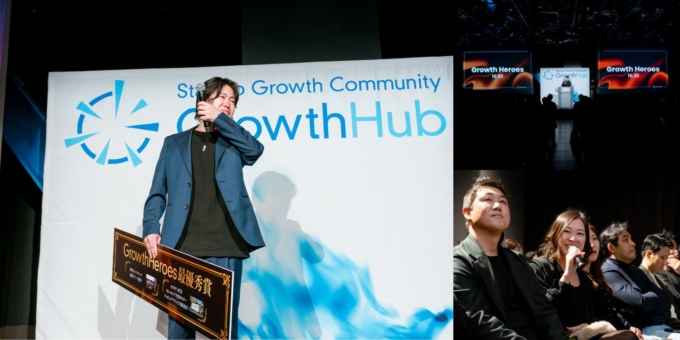
The other day, at the Jiji Press Hall, the PR Award 2025 awards ceremony was held to recognize outstanding PR case studies that contribute to the development of Japan’s PR industry.
This award has also seen SUNNY SIDE UP Director Rie Matsumoto serve as one of the judges for the past four years.
In this article, I will report on the awards ceremony from a planner’s perspective.
|
What is the PR Award? Hosted by the Public Relations Society of Japan (PRSJ), this award selected a total of 10 winners this year from 98 entries: 1 Grand Prix, 1 Gold, 4 Silver, 4 Bronze awards, and 1 Special Jury Prize—showing even greater momentum compared with last year’s 80 entries. |
What was emphasized as particularly important for the 2025 awards was not PR as merely a method of disseminating information, but rather “public relations as a philosophy.”
Specifically, the three key evaluation pillars were as follows:
- Authenticity (inevitability)
Whether the issue was defined with a clear sense of “what makes you, you” - Co-creation with multiple stakeholders (a swell created through dialogue)
Whether they engaged people from multiple angles and built co-creation that led to results - Pioneership (resolve)
Whether it breaks free from conventional wisdom and serves as a trailblazer for the next generation of PR
Based on these three perspectives, let us take a look together at the cases that particularly stood out to me as a planner.
1.Grand Prix Winner: “Noto Peninsula Earthquake: Real-Time Disaster Communications to Save Lives”
First, I would like to highlight this case, which won the Grand Prix.
To quickly deliver necessary and accurate information to those affected by the Noto Peninsula Earthquake and to residents across the prefecture, the government proactively used social media and video, providing information strategically.
They also made the “Supportive Consumption, Please” project logo available for free download, encouraging broad participation and helping spur support for Noto across Japan.
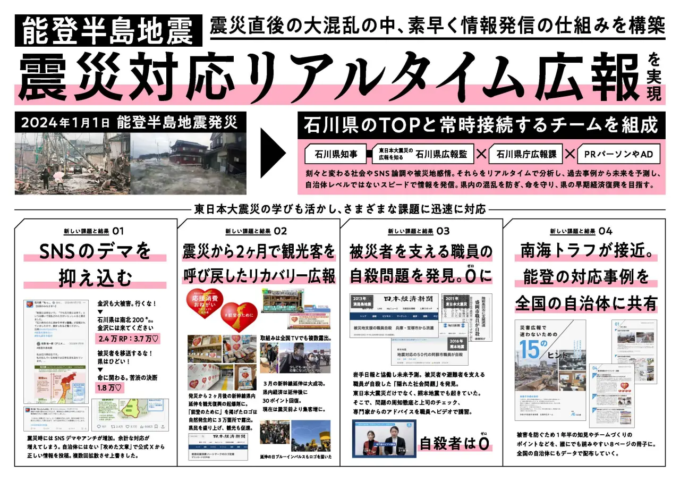
PR, which has the power to control information and move society, carries an especially great responsibility during disasters.
In “disaster communications,” which change depending on the situation, we who handle information must keep learning and thinking about when, what, and how we should communicate—this is the responsibility of PR professionals.
By confronting this challenge head-on, this case became an extremely valuable model for Japan, where natural disasters including earthquakes are frequent, and it offered many lessons—particularly from the perspective of “pioneership (resolve).”
Image source: https://prsj.or.jp/case-study/grandprix2025/
2.Gold Winner: “Dotonbori Kinryu’s Tail Project”
Next is the Gold-winning case involving the three-dimensional sign of Kinryu Ramen in Dotonbori, Osaka.
In August 2024, it was discovered that the dragon’s tail extended onto adjacent property, which led to the decision to remove the “tail” portion.
Because the dragon had long been beloved by many local residents, the removal sparked mixed reactions. They turned what was by no means a positive incident into a story by framing it around the question, “Where will Kinryu’s tail go?”
Rather than simply cutting off the protruding tail, they designed the cut surface, added tear decorations to the dragon, and even installed the tail on a neighboring three-dimensional crab sign—ideas realized through collaboration with the sign manufacturer and a crab restaurant next door.
Through these displays and social media communications, they engaged local residents and tourists, transforming the situation into communication filled with humor and empathy.
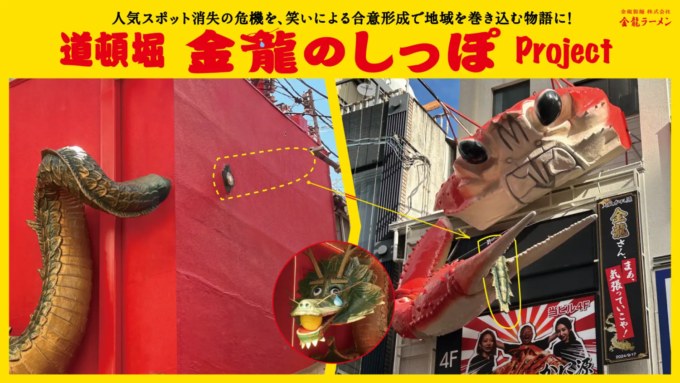
What left a strong impression was how they brought a theme that could easily have escalated into criticism or conflict back into the context of “humor,” and designed it as a “place for consensus-building.”
Instead of pushing through solely with correctness or accountability, they used humor as a medium to lead into dialogue. By naturally involving multiple stakeholders—community, company, and consumers—and creating “a swell through dialogue,” this felt like an initiative that only PR could achieve.
Image source: https://prtimes.jp/main/html/rd/p/000000096.000043449.html
What I felt strongly through PR Award 2025 was that, even in society’s understanding, “PR” is steadily and correctly evolving from “the technique of conveying” to “how we engage with society.”
Stepping forward with resolve in the face of challenges with no single right answer, and reweaving relationships between people.
It was an awards ceremony that reaffirmed the power and potential of PR.
What do we face, who do we engage in dialogue with, and what kind of future do we want to create?
As a PR planner, it was a ceremony that left me thinking that I want to keep these questions in mind and continue creating GOOD impact through joyful commotion.