Valentine’s Day for Working Gen Z: How Is the Diversifying Holiday Actually Perceived?
Hello! I’m Ninomiya from the Account Planning Bureau.
It’s already February! Time flies, doesn’t it? It feels like New Year’s Day was just yesterday…
Now, speaking of February, there is also Setsubun, but the classic event is definitely Valentine’s Day! (I feel like I’m forcing this transition a bit, but I hope you’ll read on with a kind heart 🌱)

Until now, February 14th has been celebrated around the world as “Lovers’ Day,” a day for couples to reaffirm their love for each other…
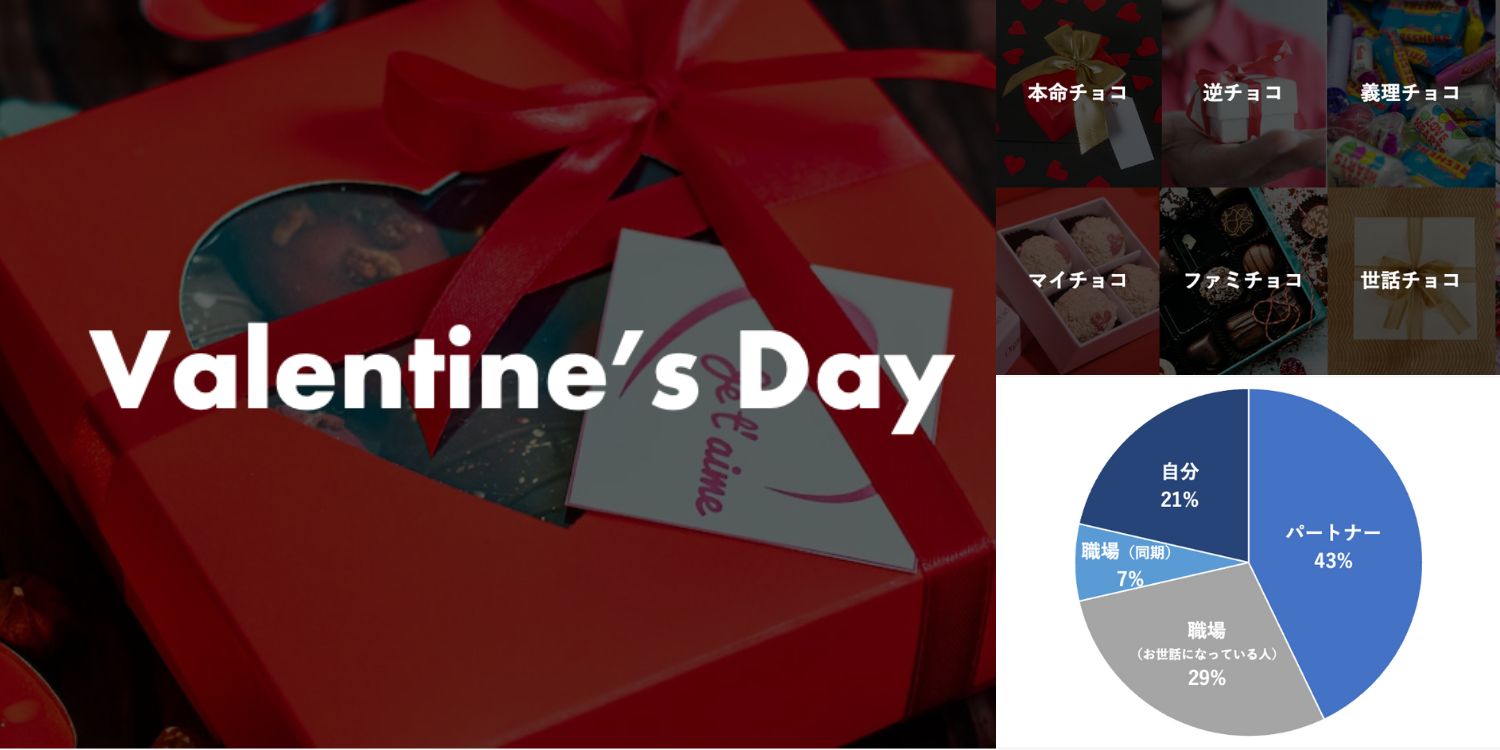
However, the way chocolate is given on Valentine’s Day is changing, moving beyond just giving it to a romantic interest.
|
・Gyakuchoko (Reverse Chocolate) | Chocolate given by men to women as a confession of love. ・Giri-choko (Obligatory Chocolate) | Chocolate given by women to men other than their romantic interest. ・Tomo-choko (Friend Chocolate) | Chocolate exchanged between friends, especially among women. ・My Choko (Self-Chocolate) | Valentine’s chocolate purchased for oneself. ・Fami-choko (Family Chocolate) | Chocolate given to family members or enjoyed together. ・Sewa-choko (Appreciation Chocolate) | Chocolate given to express gratitude to those who have helped you. |
And so on…
In recent trends, “Oshi-choko” has also made an appearance!
*Oshi-choko | Chocolate purchased for the purpose of giving to one’s “Oshi” (favorite celebrity/character).
People post chocolates inspired by their favorites on social media
or exchange them with fellow fans.

As you can see, the values and forms of Valentine’s Day are changing and evolving into even freer styles than before.
But how does the “working Gen Z” actually feel about it?
I decided to investigate the reality among the working Gen Z around me, including myself.
*This survey was conducted among working Gen Z individuals (ages 23-26) in different professions and life stages. Please note that these results do not represent everyone and should be used for reference only.
How does the working Gen Z actually spend Valentine’s Day?
- First of all, will they give chocolate to anyone this year?
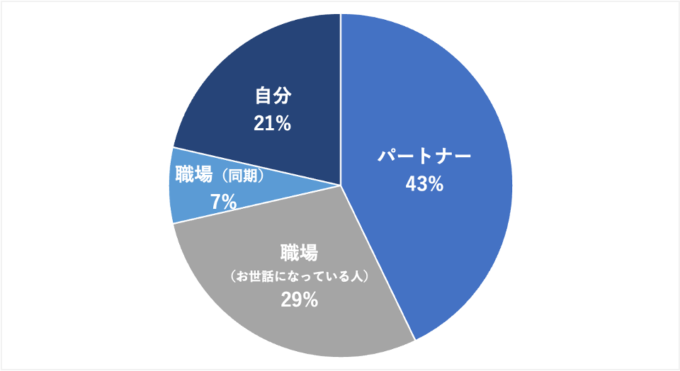
None of the survey participants said they would not give or buy chocolate; generally, many seem to give it to their partners or people they are indebted to at work.
*Partner: Includes romantic partners and spouses.
While “Fami-choko” and “Tomo-choko” are mainstream in society, the survey subjects are working adults and Valentine’s Day falls on a weekday this year. Since many live alone or don’t necessarily make special plans to meet friends, there may be fewer opportunities to give chocolate to family or friends once they enter the workforce.
In fact, when I was a student, I used to make or buy chocolate for friends and teammates, but since becoming a working professional, I give it to a more limited number of people.
Furthermore, for my family, I used to just give them whatever was left over from what I gave my friends (oops!)
Also, this is just my personal opinion, but while people might gather with friends on Christmas because they don’t want to be alone, Valentine’s Day has a stronger tradition of giving chocolate than spending time together. Therefore, few people seem to mind being alone.
(People try to find a partner before Christmas, but Valentine’s Day was originally more about the act of making a connection.)
Additionally, while there is demand for “My Choko” as a self-reward, those with partners don’t necessarily buy a separate reward for themselves. Instead, they seem to choose chocolate with the mindset that “giving to my partner = a reward for myself,” as they will likely eat it together.
Does Valentine’s Day change depending on the recipient?
How do the types of gifts and the feelings behind them differ between “partners” and “the workplace (people who have helped you),” which were the most common recipients?
When I asked for more details…
For Partners >>
Gifts often included store-bought chocolates, handmade chocolates, or cakes.
Some gave non-chocolate items to partners who don’t like sweets, and depending on the relationship, some couples even prepared a handmade Valentine’s dinner.
It seems they are being creative to match the other person’s preferences and avoid repeating previous gifts, without being bound by the concept that “Valentine’s = chocolate.”
Regarding the sentiment, many give gifts to show daily gratitude or to enjoy the festive and special feeling of the event. Even as Valentine’s Day diversifies, the perception of it as a “slightly special day” different from the norm may remain unchanged.
Workplace (People who have helped you) >>
On the other hand, for those they are indebted to at work, there was a unanimous decision to buy and give store-bought chocolates or sweets.
Handmade items can feel burdensome or be disliked depending on the recipient. Unless someone is exceptionally good at baking and that character is well-established, the hurdle for giving handmade chocolate is quite high.
As for the sentiment, while there is a sense of “daily gratitude,” many companies have a culture where giving has become a rule or tradition, creating a custom of giving Valentine’s chocolate as a “tacit understanding.”
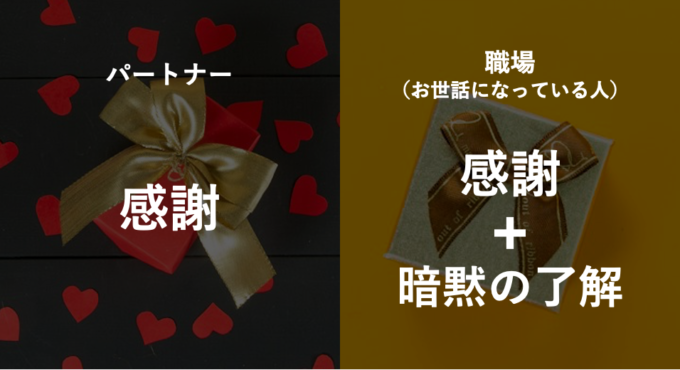
While there is a desire to “convey daily gratitude” to the recipients, in the workplace, it seems to be perceived as an obligatory event.
Given these recent Valentine’s trends, what does the working Gen Z actually think?
To be honest, what do you think of Valentine’s Day?
Here are some of the voices we heard…
・It became an obligatory thing once I started working, and now I dislike it.
・It’s a stressful event because I have to change what I give depending on the person.
・In middle and high school, it was fun to exchange with friends in class or clubs, but as an adult, it doesn’t feel like such an important event anymore.
・It has become formal, so I don’t enjoy it from the bottom of my heart.To be honest, I wouldn’t mind if Valentine’s Day disappeared.
And so on…
While there were negative voices like those above after starting work, some people have discovered their own ways to enjoy Valentine’s Day!
・In high school, it felt like a fixed ritual where we just made and exchanged things, but since college, I’ve been going out to eat or buying chocolate as a reward for myself.
・As I transitioned from a student to a working professional, I started enjoying buying store-bought chocolates for myself.
・The sense of it being a mass event has decreased compared to my student days, and I now give it only to a very limited number of people. Since I have money now, it feels like an event for myself where I just do what I want to do.
・It’s a time when it’s okay to buy slightly expensive chocolate. It’s like a bonus round for eating.
And so on…
As people become working adults, “Tomo-choko,” which was a joy during student days, decreases, and obligatory “Sewa-choko” emerges, leading some to have a less favorable impression. However, as the range of disposable income increases and the desire to reward oneself for hard work grows, “My Choko (Reward Chocolate)” has begun.
It seems that entering the workforce is a turning point in how Valentine’s Day is perceived.
Summary of Valentine’s Day for Working Gen Z
The survey results show that for the working Gen Z, values regarding the event differ between Gen Z in their teens and those in their 20s, and “working” seems to be the turning point where the perception of Valentine’s Day changes.
Particularly, as they become working adults, there is an increased recognition of it as:
・A way to show “daily gratitude” to recipients
・A special day to pamper oneself
As a result, the original romantic meaning of Valentine’s Day is less apparent.
Furthermore, while some enjoy it as a festive event or a special cheat day, others view it as an obligation, and it is a fact that some perceive it as a “tiresome event.”
So, how should we approach users who hold such insights?
A famous example is from around 2018, when a certain chocolate brand made headlines by running a newspaper ad saying, “Japan, let’s stop giving obligatory chocolate.”
It could be called a declaration of liberation from the obligation of Giri-choko.
This was a project that successfully conveyed the brand’s message: “We want users who actually buy chocolate to enjoy Valentine’s Day from the bottom of their hearts!”
By unraveling the insights held by users and speaking for the voices that couldn’t be heard before, or offering alternative suggestions, precisely because Valentine’s Day is diversifying, it may be best to suggest ways to enjoy it that align with each insight without being bound by old-fashioned formalities.
In “The State of [X] for Working Gen Z,” we hope to share information that helps explore concerns and solutions regarding Gen Z, such as what they actually think and what approaches are effective.
While these posts will be irregular, I hope they provide some kind of hint.
Let’s do our best in February too!