A chemical reaction between Japan’s cutting-edge education and PR!? Five second-year Dalton Tokyo Junior High School students learn the essence of PR through a two-day work experience program!
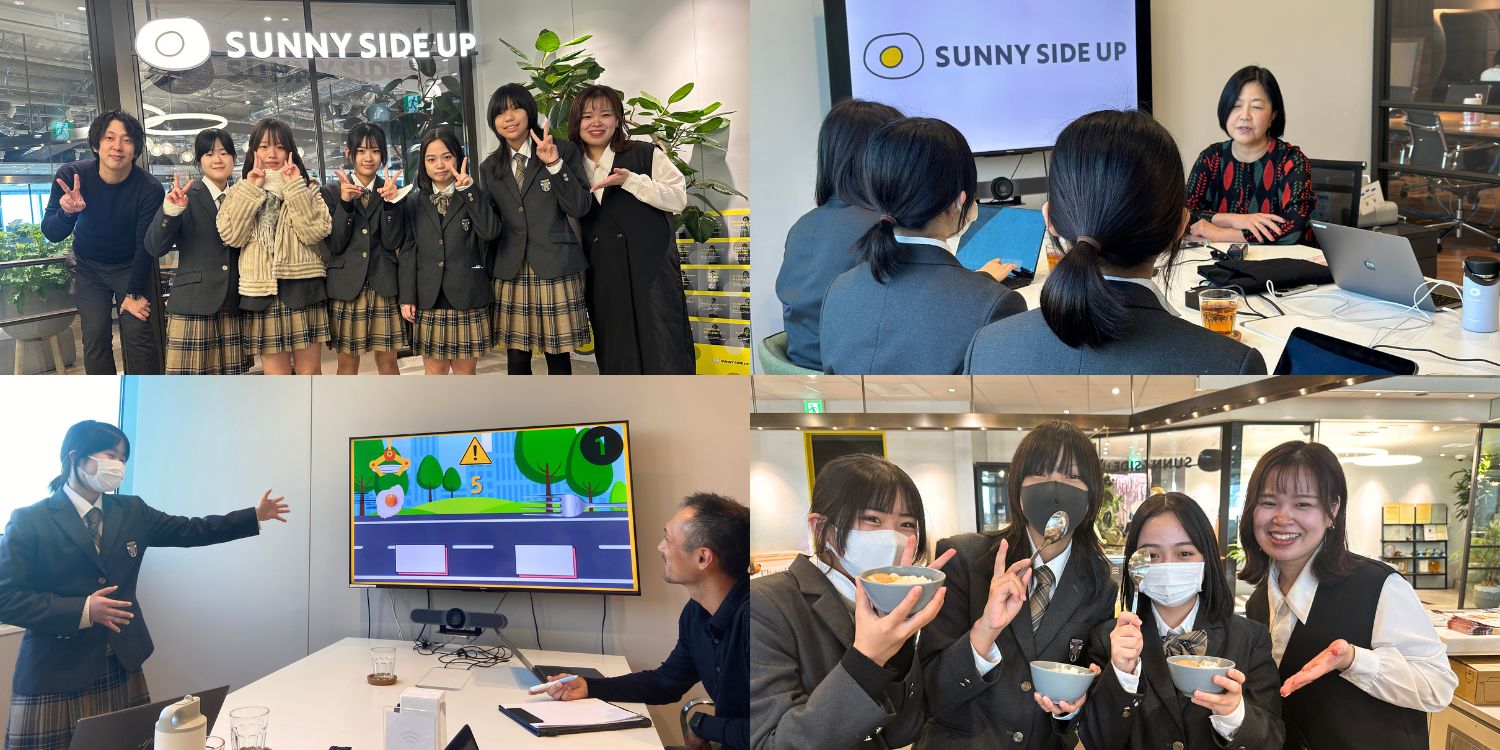
Hello everyone. I am Inakazu from the Talent Planning Department at SUNNY SIDE UP GROUP.
At SUNNY SIDE UP GROUP, we welcome students for lectures and work experience programs because we want to share the importance of PR communications and the appeal of our work with the younger generation who will shape the future.
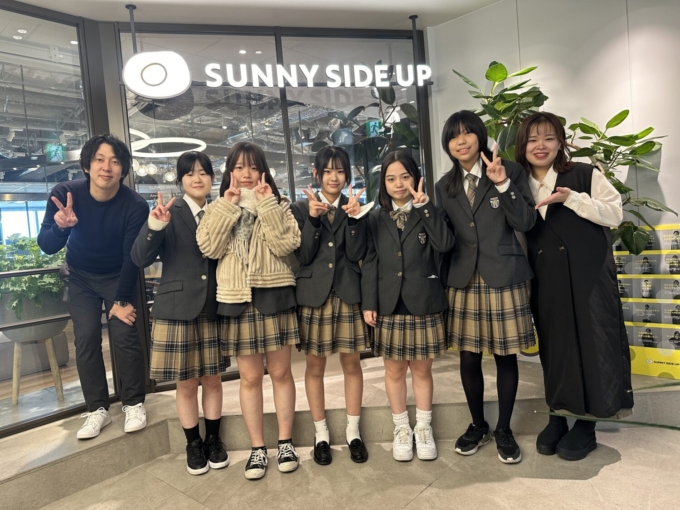
This time, students from Dalton Tokyo Gakuen in Tokyo visited SUNNY SIDE UP GROUP for a work experience program. Together with these students from a school known for providing some of Japan’s most advanced education through STEAM learning, we covered everything from the basics of PR to how to build a plan.✏️
■What is cutting-edge “STEAM education”?
When you hear “STEAM education,” does it ring a bell for you?
STEAM is an educational concept formed from the initials of five words: Science, Technology, Engineering, Art (arts and liberal arts), and Mathematics.
Dalton Tokyo Gakuen, whose students joined our work experience program, is said to offer some of Japan’s most advanced education by incorporating STEAM learning.
It is simply enviable—these are fields I never had the chance to encounter when I was in junior high school!
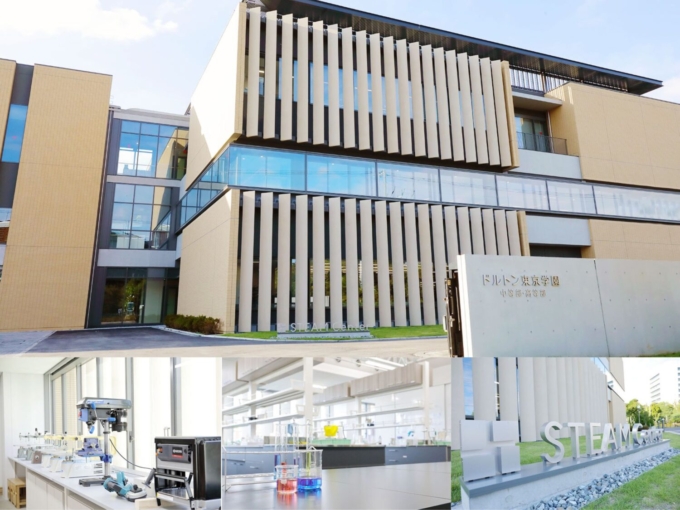
Five second-year junior high students who study in that environment every day decided to join our work experience program, and for several days the operations team wrestled with the question, “What should we do for a two-day curriculum…?”
■Taking on a high-difficulty presentation on the theme of “PR”!
As we worked out the two-day curriculum after receiving the request, one question kept coming to mind: how far can second-year junior high students go…?
For us, who rarely have opportunities to interact with second-year junior high students now that we are adults, it was quite a challenge.
And for good reason—we decided to have them deliver a high-difficulty presentation at the end of the two days. We wanted the students to experience a major challenge: tackling a question that even adults cannot answer easily.
“Propose a way for all Dalton Gakuen junior high students to share a common understanding when they hear ‘PR.’”
“Helping people understand the value of PR” is an enduring challenge even for us at SUNNY SIDE UP GROUP, which has grown with PR at its core. This time, we decided to have junior high students—specifically Dalton Gakuen students—think it through as the target audience.
Second-year junior high students who were learning about “PR” for almost the first time had to come up with an answer in just two days. When we shared the assignment with the five students who visited our office for a pre-program alignment meeting, we received an unexpected response.
“Understood! We will prepare and give it a try by the day of the program.”
We were internally surprised—this is a question even adults struggle with, yet they responded so clearly.
With their calmness and confidence beyond their years, and their excitement about taking on something unknown, we felt both rising expectations and a hint of anxiety—yet we renewed our resolve to run the two-day work experience program.
■Day 1: An opportunity to experience the essence of PR
On Day 1, we included as many opportunities as possible to engage with “the essence of PR.” We believed that unless the five students first understood PR, it would be impossible for them to find a way for everyone at Dalton Tokyo Gakuen to share a common understanding of “PR.”
[The history and vision of SUNNY SIDE UP GROUP]
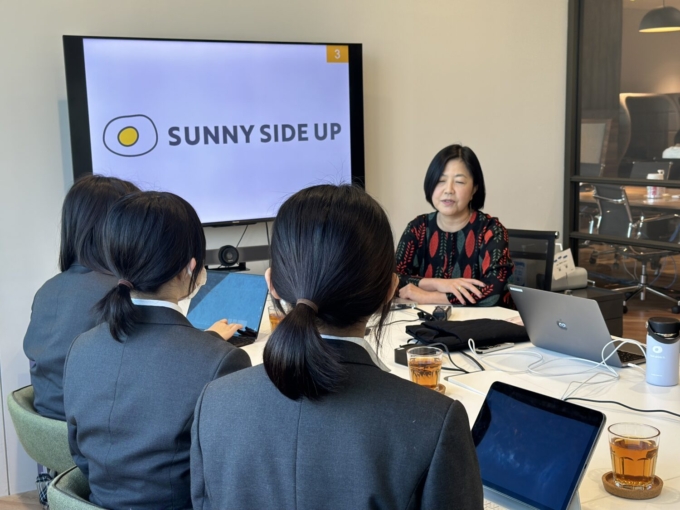
After brief greetings, the lecture began at full speed!
Believing it was most important for them to learn our history and vision, Rie Matsumoto, a Director at SUNNY SIDE UP and also a board member of the Japan Public Relations Association, took the stage.
What path has SUNNY SIDE UP GROUP taken, what do we aim for going forward, and what kind of presence should we be for the company, employees, society as a whole, and other stakeholders? After hearing the many thoughts behind PR, the five students sat up straighter than ever before.
[Special lecture by a PR planner: “What is PR?”]
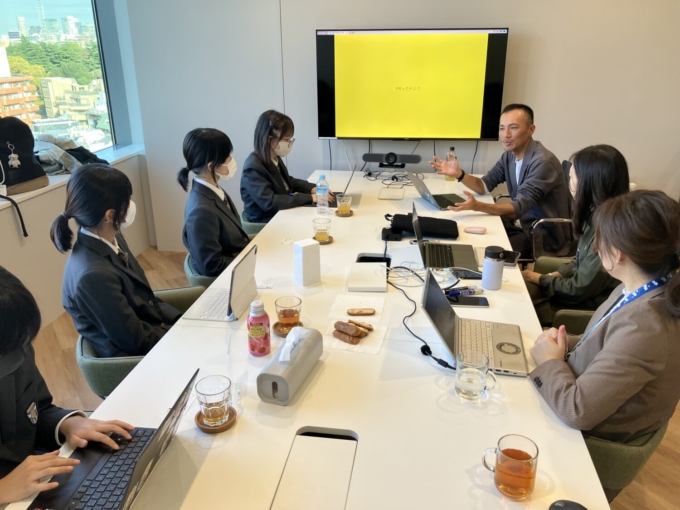
Next to take the stage was Takuma Shimizu, a PR planner at SUNNY SIDE UP.
For the five students with almost no prior knowledge of “PR,” he clearly explained what PR is in the first place and what role it plays in society, using examples.
What mattered most was helping them see PR not as “someone else’s issue,” but as something personal. We wanted them to realize that PR is all around them and part of everyday life. It was striking to see the five students nod deeply and lean in as they listened, having become aware for the first time of their own points of contact with PR.
[So what does PR actually mean?]
Through the lectures by Matsumoto and Shimizu, the five students began to form a clear picture of what PR is.
“PR means thinking about what is good for society and communicating it.”
And yet, something still did not feel fully clear. They understood the meaning, but a question remained: would these words resonate with other junior high students?
As silence began to settle over the meeting room, one student spoke up as if struck by an idea.
“Could we translate it into words that are easier for junior high students to understand?”
That single comment sparked a flow of ideas from all five.
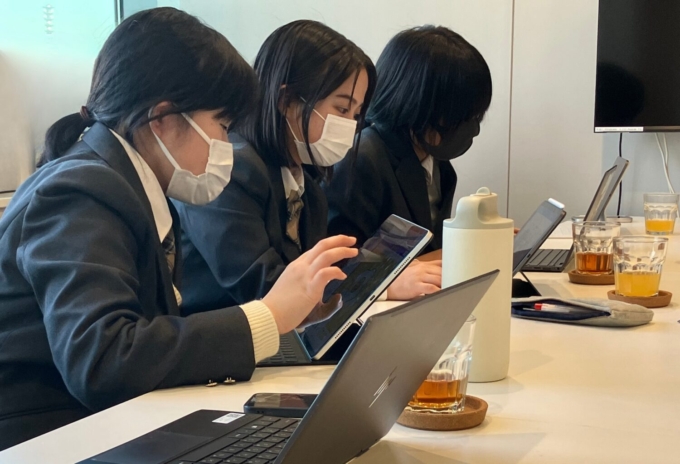
“Isn’t this situation PR too? This happened recently—could that be PR as well?”
It was the moment they realized how much PR is woven into their daily lives. Perhaps it felt like they had finally reached the starting line for tackling the assignment.
Day 1’s lectures ended there. Later, we learned that the five students continued discussing PR late into the night after returning home, and everyone on the team was astonished…!! We were impressed by the tremendous energy they brought to taking on the unknown.
■Day 2: Considering how to communicate: exploring “methods of PR”
Day 2 was an opportunity to think about “methods of PR,” including preparing for the presentation. We learned more concrete PR approaches from the PR lead of a project that the five students had specifically asked to hear about in advance.
[Behind the scenes of the Blue Period Exhibition: a real PR case study]
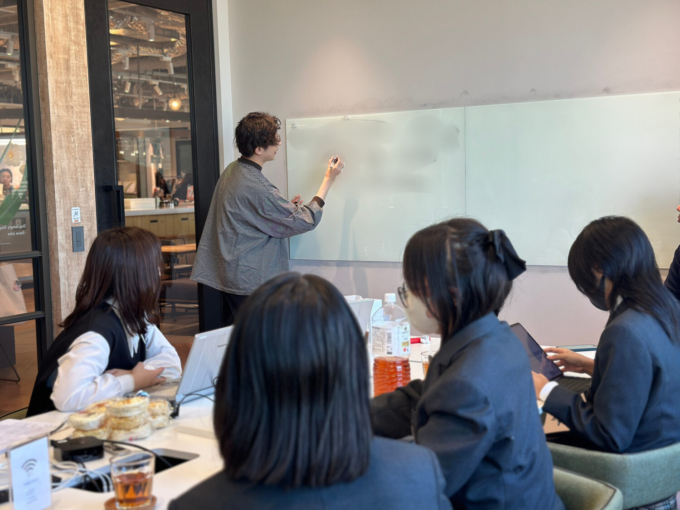
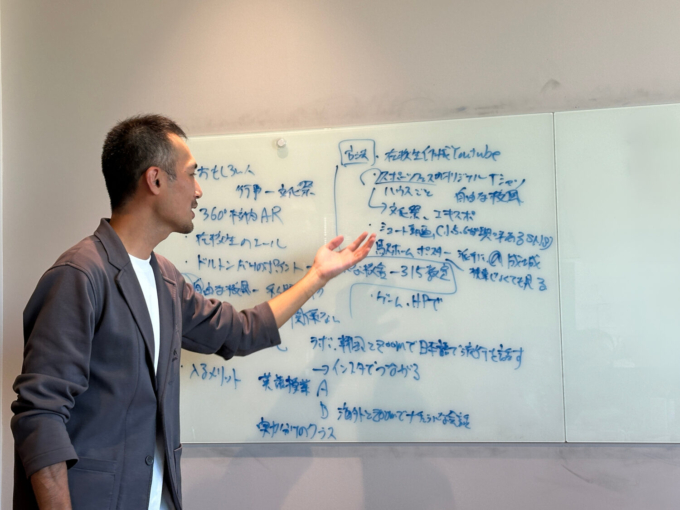
Taking the stage here was Yuya Waku of SUNNY SIDE UP, one of the members who worked on the Blue Period Exhibition.
He generously shared PR points only someone on the project would know, as well as the challenges they faced. Learning that PR initiatives were carried out from every angle—fine art, manga, entertainment, outings, and more—the students seemed unable to hide their surprise.
How do you reach the target audience you want to reach? This way of thinking became an extremely important point for considering the assignment in this work experience program. The five students seemed to absorb fully from Waku the foundation for how to communicate to junior high students and what methods to use.
[A quick break: experience SUNNY SIDE UP’s employee benefits!]
The meeting room was heating up as we were ready to dive into the assignment. But as the energy rose, so did fatigue…!? So, at this timing, it was break time. Since we wanted them to experience SUNNY SIDE UP’s original employee benefits, we enjoyed a tamago kake gohan (egg over rice) lunch together.🍳
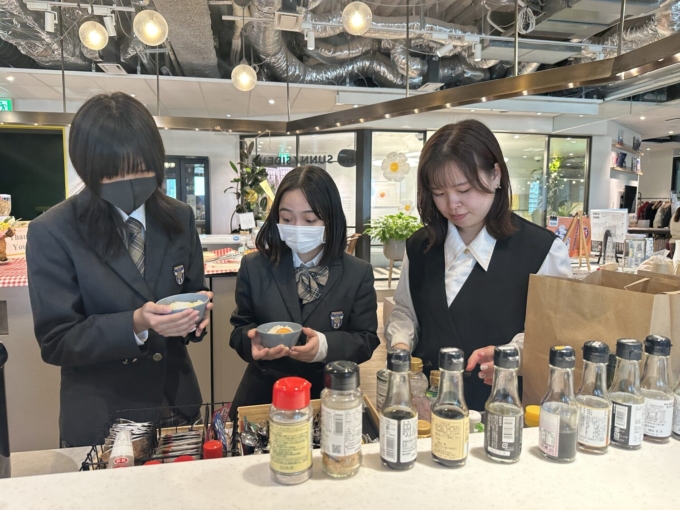
Surprised: “Wait—unlimited toppings?”
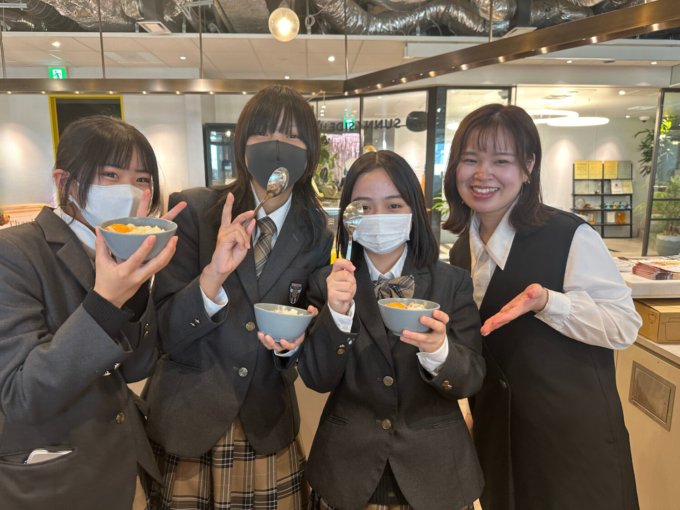
A commemorative photo with our original tamago kake gohan🍳
Learn more about the 32 Benefits here.
[Presentation preparation time!]
With the presentation approaching, the students began brainstorming and preparing. Unlike Day 1, their deeper understanding of PR took both the quantity and quality of ideas to a whole new level. With limited time, they assigned roles and moved straight toward the goal, filling the meeting room with tension.
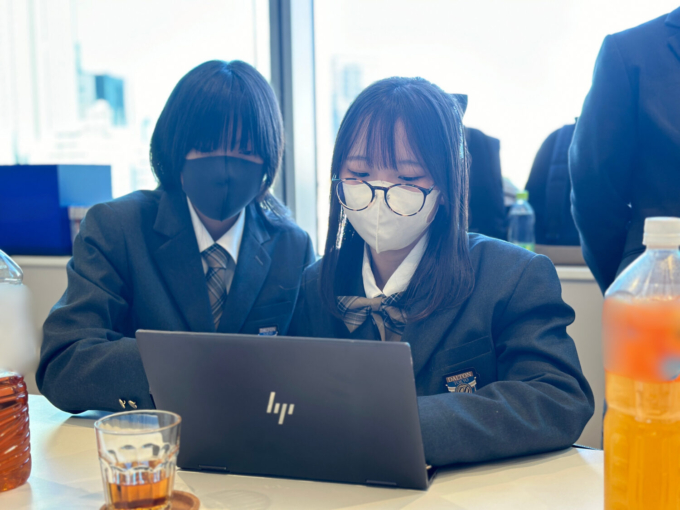
Two students refining ideas and the presentation content
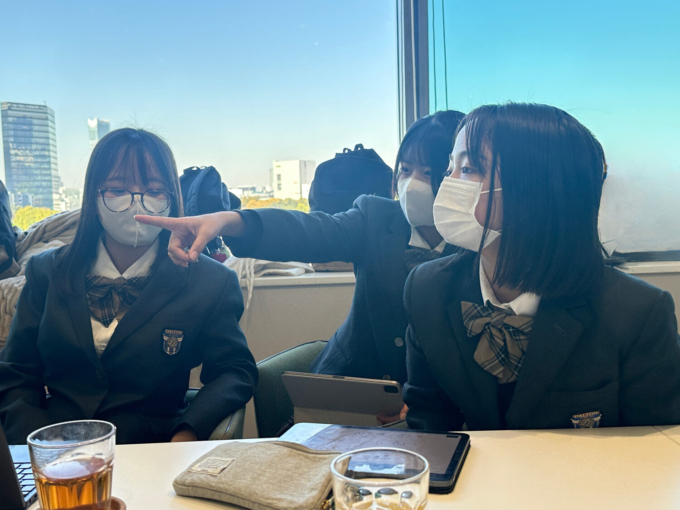
The meeting room as discussion intensifies
[Finally, the final presentation!]
And then, the work experience program entered its final stage. As the culmination of the two days, the students delivered their presentation!
“Propose a way for all Dalton Gakuen junior high students to share a common understanding when they hear ‘PR.’”
The five students presented on this theme—one that even professionals struggle with.

A proposal using “games,” which many junior high students enjoy, as the hook
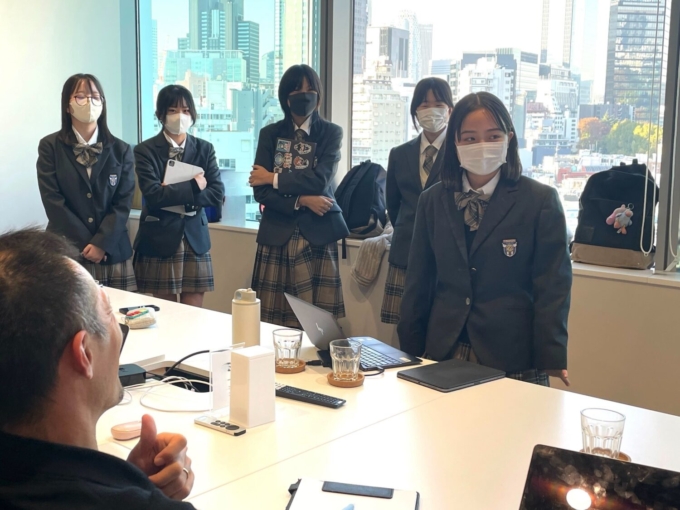
Each of the five students presenting their respective parts
In response to the question they struggled with most—“How can we make it understandable for junior high students?”—the answer they arrived at together was the catchphrase: “What you love is the best PR.”
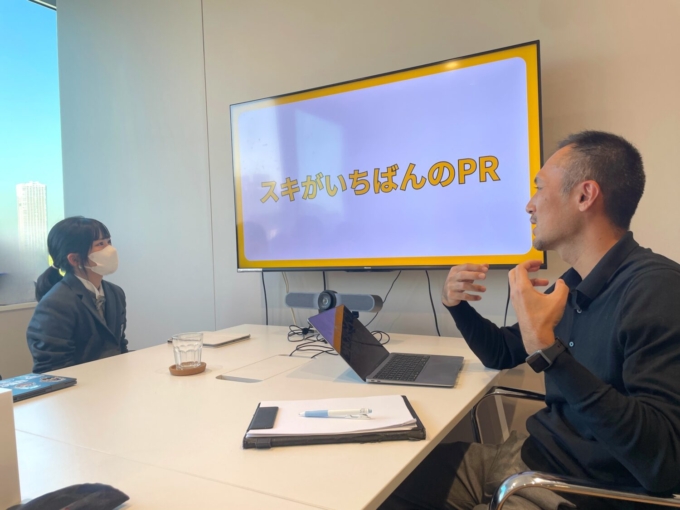
Love motivates people and naturally makes them want to share what they love with others. The five students seemed to conclude that this driving force of “love” is PR itself. Shimizu, who listened to their presentation, also provided feedback while praising its high quality.
“You grounded PR in your daily lives, and the presentation was highly feasible and high quality.”
“Above all, the phrase ‘What you love is the best PR’ is simple and truly resonates.”
As the five students listened to Shimizu’s feedback, they looked less like junior high students and more like PR professionals trying to change reality, even if only a little. Even with bright, relieved expressions, they listened seriously and showed a determination to take something away—right to the very end, they continued to amaze us.
To think they could grow this much in just two days…! The operations team was inspired by both their rapid growth and their potential going forward.
[Two-day recap networking session]
After an intense two days, it was time to reflect.
Only then did their serious expressions soften, and we caught glimpses of the innocence typical of second-year junior high students. Seeing the five students smiling as they ate the snacks we prepared, the whole team felt relieved—and truly glad we had provided this experience.
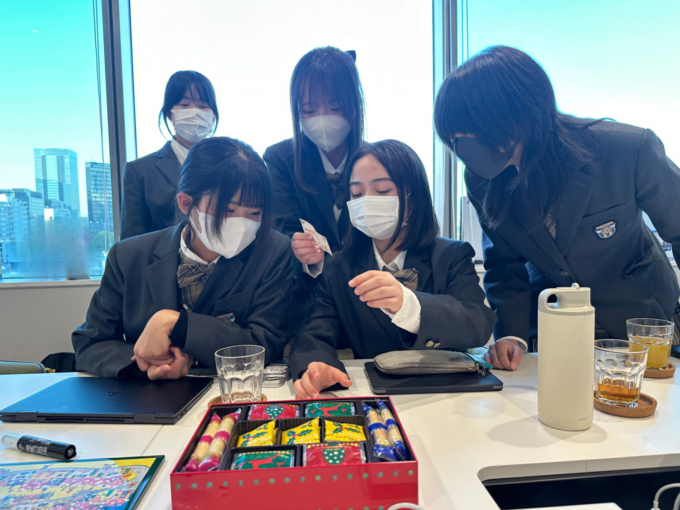
It was likely a demanding curriculum and presentation theme for second-year junior high students, but we caught a glimpse of the strength of 14-year-olds who can overcome difficulties while enjoying the process.
It was a moment that made us keenly realize that assuming “it is still too difficult because they are second-year junior high students” only narrows their possibilities.
And the five students’ reflections on the two days were wonderful feedback that made us very happy!
“I learned that PR is so familiar and fun, and I came to like PR.”
“I really understood how important PR communication work is for society.”
“I did not like group work, but these two days of working together as five were really fun.”
■The answer to cutting-edge education × PR
Over the two days, we saw the potential to create future movements in society by fusing “input” through cutting-edge education with “output” through PR that communicates it.
In that sense, providing more opportunities for people to encounter and learn about PR may also be our mission as professionals who make a living through PR communications.
This applies not only to students, but to adults as well. Communicating the value of “PR” to many people living today feels like a major assignment entrusted to us.
We hope that, through this two-day work experience program, the five junior high students were able to take home even one meaningful learning—and we also feel that we learned a great deal. We sincerely thank the five students for their dedicated efforts.
“What you love is the best PR”
With these words in mind, we are already looking forward to seeing the five students create movements in the world.🥚